Saigon Telecommunication Technology, known as Saigontel, has become an authorised distributor of Starlink, the satellite internet service run by Elon Musk’s SpaceX, after winning a licence that lets it resell satellite connections across Vietnam until 2030. The technology department of Ho Chi Minh City granted the licence on 8 October, after Saigontel signed a cooperation agreement with Starlink’s local company in September.
The licence covers telecoms services that Saigontel provides without owning the network itself. Starlink’s local company runs the satellite service and the ground stations behind it, while Saigontel sells that service on to its own customers. The licence allows Saigontel to resell fixed and mobile satellite internet nationwide, including at sea, and to lease satellite lines that connect mobile phone towers to the wider network, according to the technology news site TNGlobal.
Saigontel is one of several local partners now selling the service, which reached Vietnam under a government pilot. Saigontel plans to fold satellite links into the larger systems it builds for industrial customers, rather than sell Starlink kits on their own, so the connection arrives as part of a site’s wider infrastructure.
A Developer With Its Own Customers
Saigontel was founded in 2002 as a telecoms company and belongs to Saigon Invest Group, a property and telecoms business. Over time it has grown into a developer of industrial land, building industrial parks, ready-made factories, urban projects and social housing. Its head office sits in Quang Trung Software Park in Ho Chi Minh City, with offices in Hanoi and at industrial sites in the northern provinces of Bac Ninh and Thai Nguyen.
The company says it has served more than 400 customers and partners over 25 years. In 2024 it proposed building a data centre in the Tan Phu Trung Industrial Park on the edge of Ho Chi Minh City, the same park where the state-owned telecoms group Viettel is developing one of its own.
Industrial clients are the market Saigontel has in mind for Starlink. It is aiming at industrial parks, manufacturing, logistics, energy and shipping, sectors whose factories, warehouses and vessels often sit far from city networks. Satellite internet can reach sites that fibre and mobile networks serve poorly, and it can act as a backup line for systems that need to stay connected when the ground network fails.
Starlink’s satellites fly in low Earth orbit (LEO), much closer to the ground than older satellites that sit far out in a fixed position above the equator. That shorter distance means less delay, so video calls and the remote control of equipment work more smoothly than on traditional satellite links. Morning Tick has followed the growth of satellite IoT (Internet of Things), the use of satellites to connect sensors and machines in places ground networks do not reach.
Filling Gaps In Mobile Coverage
Saigontel is also taking part in a government pilot to close gaps in mobile phone coverage across 13 provinces and cities. Working with Vietnam’s telecoms authority and Starlink’s local company, it plans to install 254 Starlink units.
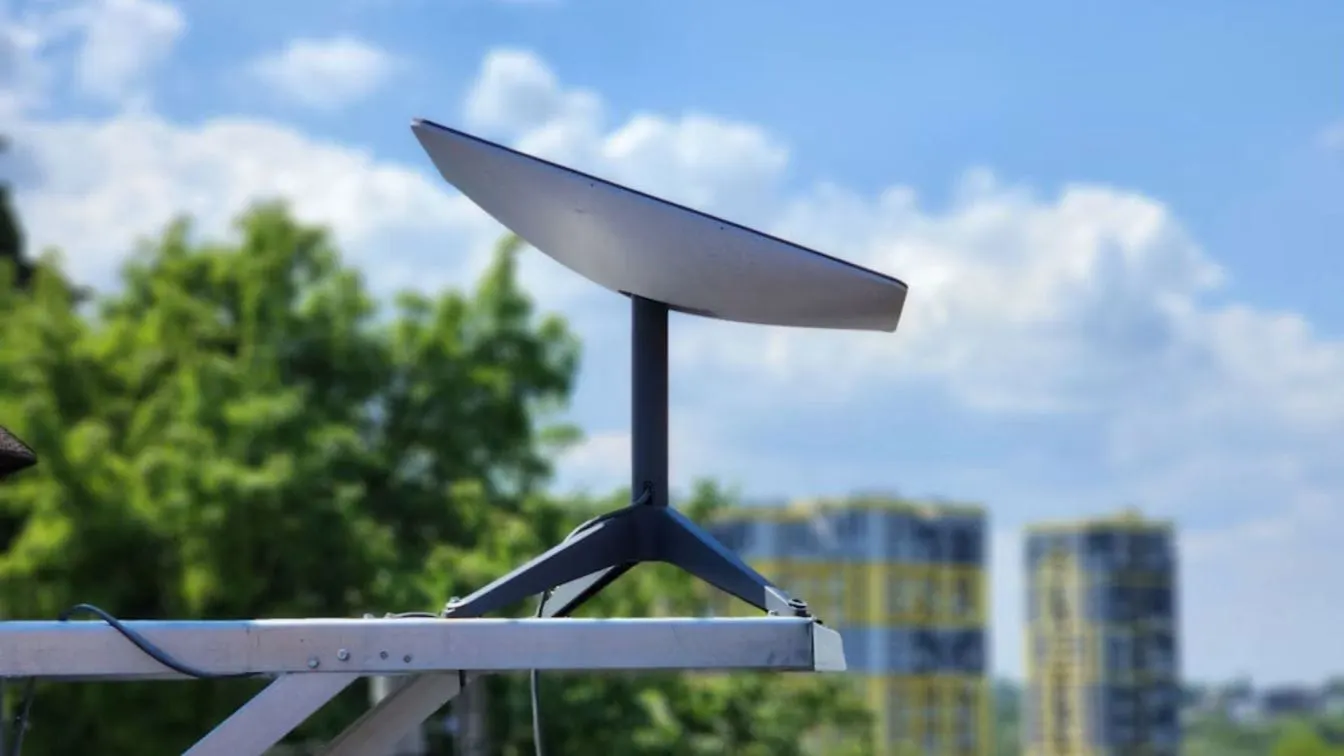
In these areas, the satellite dishes are meant to link remote mobile towers back to the national network. Running fibre to every hill village or island is slow and expensive, and a satellite link lets an operator switch on a tower first and lay cable later, or not at all.
How Starlink Got Into Vietnam
Vietnam has kept tight control of its telecoms market, which is dominated by state-owned groups such as Viettel, VNPT and MobiFone. Vietnam’s rules had stopped foreign investors from holding a controlling stake in any telecoms company that owns network infrastructure. In March 2025 the government made an exception for LEO satellite services, allowing SpaceX to launch Starlink in a pilot with full ownership of its local business.
SpaceX set up Starlink Services Vietnam in September 2025 with charter capital of 30B dong, about $1.1M. The local company was licensed in February 2026 to serve up to 600,000 terminals, the dishes customers install, during the pilot, which runs to the end of 2030. The government has authorised four ground stations to link the satellites to the internet, though some may not yet be operating.
Starlink began taking orders in Vietnam on 13 August 2026, with a home plan from 1.13M dong (about $43) a month and hardware costing 8.66M dong, making Vietnam the sixth market in Southeast Asia to get the service. Hanoi still decides which services Starlink can offer, where, on which frequencies and at what scale, and regulators have warned that people using uncertified imported dishes face fines and confiscation. The low-cost airline Vietjet signed an agreement in May 2026 to use Starlink for in-flight internet on its planes.
For home users, Starlink faces stiff competition from cheap fibre. VNPT, for example, sells home broadband at 300 megabits per second (Mbps) from 215,000 dong a month, far below Starlink’s price. That leaves businesses in remote areas, ships at sea and operators filling coverage gaps as the customers most likely to pay for satellite links, and they are the segment Saigontel is targeting.
Reseller Licence In Hand
Saigontel has not said how many customers it expects to sign in Vietnam or what it will charge industrial clients for bundled satellite connections, and the 13 provinces and cities in the coverage pilot have not been named.
Saigontel’s approach shows how Starlink is spreading in markets that keep tight control of telecoms: through local firms that already own the customer relationship. SpaceX is also widening what Starlink can do, from home dishes to ordinary phones, and Morning Tick has reported on Starlink Mobile, the SpaceX service that connects phones straight to satellites. In Vietnam, though, Starlink’s reach into factories and coastal waters now runs partly through an industrial park developer from Ho Chi Minh City.