For most of its life, Starlink has been a broadband service sold to homes, ships, aircraft and businesses through a dish on a roof or a mast. Its mobile ambitions were a side project: a partnership with T-Mobile to send text messages from satellites to ordinary phones in places without coverage.
That side project is growing into something much larger. SpaceX now markets its direct-to-cell service as Starlink Mobile. It has secured spectrum from EchoStar, signed operators on several continents and plans a new generation of satellites with far more capacity. In early August 2026, in its first results since becoming a public company, SpaceX also floated a more radical idea: putting small cellular base stations on the equipment that holds Starlink dishes, and competing directly for the customers of America’s largest mobile operators.
Analysts are divided on how serious that last idea is. What is clear is that SpaceX is building a mobile business that spans satellites, spectrum and, possibly, ground infrastructure, and that it expects robots and vehicles, not just phones, to drive demand.
What Starlink Mobile Is Today
Starlink Mobile is the name for SpaceX’s direct-to-cell service, which connects standard mobile phones to satellites without special hardware.
The First Generation
Fierce Network reported at MWC 2026 that the first-generation constellation comprises around 650 satellites, with launches that began in 2024. These satellites act like cell towers in orbit, using partner operators’ spectrum to provide text messaging and limited data in areas without terrestrial coverage.
The Operator Partners
In the United States, the service runs through T-Mobile, which markets it as T-Satellite. In Europe, Deutsche Telekom is a partner and is set to be the first in the region for the next generation of satellites. Ukraine’s Kyivstar reported in January 2026 that 3 million of its customers were using the service.
SpaceX’s second-quarter 2026 results added new Starlink Mobile partnerships with SoftBank and NTT Docomo in Japan and Spark in New Zealand.
IoT So Far
IoT support has been limited but is part of the plan. In early 2025, SpaceX reported successful data testing of Cat-1 IoT devices over the direct-to-cell network, and said it was working towards “providing additional services for IoT devices, data, and voice.” LTE Cat-1, and its single-antenna variant Cat-1 bis, is widely used in trackers, payment terminals and telematics units, which makes it a practical starting point.
The Spectrum Behind It
The biggest change in the past year is spectrum.
The EchoStar Deal
In September 2025, SpaceX agreed to buy spectrum licences from EchoStar, in deals later expanded to a value of close to $20 billion. In its second-quarter results, SpaceX said it had received FCC approval of the transfer of “65 MHz of spectrum in the U.S. and certain global Mobile Satellite Service spectrum licenses.”
Why It Matters
Until now, Starlink’s direct-to-cell service has relied on borrowing a small slice of each partner operator’s spectrum. RCR Wireless reported that the current partnership model uses about 5 MHz, and that the EchoStar spectrum takes the total to about 70 MHz, a roughly 13-fold increase in spectrum capacity. SpaceX also plans a tenfold increase in the number of direct-to-device satellites.
Owning spectrum outright changes SpaceX’s position. It can offer services without depending entirely on each operator’s frequencies, and it has enough capacity to move beyond messaging.
The Next Generation
SpaceX’s second-generation direct-to-cell satellites are due to launch from mid-2027, according to Fierce Network, with commercial service expected by the end of that year, according to RCR Wireless.
Twenty Times The Throughput
SpaceX says the new satellites will offer about 20 times the throughput of the first generation, using custom SpaceX chips and phased array antennas. They are designed to use the S-band spectrum acquired from EchoStar and to support text, data, voice and video calls. SpaceX’s own description is that they “will deliver full cellular coverage to places never thought possible.”
Device Support
The new service is expected to work on most devices in the United States when it launches. For phones, that depends on support for the relevant bands in chipsets and handsets. For IoT devices, the question will be which modules support the bands and how quickly manufacturers certify them.
The Small Cells Idea
The most surprising part of SpaceX’s August update was not about satellites at all.
A Base Station On The Dish Mount
Gwynne Shotwell, SpaceX’s president and chief operating officer, suggested a way to build terrestrial mobile coverage using Starlink’s existing footprint. “You could put a cellular base station on the gear that holds a Starlink broadband dish,” she said, according to RCR Wireless.
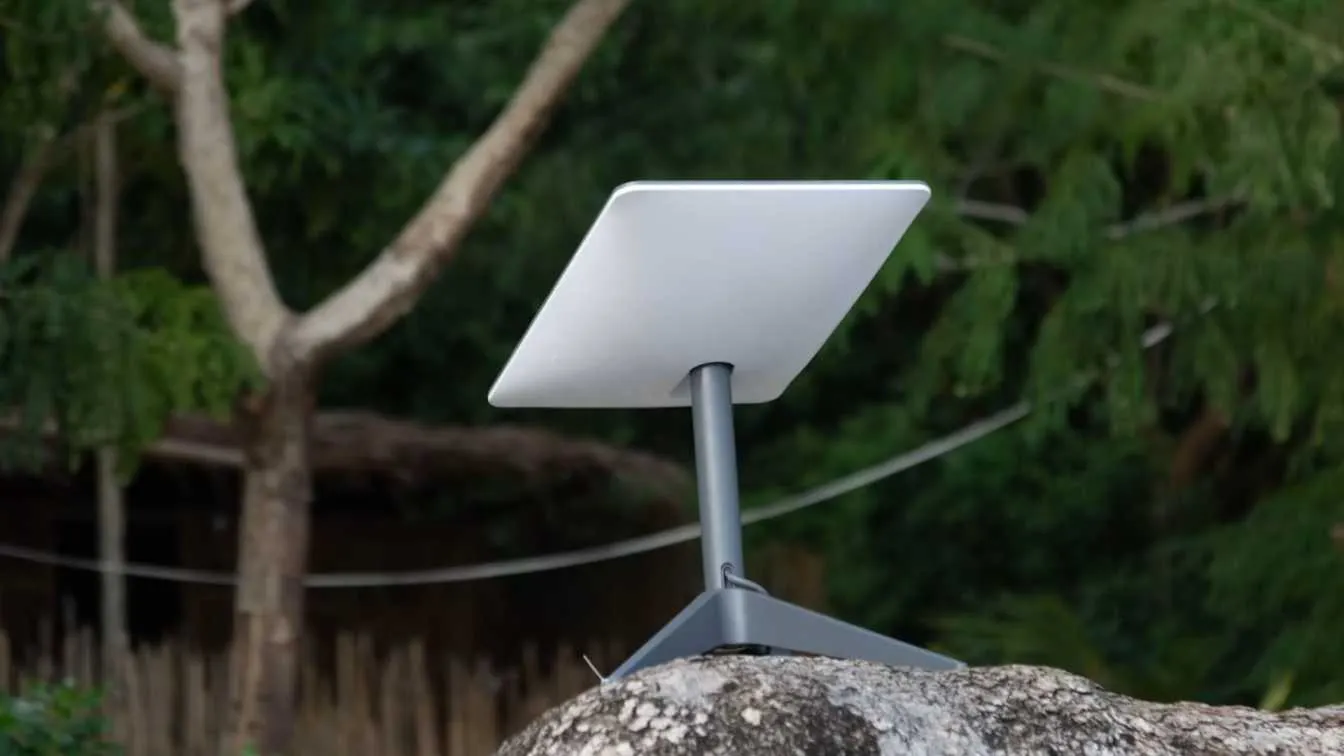
The concept is simple. Millions of Starlink dishes already sit on rooftops and poles, with power and a backhaul connection to the satellite network. Adding a small cellular base station, sometimes called a femtocell, would create local mobile coverage without building towers.
A Direct Challenge To Carriers
Shotwell was explicit about the target. Referring to AT&T, T-Mobile and Verizon, she said: “I anticipate us to be able to acquire quite a few of their customers.”
That is a striking statement from a company whose direct-to-cell business depends on partnerships with operators, including T-Mobile in the US.
The Sceptics
Analysts reacted with caution. Dimitris Mavrakis of ABI Research wrote that “Elon Musk is nuts if he thinks 5G small cells with Starlink backhaul can offer better (and cheaper) service than AT&T, Verizon, and T-Mobile.” Sam McHugh of BNP Paribas was quoted in RCR Wireless’ follow-up analysis saying: “We continue to believe [SpaceX has] a weak hand in trying to generate meaningful revenue / returns from wireless in the US.”
Concerns include power, the placement of small cells, which depends on where customers happen to have dishes, and the lack of a proven model for building a national network from femtocells.
A Different Reading
Not everyone sees it as a bid to become a fourth national carrier. Vish Nandlall argued in the same RCR analysis that small cells could make the satellite system more efficient: “The dish moves traffic off the scarce direct-to-cell payload onto the much larger broadband payload.” In that reading, small cells are a way to offload traffic from limited direct-to-cell capacity onto Starlink’s much larger broadband capacity.
The analysis also raised a broader possibility: that Starlink could help “unbundle” connectivity, with devices moving between satellite, small cell, Wi-Fi and traditional mobile networks, managed by software in the background.
The Physical AI Argument
SpaceX’s strategy rests partly on a view of where demand will come from.
Machines, Not Just Phones
Elon Musk argued during the results call that robots and AI-powered vehicles would generate far more data than smartphones, estimating that such machines could produce “billions of bits per second continuously,” according to RCR Wireless.
The point is that human smartphone use has natural limits. Machines that see, map and act in the physical world, such as autonomous vehicles, delivery robots, drones and industrial robots, generate continuous streams of sensor data and may need connectivity wherever they operate.
What That Means For Connectivity
For IoT, the physical AI argument cuts two ways. It suggests growing demand for connectivity in places terrestrial networks do not reach, such as farms, mines, highways and remote infrastructure. We looked at how vehicles became data-heavy connected devices in our story on how IoT rewired the car.
It also raises questions. Most autonomous machines process sensor data locally rather than streaming it, because latency, cost and reliability make constant uploads impractical. Satellite links, even with far more capacity, are unlikely to carry raw sensor streams from millions of machines. The more realistic role is carrying commands, updates, alerts and summarised data, and providing a connection when other networks fail.
SpaceX As A Public Company
The strategy is now being tested in public markets.
In its second-quarter results, SpaceX reported total revenue of $7.8 billion, up 92% from a year earlier, and 12.0 million Starlink subscribers, double the level a year earlier. Starlink connectivity revenue was $4.3 billion. The company’s capital spending rose sharply, driven largely by investment in AI infrastructure, and its shares fell after the results as investors weighed the cost.
RCR Wireless reported that SpaceX is targeting a $100 billion annualised revenue run rate by the end of 2026. Mobile is one of the ways it hopes to get there. That context matters for customers: Starlink Mobile is not an experiment on the edges of the business but part of the growth story SpaceX is selling to investors.
How It Compares
SpaceX leads the direct-to-device market by a wide margin in satellites in orbit, operator partnerships and now spectrum. Competitors are responding.
AST SpaceMobile, which works with AT&T, Verizon and Vodafone, is deploying large satellites designed for broadband-class service to phones. We profiled the company in our look at the Texas startup betting on a cell tower in space. Amazon is buying Globalstar and plans a dedicated direct-to-device constellation from 2028. Viasat and Space42 are forming Equatys as a shared platform. Lynk and Omnispace have merged as Elveo Mobile.
For operators, SpaceX’s small cell comments complicate the relationship. A partner that openly discusses winning your customers is a different kind of partner. Some operators may lean towards alternatives that position themselves purely as wholesale suppliers, while others may decide that SpaceX’s scale and head start make it too important to ignore.
What It Means For IoT
For companies deploying connected devices, several practical points stand out.
Coverage Is Coming Through Operators
For now, Starlink Mobile reaches IoT customers through partner operators. If your operator partners with SpaceX, satellite coverage may become available on existing contracts. Deutsche Telekom, for example, works with SpaceX for direct-to-device services and with Iridium for NB-IoT.
Cat-1 Is The Likely Entry Point
SpaceX’s early IoT testing focused on LTE Cat-1. Devices using Cat-1 or Cat-1 bis modules, which have become the fastest-growing choice for mid-range IoT, may be among the first to benefit as the service matures. Low-power NB-IoT devices may find better fits with services designed specifically for them.
Capacity Will Improve From 2027
The first-generation satellites have limited capacity, suited to messaging and small data. The second generation, with its dedicated spectrum and higher throughput, is when richer IoT services become more realistic.
Watch The Relationship With Carriers
If SpaceX moves towards selling mobile service directly, the operator partnerships that currently bring Starlink Mobile to IoT customers could change. Buyers relying on satellite coverage through a carrier should watch how those relationships develop.
Questions For IoT Buyers
Does your mobile operator offer Starlink direct-to-cell coverage, and does it extend to IoT SIMs, not only consumer phones?
Which modules in your devices support the bands Starlink Mobile uses now, and which will they need for the second-generation service?
What data rates and message sizes does your application need beyond coverage, and are they realistic on direct-to-cell capacity?
How dependent would your deployment become on a single satellite provider, and what alternatives exist if terms or partnerships change?
A Mobile Operator In The Making
Starlink Mobile began as a way to send texts from space. With EchoStar’s spectrum, a new generation of satellites due in 2027 and talk of small cells on Starlink dishes, SpaceX is building something closer to a mobile operator of its own, one that spans orbit and ground.
Whether it becomes a fourth national carrier, a more efficient satellite network or a new layer that devices move between automatically remains open. For the IoT industry, the near-term effect is more satellite coverage reaching standard devices through operators. The longer-term effect could be a market in which the line between satellite provider and mobile operator no longer holds.