
Berg Insight has published its latest count of the satellite IoT market, and the headline figure is a jump from 7M subscriptions at the end of 2025 to 42M by 2030. That works out at a compound annual growth rate of 43.1%. Revenue follows a flatter curve, with the Swedish research firm putting connectivity revenue at €390.6M in 2025, growing to about €2.02B by 2030.
The operators at the top of the table are the ones that have been there for years. Iridium leads with 2.1M subscribers, ORBCOMM counts 950,000 across its own and Viasat's networks, and Globalstar has 540,000. Below them sit Myriota, Kineis and Thuraya, each with subscribers in the tens of thousands, among 44 operators the report profiles in total.
"Iridium, Orbcomm, Viasat (Inmarsat) and Globalstar are the largest satellite IoT network operators today," said Johan Fagerberg, principal analyst at Berg Insight.
The opportunity the firm describes has not changed in a decade of these reports. Roughly 10% of the Earth's surface has terrestrial coverage, which leaves shipping, farming, mining, pipelines and remote infrastructure dependent on satellites or on nothing at all.
Forecasts Keep Outrunning The Market
Berg Insight has published this report annually for years, which makes the older editions a useful check on the new one. In September 2022, the firm counted 3.9M subscribers at the end of 2021 and forecast 21.2M by 2026, at a growth rate of 40.3%. Last September it counted 5.8M at the end of 2024 and projected 32.5M by 2029 at 41.1%, and this year it counts 7M and projects 42M by 2030 at 43.1%.
Set the three together and a pattern appears. The installed base grew from 3.9M in 2021 to 7M in 2025, which is roughly 16% a year, while each successive forecast has assumed more than 40% growth for the five years ahead. The 2022 edition is now testable: it expected 21.2M subscribers by the end of this year, and the market entered 2026 at 7M.
None of that makes the new figure wrong. Satellite IoT has genuinely new supply arriving, and a forecast built on standards-based connectivity in 2026 rests on different assumptions from one written in 2022. It does mean the 42M sits on a growth rate the market has not yet demonstrated for any sustained period.
The Leaders Grew Slowly
The same older reports carry operator numbers, and those show where the growth has actually come from. Iridium held 1.3M satellite IoT subscribers at the end of 2021, 2.0M at the end of 2024 and 2.1M now, so its base has roughly doubled in five years while adding only 100,000 in the most recent one. That is a mature business growing steadily rather than a market taking off.
ORBCOMM tells a stranger story. It counted 1.1M across its own and Inmarsat's networks in 2021, fell to 742,000 by the end of 2024, and has recovered to 950,000 this year, still below where it stood five years ago. Globalstar has moved more consistently, from 420,000 in 2021 to 510,000 in 2024 and 540,000 now.
Between them, the three largest operators account for about 3.6M of the 7M subscriptions Berg Insight counts. The rest sits with 41 other companies, which is a fragmented base for a market that forecasts assume will grow six-fold in five years. The number of operators has also stopped rising: last year's edition profiled 46, and this one profiles 44.
The Price Per Connection Falls
The revenue numbers describe the economics more plainly than the subscriber count does. In 2025, €390.6M across 7M subscriptions works out at about €4.65 per subscription per month, and by 2030, €2.02B across 42M subscriptions comes to roughly €4.00, a decline of around 14%.
That is the shape of a volume business with price compression built into the forecast, which is what has happened in terrestrial IoT connectivity as well. The subscriber line grows six-fold, the revenue line grows a little over five-fold, and the gap is the price of a connection falling as supply arrives.
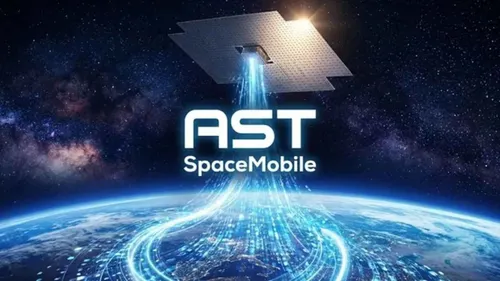
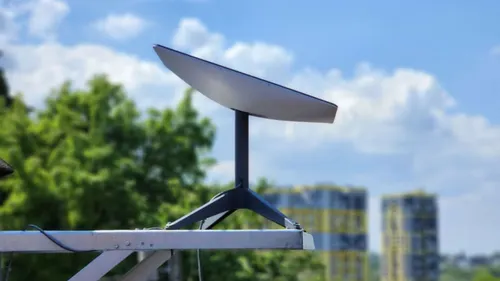
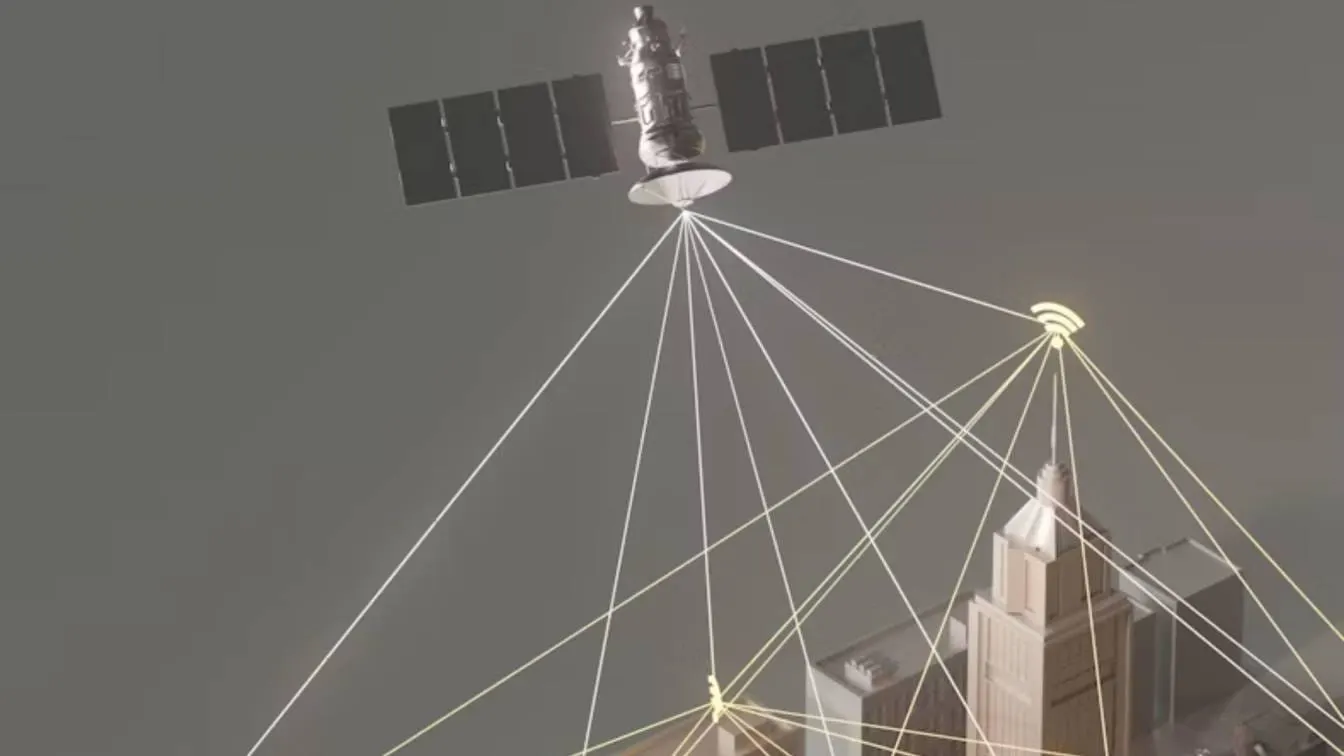
Supply is arriving from a long list, and Berg Insight names AST SpaceMobile, Geespace, Hubble Network, Kineis, Ligado Networks, Lynk, Myriota, Elveo Mobile, OQ Technology, Plan-S, Sateliot, Skylo and Starlink among the newer entrants. Several of those run standards-based networks rather than proprietary ones, using 3GPP narrowband IoT over non-terrestrial networks, which lets an ordinary cellular module reach a satellite without a dedicated terminal. That removes the hardware premium which kept satellite IoT a specialist purchase, and it is also why the price per connection falls.
The approaches underneath differ considerably. AST SpaceMobile is building large satellites for ordinary phones, Sateliot and OQ Technology are running small satellites for narrowband devices, and Starlink is adding device connectivity to a constellation built for broadband.
What Would Confirm The Number
The measure that settles a forecast like this is not how many devices get switched on but how many are still paying three years later. Repeat orders, continuing use after a pilot ends and revenue that survives a customer's budget review are the signals that distinguish a market from a procurement cycle. Those are also the hardest figures to obtain, because operators report subscribers rather than retention.
The current deployments give some sense of where the industry actually stands. Sateliot, one of the standards-based entrants, put five more satellites in orbit this month to reach 11 in total, and still describes its coverage as intermittent against a plan for more than 500. That is the position across much of the sector: real networks, real customers, and capacity that remains some distance from the service the forecasts assume.
Steady Growth, Explosive Forecasts
Satellite IoT has roughly doubled its subscriber base in four years, added credible new operators, and brought its connectivity onto cellular standards, which is a solid record by the standards of most emerging markets. The forecasts attached to it have consistently described something faster, with each annual edition pushing the destination out by a year and raising the assumed growth rate, while the actual base has climbed at a steadier pace than any of them projected.
Both things can be true at once, and the gap between them is the useful part. A business planning around 42M connections in 2030 is planning around a different market from the one that exists today, where 7M devices generate less than €400M a year between 44 operators, and the companies in it are competing hard on price before the volume has arrived.