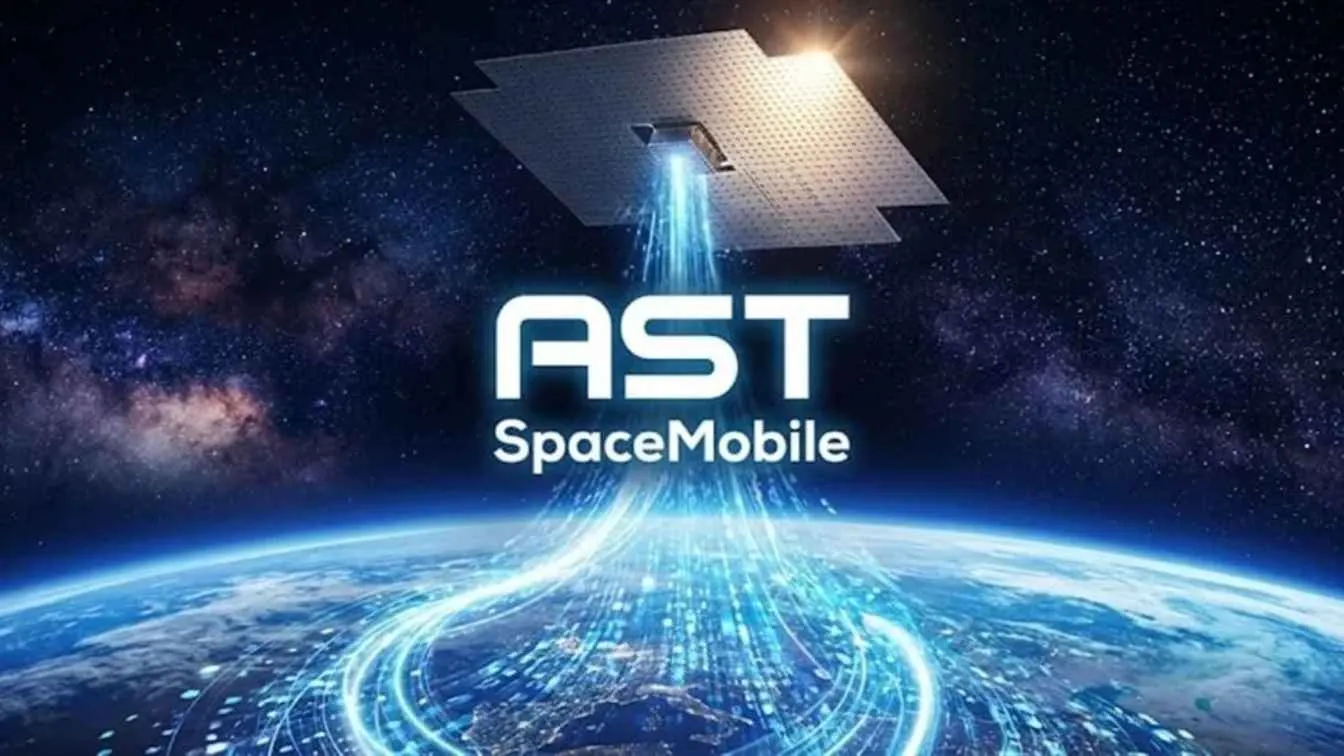
AST SpaceMobile has trucked three more of its BlueBird satellites from its factory in Midland, Texas, to Cape Canaveral in Florida, where they will wait for a ride to orbit on a commercial rocket. The shipment of BlueBirds 14, 15 and 16 was confirmed at the start of October. It follows the launch of three others in August and brings the company closer to the network it needs before its phone-from-space service can run without gaps.
“Another convoy is on the move,” the company posted on X, adding: “Next stop: orbit.” It has not said when the three satellites will launch or on which rocket, although after the August launch its founder and chief executive, Abel Avellan, said BlueBirds 14, 15 and 16 would “follow right after”.
Morning Tick first profiled AST SpaceMobile as a Texas startup betting everything on putting a mobile phone tower in space. The bet is still unfinished, and the company says reaching its 45-satellite target is what will give customers a steady connection and start regular commercial revenue.
A Cell Tower Above The Clouds
Most satellite phones need special handsets and bulky antennas. AST SpaceMobile is building a network that talks directly to the ordinary smartphones people already carry, so a phone that loses signal in a remote valley or out at sea could connect to a satellite overhead instead of a tower on the ground.
To reach a phone from orbit, each satellite unfolds a huge flat antenna. The company says its next-generation BlueBird spans nearly 2,400 square feet once deployed, more than three times the 693 square feet of its first five satellites. It can deliver peak speeds above 150 megabits per second (Mbps) to each area it covers, which the company says is enough for calls, video streaming and apps on a standard phone.
AST SpaceMobile does not sell to the public. It works through mobile operators, which offer the satellite link to their own customers, and says it has agreements with more than 60 carriers that together serve over 3B subscribers. AT&T and Verizon in the United States (US) are among its partners. AT&T also works with other satellite providers, and Morning Tick has reported on AT&T Business’s plan to offer Amazon Leo broadband, Amazon’s satellite internet service, to business customers alongside the carrier’s fibre and 5G (fifth-generation mobile) services.
AST SpaceMobile’s best-known rival is SpaceX, whose Starlink satellites already carry text messages to some phones through T-Mobile in the US. Morning Tick has also covered SpaceX’s plans for Starlink Mobile, its own move into mobile phone service. AT&T has pushed back on SpaceX’s ambitions: AT&T’s chief executive, John Stankey, called a rooftop cellular network proposed by SpaceX “not a viable strategy”.
The Road To 45
The company launched its first five BlueBirds in September 2024, then added BlueBird 6 in December 2025, BlueBird 7 in April 2026 and three-satellite batches in June and in August. The August launch lifted BlueBirds 11, 12 and 13 on a SpaceX Falcon 9 rocket. Each satellite needs a couple of weeks to unfold its antenna and pass checks before joining the network and carrying traffic.
A Falcon 9 can carry at most three of the large satellites, while Blue Origin’s bigger New Glenn rocket can carry eight but was grounded after a launch pad explosion on 28 May. AST SpaceMobile had aimed to reach 45 satellites by the end of 2026, but in mid-July it pushed that target back to early 2027.
Production is further ahead than launches. The company says it has built satellites up to BlueBird 50 at its Midland plant and has more than 20 further satellite structures being assembled. It is aiming for a pace of six a month and plans to finish the antennas for 50 BlueBirds by the end of 2026. Its long-term plan is a network of 248 satellites. The company says it now employs more than 2,250 people and has more than 500,000 square feet of facilities and holds more than 3,900 patent claims, granted or pending, on the technology.
Spectrum, Money And Patience
A phone-from-space network also needs radio frequencies to transmit on, and these are tightly controlled. Avellan met Brendan Carr, chair of the US Federal Communications Commission (FCC), at the end of September to push for wider access to those frequencies for satellite services.
The company backed an FCC proposal to open unlicensed frequencies to direct-to-device services (the industry term for satellite links straight to phones), and asked for the lower part of the 6 gigahertz (GHz) band to be included. With its partners, it also supported an auction of airwaves between 1675 and 1695 megahertz (MHz).
AST SpaceMobile does not yet have recurring commercial revenue. Its income so far comes from government contracts and advance payments from its carrier partners, and it has funded the build-out by borrowing and issuing new shares, leaving it with about $3B of long-term debt. Its shares have fallen by more than 40% over the past 12 months.
Avellan has kept the focus on the build itself, saying the company had invented “a new way to design, manufacture at scale, deploy, and fly lightweight composite stackable architecture”.
Each convoy from Texas narrows the gap between the satellites in orbit and the number the service needs, but the pace now rests on launch slots rather than production. How quickly rockets become available will decide when the network fills in.
For the carriers and the billions of phone users they serve, the promise is a signal that does not end where the towers do. AST SpaceMobile’s early-2027 target is the date when that promise is meant to become a working service, and the next launch of BlueBirds 14 to 16 will show whether the new timetable holds.