Monopulse, a drone maker with bases in Copenhagen, Denmark, and Vilnius, Lithuania, has raised more than €2M to build more of its surveillance drones, which are designed to keep working when an enemy tries to jam their signals. The company’s technology is already in use with the Lithuanian and Danish armed forces.
The round brought in the Lithuanian venture firm Coinvest Capital, the angel investor network NGL Ventures and the Silicon Valley startup accelerator Plug and Play, along with other backers in Lithuania and abroad. NGL’s angel syndicate, a group of individual investors who pool their money into a single deal, put in €560,000 from 68 people, making it the largest syndicate the network has assembled, according to the European technology site Tech.eu.
Monopulse will use the money to expand production, grow in Scandinavia and enter other international markets and fund more research and development (R&D).
“Customers demand secure manufacturing and resilient supply chains,” said Justas Poderys, its founder and chief executive.
Drones That Keep Flying When Signals Fail
Monopulse builds small reconnaissance drones for NATO militaries. The drones are used to watch an area from the air or the water without putting soldiers at risk. Such drones are typically sent to check a route ahead of troops, watch a border or spot activity before a unit moves.
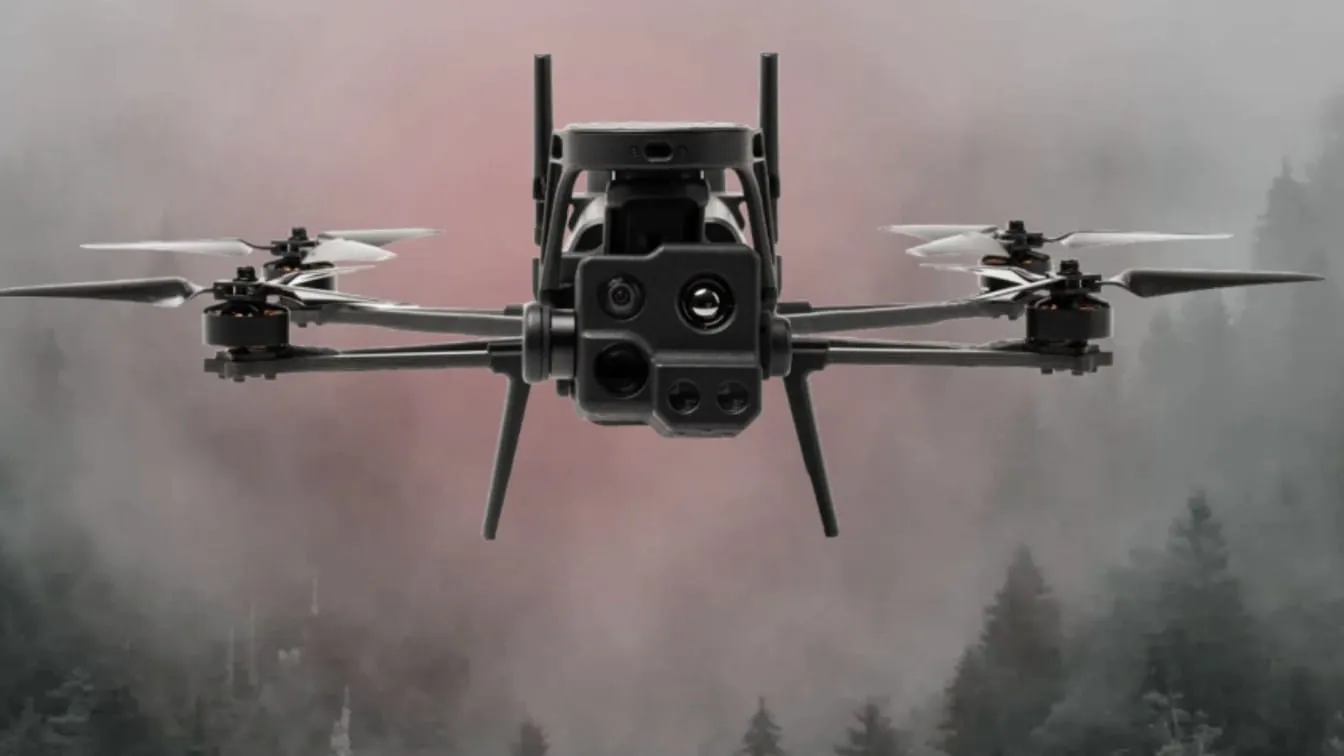
Monopulse’s main aircraft is the Falcon, a surveillance and reconnaissance drone in NATO’s Class I category. That class covers drones weighing less than 150 kilograms, and the Falcon sits in the class’s mini subcategory, small enough for troops to carry and launch in the field. One version, the Falcon MK3S, comes in variants for intelligence, surveillance and reconnaissance work, and the company also makes a water-based system called Hydrohex.
In modern conflicts, armies routinely use electronic warfare, the jamming or blocking of radio signals, to cut drones off from their operators or confuse their navigation. Monopulse designs its drones to hold their communications link or carry on flying on their own when signals are jammed or lost, including when the Global Positioning System (GPS) used for navigation is unavailable.
The Falcon has night vision and a range of up to 15 kilometres, according to the Ukrainian technology news site AIN.UA. It has no connection to the cloud, and the data it gathers is stored locally rather than sent to outside servers.
To keep its drones working under jamming, Monopulse combines aerospace engineering with electronics, computer vision, artificial intelligence (AI) and sensor fusion, which merges readings from several sensors into one picture.
The company develops its core hardware and software in-house, designing its own flight control computers, sensor modules and airframes, as well as the flight software and ground tools operators use to control the drones. Its lightweight drones are built for small teams working at short range.
Built In Europe, From Allied Parts
Monopulse says it sources critical components from suppliers in the European Union (EU) and allied countries. Beyond the armed forces, it designs drones for government, law enforcement, security and industrial customers.
The company was founded in 2021 by engineers from the defence industry, including Poderys and Alexander Vesterhauge, its chief mechanical engineer. It now has a team of 14 people, among them engineers, researchers and former military personnel, and trades in Lithuania as MNP Technologijos.
Monopulse also works with partners in Ukraine, where the war has turned small drones and the electronic warfare used against them into a central part of the fighting. Both sides use jammers widely, and the contest between drones and the systems built to stop them shifts from month to month.
Poderys has said the war showed how much modern warfare now depends on information technology, and that the main challenge is keeping pace with how quickly the technology changes.
“What is considered state-of-the-art technology today can be obsolete a year later,” he said last year, adding that drone makers have to keep developing new versions even when that limits mass production.
Feedback from military and law enforcement users in the field shapes those new versions.
Funding For A Growing Defence Scene
The new round follows a €1.12M loan from ILTE, Lithuania’s national development bank, in November 2025, under a programme called “Billion for Business” that supports the defence industry and digital projects. The company said the loan would help it expand drone production, fill orders in Lithuania and abroad, develop more key components in-house and strengthen its supply chain with allied partners.
Lithuania and Denmark have both raised defence spending since Russia’s full-scale invasion of Ukraine in 2022. The company currently supplies customers in Scandinavia and the Baltics and is looking for buyers in Western Europe, where it has yet to announce a customer.
Other companies are also building technology for militaries that expect their equipment to be targeted. Morning Tick has covered Kraken, a system from the Swedish defence group Saab that puts drone radar on an uncrewed boat. It has also covered Traysar, a defence startup from Austin, Texas, that wants to put AI data centres for militaries underground with Armada to protect them.
From Baltic Orders To NATO Markets
Monopulse has not said how many drones it builds or sells, or what its products cost. Together with last year’s ILTE loan, it has now raised more than €3M in just under a year. The new funds give it room to scale production as it tries to win orders from other NATO members while keeping up the pace of new versions that Poderys says the market demands.
The round is small next to the largest defence deals, but NGL’s 68-person syndicate shows private backers are willing to put their own money into a company that builds equipment for the region’s armed forces. For Monopulse, the next test is whether it can win contracts with militaries in Western Europe and other NATO countries.