
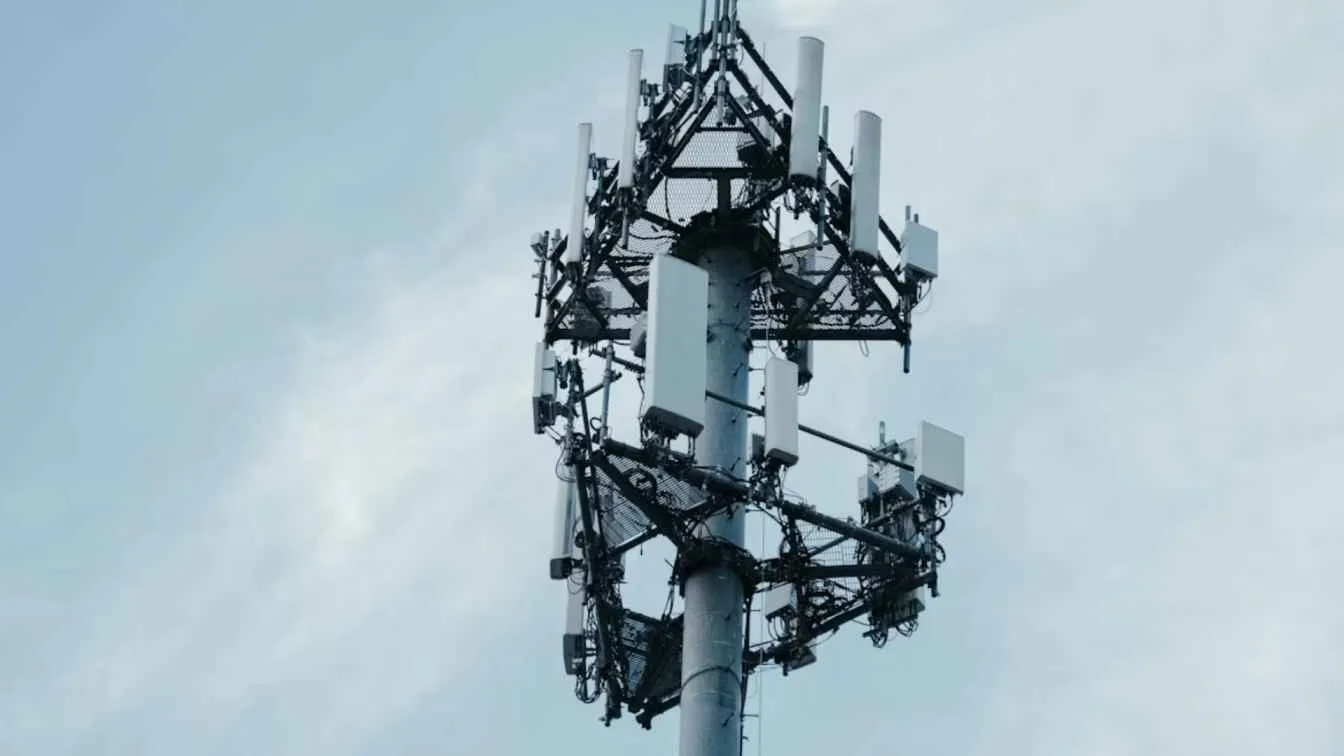
Most discussion about AI and mobile networks focuses on data centres and radios. Semtech is pointing at a less visible link in the chain: the short fibre connections between a cell site's radio units and the baseband equipment that processes their signals. It says those links need to double in speed to keep up with how AI is changing mobile traffic.
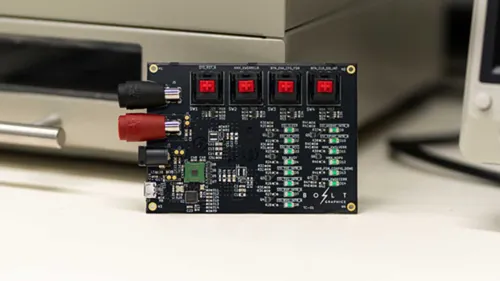
The company has put its 50G fronthaul portfolio into full production, with chips designed to move fronthaul links from 25 Gbps to 50 Gbps for 5G-Advanced deployments. Semtech showed the portfolio at the ECOC 2026 optical communications conference in Málaga, Spain, which ran from 21 to 23 September.
The driver, according to Semtech and industry group MOPA, is the uplink. As devices send more data to the cloud for AI processing, operators expect the traffic flowing from devices into the network to grow sharply.
Why The Uplink Is Suddenly Important
Mobile networks have long been built around downloads: video, web pages and app updates flowing to phones. AI changes that balance. Devices that rely on cloud-based AI often need to send images, video, audio and sensor data upstream for analysis before a response comes back.
The Mobile Optical Pluggables Alliance (MOPA) says operators may need three to five times more uplink capacity as phones and other devices hand AI workloads to the cloud. That pressure lands heavily on fronthaul, where the way radio signals are encoded for transport already consumes much of the available capacity.
"AI is rewriting the rules of mobile traffic, and the uplink is now one of the critical dimensions," said Raza Khan, director of wireless marketing in Semtech's Signal Integrity Products Group.
Where IoT Fits In
Many of the devices expected to push uplink demand are IoT and edge devices, not just phones. Security and inspection cameras, smart glasses, connected vehicles, drones and robots all generate continuous streams of sensor data. When they depend on cloud AI to interpret that data, they add to the upstream load.
That trend runs alongside another: more AI processing moving onto devices themselves, which reduces how much raw data needs to be sent. We looked at that side in our piece on the cellular module becoming an AI computer, and at AI vision in a single module in our coverage of Quectel's SE200ZC-AP AI module. In practice, networks will likely see both: smarter devices, and more of them sending richer data upstream.
What Semtech Is Shipping
Semtech's portfolio pairs clock and data recovery (CDR) chips with a transimpedance amplifier (TIA), the components inside optical transceivers that clean up and amplify signals as they travel over fibre. The company is offering three combinations for different fronthaul designs:
· The GN2255 CDR with the GN1700TI TIA, for 10 km duplex links.
· The GN2255S CDR with the GN1700TI TIA, for 15 km bidirectional links over a single fibre.
· The GN2256 CDR with the GN1700TI TIA, for wavelength division multiplexing (WDM) and longer-reach designs.
The chips come from Semtech's existing ClearEdge, Tri-Edge and FiberEdge lines, and the company is pitching them as a path that runs into early 6G networks around 2030.
Ecosystem Support
Optical module makers are the direct customers for these chips. Source Photonics, which builds transceivers, backed the launch.
"Semtech's CDR and TIA portfolio gives us the flexibility and performance we need to deliver across the full range of fronthaul architectures," said Frank Chang, chief technology officer at Source Photonics.
MOPA itself was set up to align the industry on standard optical pluggables for mobile networks. Its founding board includes Ericsson, Nokia, Sumitomo Electric, Coherent, Lumentum and Semtech, so its view of uplink growth reflects the thinking of major radio equipment vendors as well as optical suppliers.
"The optical layer is the foundation of the AI-era mobile network," said Stefan Dahlfort, president of MOPA.
What 5G-Advanced Adds
5G-Advanced is the next stage of 5G standards, bringing improvements in capacity, positioning, energy efficiency and support for AI within the network itself. Radio equipment vendors are introducing AI-ready radio units that process more data and use wider bandwidth, both of which increase the load on fronthaul links.
Moving from 25G to 50G optics gives operators headroom without laying new fibre, since faster transceivers can run over existing fibre routes. That matters because fibre construction at cell sites is often slow and expensive.
The Practical Questions For Operators
For mobile operators, adopting 50G fronthaul raises a few decisions:
· Whether uplink growth in their networks justifies an upgrade now or later.
· How new 50G optics fit with existing radio units and baseband equipment.
· Which fronthaul designs, such as duplex, single-fibre bidirectional or WDM, suit their sites.
· How power use and operating temperature affect outdoor installations.
The move also depends on radio vendors supporting 50G interfaces in their equipment, which industry activity suggests is already under way.
The Bottom Line
Semtech's 50G fronthaul chips address a part of the network that rarely makes headlines but could become a bottleneck as AI shifts mobile traffic toward the uplink. With the portfolio now in full production and backed by the MOPA industry group, the optical side of the 5G-Advanced upgrade is starting to take shape.
For the IoT world, the message is that networks are preparing for devices that send far more data than before. How quickly operators upgrade will depend on how fast AI-driven uplink demand appears in real traffic, not just in forecasts.