

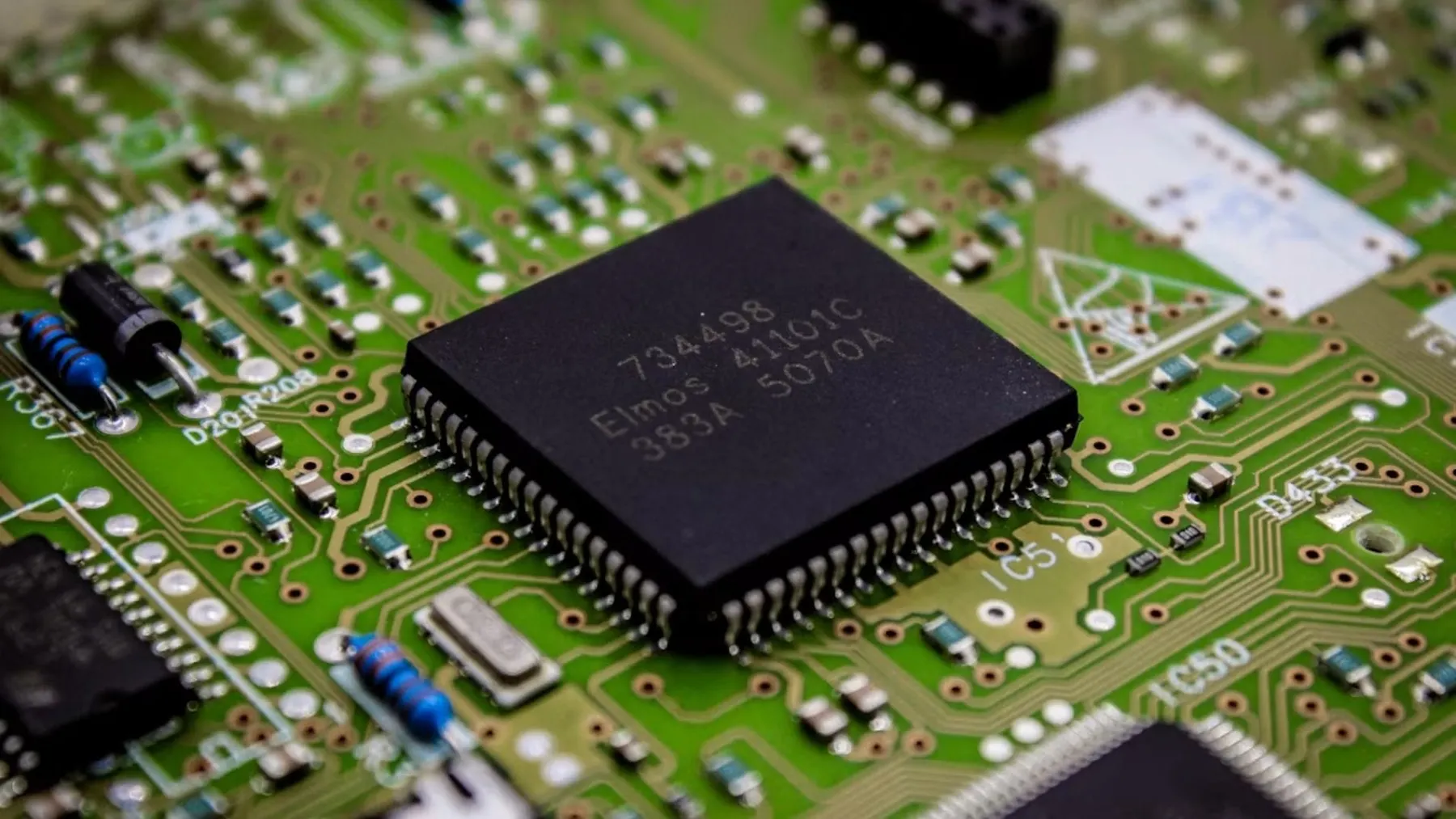
Building a camera that can recognise what it sees has traditionally been a hardware project in its own right. A device maker needs a processor capable of running AI models, an image signal processor to turn raw sensor data into usable pictures, video encoders, memory, interfaces for cameras and networks, and an operating system to tie them together. Each of those choices takes engineering time, and each board has to be designed, tested and certified.
Quectel, the world’s largest supplier of cellular IoT modules by shipments, wants to take most of that work off the table. On 21 September 2026, the company introduced the SE200ZC-AP, a smart module that packages AI processing, multi-camera support and industrial connectivity into a single 40 by 40 millimetre component.
The launch is a small product announcement in a crowded month. It is also a clear example of a broader trend: the modules that once only connected devices to networks are becoming the computers inside them.
What Quectel Announced
The details come from IoT Business News’ report on the launch.
The Processor And AI Engine
The SE200ZC-AP is built on Rockchip’s RV1126B platform, with an RV1126BJ variant. It uses a quad-core Arm Cortex-A53 processor for general computing and a neural processing unit rated at 3 TOPS, or three trillion operations per second, for running AI models.
The neural processor is the part that matters most for vision applications. It handles tasks such as detecting objects, classifying images or recognising specific events in a video stream, work that would be slow or power-hungry on the main processor alone.
Cameras And Video
The module supports up to five cameras. It includes a 12-megapixel image signal processor with high dynamic range, which helps cameras cope with scenes that mix bright and dark areas, and an 8-megapixel AI image signal processor.
For video, it can encode 4K footage at up to 45 frames per second and decode 4K at up to 30 frames per second, and it supports multiple simultaneous video streams. That combination suits devices that need to record, analyse and transmit video at the same time.
Connections And Interfaces
The SE200ZC-AP does not include a cellular modem itself. Instead, it connects to external Wi-Fi, Bluetooth and cellular modules, with LTE Cat 1 given as an example, as well as GNSS positioning. On the wired side, it offers Gigabit Ethernet, USB 3.0 and two CAN FD interfaces. CAN FD is a bus widely used in vehicles and industrial equipment, which signals where Quectel expects the module to be used.
Size, Temperature And Software
The package measures 40 by 40 millimetres. It comes in commercial and industrial grades, with the industrial version rated to operate from -35°C to 80°C. It ships with Linux, based on Debian, preloaded.
Quectel describes the module as coming soon for customer sampling and evaluation. Pricing and volume availability were not disclosed.
Why A Vision Module Matters
Zeljko Maric, a product development manager at Quectel, summed up the pitch: “With SE200ZC-AP, we’re giving customers a single, ready-to-deploy platform that combines vision, AI, and connectivity so they can focus on their application instead of reinventing the hardware underneath it.”
Skipping The Custom Board
For a company building an AI camera or a machine vision system, the alternative to a module is usually a custom board designed around a processor chip. That route offers full control but requires specialist hardware engineering, careful layout for high-speed signals, thermal design and a long validation process.
A module packages the difficult parts. The device maker designs a simpler carrier board, connects cameras and interfaces, and focuses its effort on software and the product itself. For smaller companies, or for larger ones launching many product variants, that can shorten development considerably.
One Platform, Many Products
The same module can sit inside several different products. A company might use it in an indoor security camera, an outdoor traffic sensor and a quality-inspection camera for factories, changing only the carrier board, enclosure and software. Sharing a common platform across products simplifies software maintenance, supply planning and certification.
This is the logic that made cellular modules successful. Quectel is applying it to AI vision.
Where It Could Be Used
Quectel lists smart security, industrial automation, intelligent vehicles, robotic vision and smart home devices as target applications. Each uses the module’s features differently.
Security Cameras
Security is the most obvious fit. A camera that can detect people, vehicles or unusual activity locally only needs to send alerts or short clips, rather than streaming continuous video. The support for several cameras also suits multi-view systems covering wide areas or entrances from different angles.
Factories And Machines
In industrial automation, the module’s vision capabilities suit inspection and monitoring: checking products on a line, reading gauges or watching for safety issues. The Gigabit Ethernet and CAN FD interfaces allow it to connect to industrial networks and machine controllers. We looked at how factories connect equipment in our explainer on industrial IoT and industrial connectivity.
Other companies are chasing the same opportunity. In September, electronics manufacturer USI also launched an AI camera for factory inspection, aimed at defect detection and assembly checks on production lines.
Vehicles And Robots
For intelligent vehicles, the combination of multiple cameras, CAN FD and positioning points towards uses such as driver monitoring, cargo monitoring or video telematics in commercial fleets. Vehicles have become some of the most data-rich connected devices, a shift we traced in how IoT rewired the car.
Robotic vision is a related case. Mobile robots and robotic arms need cameras to see their surroundings and identify objects. A compact module with a neural processor can handle simpler vision tasks on the robot itself, while more complex reasoning runs on larger computers.
Smart Home
In the home, the module could sit inside doorbells, indoor cameras or appliances that recognise objects or people. The commercial temperature grade suits these indoor products, while the industrial grade targets outdoor and harsh environments.
Local Vision Versus Cloud Vision
The case for a module like the SE200ZC-AP rests on a wider argument about where video should be analysed.
The traditional approach sends camera footage to a server or cloud service, where powerful computers run the analysis. That works well when bandwidth is plentiful and cheap, and when a delay of a second or two does not matter. It also makes it easy to update models centrally and to run large, accurate models that would not fit on a small device.
Local analysis turns that around. The camera processes its own video and sends only what matters: an alert, a count, a cropped image or a short clip. That reduces the amount of data leaving the device, which lowers connectivity costs and makes cellular or low-bandwidth links practical. It also keeps working if the network drops, and it can keep sensitive footage on the device, which may help with privacy obligations in homes, workplaces and public spaces.
In practice, many systems will combine both. A camera module handles the first pass, deciding what is worth attention, while a server or cloud service handles deeper analysis, long-term storage and model training. The SE200ZC-AP is aimed at that first pass: fast, local and efficient judgements close to the sensor.
For buyers, the question is not which approach is better in general, but which tasks need to happen on the device and which can wait for a larger system. That balance will differ between a factory inspection line, a delivery van and a front door.
What 3 TOPS Means In Practice
Headline AI performance figures are easy to overread. A 3 TOPS neural processor is well suited to the kinds of vision models commonly used at the edge: object detection, image classification and recognising specific events. It is not designed to run large language models or the complex multi-step reasoning now appearing on much larger edge computers.
That is not a limitation for most of the module’s target uses. The majority of industrial and security vision tasks are narrow: is there a person in this zone, is this part defective, has this door opened. Small, efficient models handle those questions well, and running them locally keeps latency low and reduces the amount of video that has to travel over a network.
The actual performance a product achieves will depend on the models chosen, how they are optimised for the neural processor, and how many camera streams are processed at once. Those details will only become clear as customers build products on the module.
Connectivity Outside The Module
One design choice stands out. Unlike Quectel’s traditional cellular modules, the SE200ZC-AP does not include a modem. Wireless connectivity comes from separate Wi-Fi, Bluetooth and cellular modules.
That separation has advantages. A device maker can choose the right network for each product, such as Wi-Fi for indoor cameras, LTE Cat 1 for vehicles or remote sites, or no wireless at all for devices connected by Ethernet. It also lets the vision platform and the radio be updated independently.
The LTE Cat 1 example is notable. Cat 1 bis, a single-antenna version of Cat 1, has become the fastest-growing cellular technology for IoT, driven partly by cameras and trackers that need moderate bandwidth. IoT Business News reported in September that Cat 1 bis accounted for more than half of the growth in cellular IoT module shipments in the first half of 2026.
Quectel’s Position In The Market
Quectel enters the AI vision space from a position of strength in connectivity. According to IoT Analytics’ latest figures, the company was the largest cellular IoT module supplier by shipments in the first half of 2026, with about 38% of shipments outside China. That gives it existing relationships with a large base of device makers, many of whom are now looking to add AI to their products.
The SE200ZC-AP fits a wider move by module makers into processing. Quectel has offered smart modules running full operating systems for some time, and competitors are adding AI in different ways. Telit Cinterion, for example, has detailed software that runs small machine learning models directly on its cellular modules. Quectel’s approach with this product is more hardware-focused: a dedicated vision processor designed around cameras.
What Buyers Should Check
For device makers considering the module, several points are worth confirming as it moves from announcement to sampling.
Availability and pricing are the first questions. The module is listed as coming soon for sampling, and no pricing has been published.
Power consumption and thermal behaviour were not detailed in the announcement. For sealed outdoor cameras or vehicle installations, these can decide whether a design is practical.
Software support matters as much as hardware. Buyers should ask which AI frameworks and model formats are supported on the neural processor, what tools are provided for converting and optimising models, and how long the Linux distribution and security updates will be maintained.
Security features, including secure boot and update mechanisms, are increasingly important, particularly for products sold in Europe as new cybersecurity rules take effect.
Finally, certification and long-term supply should be confirmed, especially for industrial and vehicle products expected to stay in production for many years.
The Module As The Brain
The SE200ZC-AP is one product among many launched in September. Its significance lies in what it represents. For years, a module was the part of a device that talked to the network. Increasingly, it is also the part that sees, analyses and decides what is worth reporting.
For device makers, that shift lowers the barrier to building AI-enabled products. For the wider IoT industry, it suggests that on-device intelligence will spread not only through expensive, specialised hardware, but through the standard building blocks that already sit inside millions of connected devices.