

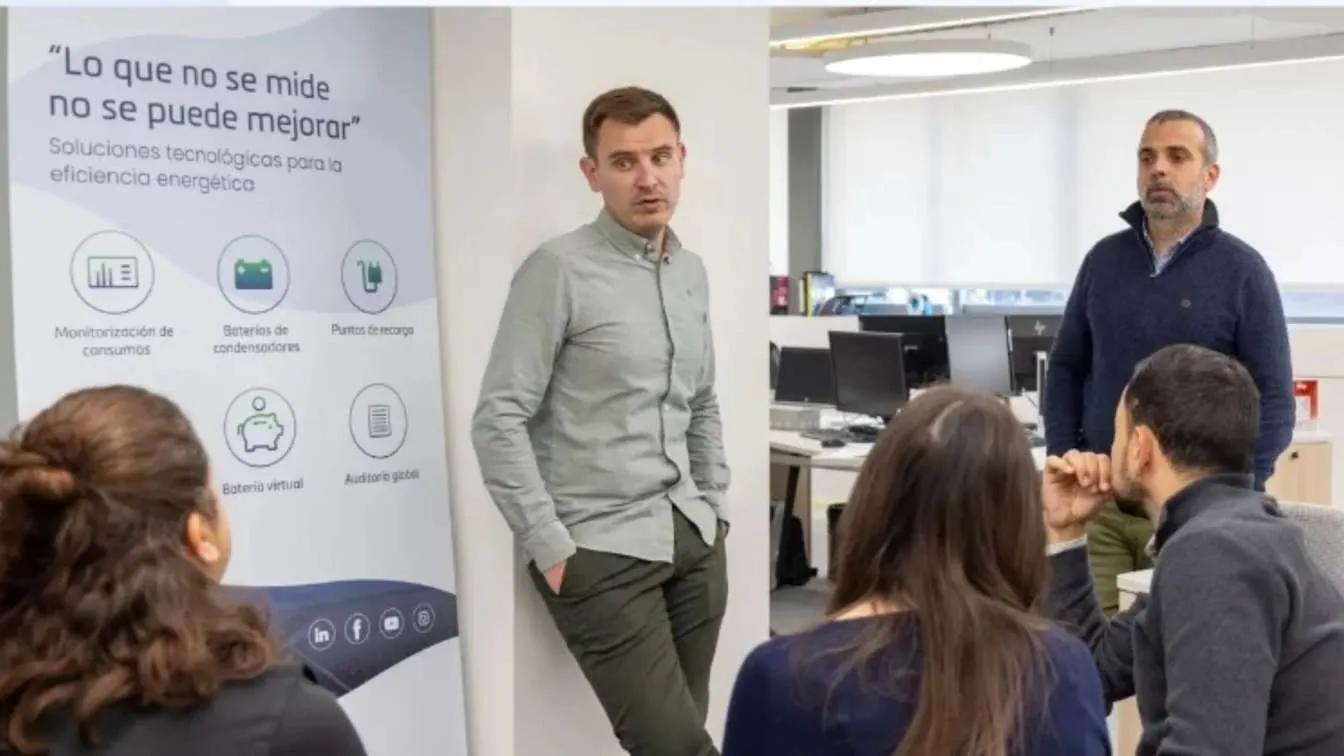
Linkener has closed a €7.5M funding round led by the Klima Energy Transition Fund, which is run by Spanish investment firm Alantra. The startup, based in Valencia, Spain, makes software that follows a company’s electricity use in real time and checks every power bill against it.
The money came in as a capital increase on market terms, meaning Linkener issued new shares to investors rather than borrowing. Neither the size of Klima’s stake nor Linkener’s valuation has been made public.
GoHub Ventures, the venture fund tied to the Valencia water group Global Omnium, stays on as a shareholder after first backing Linkener in 2019. More than half of the new money is set aside for organic growth, mainly product development and sales. That includes artificial intelligence (AI) models that check bills, spot unusual use and find savings. Buying other companies is the other main part of the plan.
Chief executive José Ignacio Ruiz says business energy management is still stuck in habits from 40 years ago, and expects the round to speed up change in a very fragmented sector. Iñigo Echaniz, a partner at Klima, makes a similar case. In his view, Linkener brings together its own technology, independent energy data and direct ties with thousands of customers.
Meters, Bills And An AI Assistant
Linkener’s service starts at the electricity meter. It fits its own metering equipment to each supply without building work or power cuts and reads data as often as once a minute. Companies that would rather skip the hardware can link the official data held by their local grid operator instead, which the company says takes under an hour.
From there, the software compares each bill with what the site actually used and what its contract says, then flags errors worth claiming. It also suggests changes to contracted power, the capacity a business pays for whether it uses it or not, and sends alerts when use jumps. None of this requires a change of electricity supplier.
Link·IA, an AI assistant built into the platform, answers questions about a site, a bill or a sudden spike, and draws up reports across all of a customer’s supply points. Linkener’s own engineers then carry out the savings, from adjusting power and removing penalties to fitting solar panels and batteries. The company says it has completed more than 400 solar and battery storage projects across Spain.
Spain’s mobile operators are switching off their older 2G and 3G networks, which many meter modems still rely on to send readings. Linkener says its modems now run on 4G, LTE, 5G or a wired internet connection. Meters across Europe face the same network switch-offs as utilities plan their next generation of devices.
Growth Plans Include Acquisitions
Linkener puts its customer count at more than 2,000, from self-employed workers to large companies, with 10,000 electricity supply points under management. Together they use 1.7 terawatt-hours (TWh) of energy a year, which the company compares to the needs of a city of 400,000 people. Supermarkets, hotels, factories, healthcare and public bodies are among the sectors it targets.
Energy advisers, electricity retailers and engineering firms also use the platform to manage their own clients, and the website lists more than 500 such partners. Ruiz said revenue passed €5M in 2025 and that the business is profitable, though Linkener has not published accounts alongside the round.
The stated goal is to triple in size through a mix of organic growth and deals. Ruiz said Linkener wants companies that add market reach, talent or products useful across its whole range, and that talks with possible targets are going well. No names or timeline have been given.
From Engineering Firm To Software
Linkener started in 2014 as an engineering firm, its website says, and later built its software business on top of that work. It now has more than 40 staff and works from the GoHub building in Valencia, an innovation space run by Global Omnium.
Global Omnium was a Linkener customer for about a year and a half before it invested €1.9M in 2019, after Linkener’s system helped cut the group’s electricity costs by 15%. At the time, the startup had 16 employees, revenue of about €600,000 and early contacts in Portugal through existing clients.
A Fund Focused On The Energy Shift
Alantra manages Klima, and Enagás, the Spanish gas grid operator, backs it through its corporate venturing programme, Enagás Emprende. The fund closed at €210M, well above its first target, with the European Investment Fund among its backers.
It buys minority stakes in companies tied to the move away from fossil fuels, a remit that covers energy efficiency and digital tools alongside renewables, storage and hydrogen. Echaniz described business energy management as a fragmented field with plenty of room to go digital, and said Klima wants to help Linkener become a leading technology platform in it.
Linkener heads into its next stage with a new lead investor, its first backer still on board and a plan to grow by buying companies as well as building software. Beyond the amount, the deal terms remain private, and the customer and revenue figures come from the company itself.