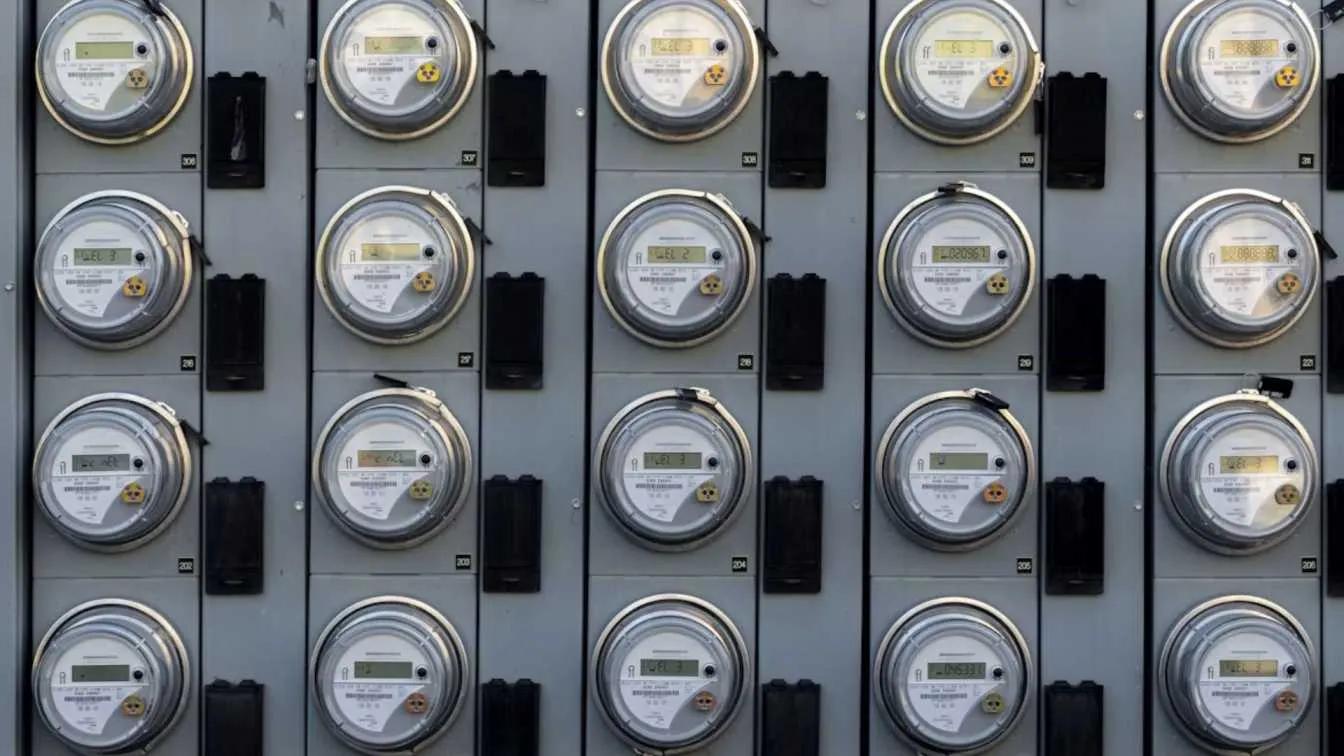
Two out of every three electricity customers across the EU, the UK, Norway and Switzerland had a smart meter by the end of 2025, and the work that remains looks very different from the first wave. In the 20th edition of its Smart Metering in Europe report, published in July, the Swedish research firm Berg Insight forecasts that utilities will install more than 130 million smart electricity meters between 2025 and 2031, lifting the installed base to about 360 million and coverage to 85%.
Much of that volume will replace meters rather than reach new homes. Berg expects second-generation swaps, where utilities pull out first-wave smart meters that have reached the end of their life, to make up between 20% and 50% of shipments each year, or roughly 4 million to 9 million meters annually.
The map is shifting too, because Central, Eastern and Southeastern Europe took more than half of all smart electricity meter shipments in 2025, up from 32% a year earlier. Poland led Europe with about 2.5 million meters shipped, ahead of Germany at more than 1.9 million and the UK at about 1.8 million, while France and Spain made the top five on the strength of replacements.
Poland And Germany Now Set The Pace
Poland's lead comes from a legal deadline, since the country's amended energy law requires distribution companies to fit remote-reading meters for at least 80% of customers by the end of 2028, including 80% of households. PGE Dystrybucja alone must equip about 6 million customers by 2030, and it awarded the first phase of that work to Elgama Elektronika, the Polish subsidiary of China's Jiangsu Linyang Energy, according to Enlit World.
Germany is finally moving after years of delay, though not fast enough for its regulator. In March 2026, the Bundesnetzagentur opened proceedings against 77 metering operators that had not started rolling out smart metering systems, after the legal quota of 20% for their obligated customers fell due at the end of 2025. "The Bundesnetzagentur will vigorously pursue the implementation of the legal requirements," said its president, Klaus Müller, who described smart meters as central to digitalising the electricity system.
Britain's Unfinished First Wave
Britain shows how long a first wave can take and how untidy it can leave things. Great Britain had 40 million smart meters, 72% of all meters, at the end of June 2026, government statistics show. Yet 3.1 million of them were running as ordinary meters rather than in smart mode, and more than half of the 1.1 million meters that large suppliers installed in the second quarter replaced smart meters already on the wall rather than converting traditional ones.
The Second Wave Runs On Different Networks
The replacement cycle matters for IoT because utilities rarely buy the same technology twice. Power line communication, or PLC, which sends data over the electricity cables themselves, dominated Europe's first wave and still accounts for most meters in service, but Berg expects wireless links to carry more than half of new meter shipments, peaking at about 62% in 2028.
Within that shift, the share going to LTE-M and NB-IoT, the two low-power cellular technologies that mobile operators run for devices sending small amounts of data, should more than double, with large projects already under way in the Benelux, the Nordics, the Baltics and Southern Europe. A cellular meter spares a utility from building and maintaining its own radio network, although it ties the meter's working life to an operator's network plans.
Finland's Elenia shows what a second-wave project looks like, having replaced the first smart meters of nearly 400,000 customers with new meters from Aidon that report over Elisa's IoT network and can take readings every 15 minutes. That quarter-hour detail matters more each year as Europe's electricity markets move to 15-minute settlement and customers adopt dynamic tariffs, heat pumps and home batteries.
Long Lives, Short Networks
Network lifetimes cut both ways, because many first-wave meters that relied on 2G or 3G modems now face switch-offs, a problem we traced in our look at the UK switch-off. Utilities choosing cellular for the second wave will need modems and SIMs that can outlast at least one more network change, which is why eSIMs that can switch operator remotely, like those Brazil's Sabesp chose for 4.4 million water meters, are drawing interest from utilities.
Gas Meters Follow, More Slowly
Gas lags electricity, with 48% of gas customers across the region on smart meters at the end of 2025, and Berg expects that share to reach 62%, or about 78.8 million customers, by 2031. The UK shipped more than 1.4 million smart gas meters in 2025, followed by Poland, which has started a large project of its own, while Berg expects Italy to become the largest gas market from 2027 and Spain to account for 22% of yearly shipments by 2031.
A Vendor Market In Flux
The suppliers behind these meters are rearranging themselves at the same time. Landis+Gyr, long one of Europe's largest meter makers, completed the sale of its EMEA business to investment firm AURELIUS at the end of March to focus on the Americas and Asia-Pacific, and the European unit, with about 2,800 staff and five factories, now trades as EYKON.
EYKON has already started narrowing its focus, since on 22 September it agreed to sell its water meter business to Sensus International, another AURELIUS company, so it can concentrate on electricity metering, connectivity and utility software. It competes with Itron, Hubbell's Aclara, Diehl, Sagemcom, Kamstrup and Iskraemeco, as well as Chinese makers such as Kaifa and Hexing, which Berg lists among the vendors active in Europe.
Europe's Next Meter Is A Network Device
Europe's first smart meter wave was a construction job measured in installations per day, but the second behaves more like an IoT project, with utilities choosing networks, modems and data platforms that must work for 15 years or more. That shift favours mobile operators, module makers and eSIM suppliers, which gain long, steady contracts, and it rewards meter vendors that can sell software and connectivity rather than hardware alone.
For utilities, the lesson from Britain's 3.1 million meters stuck in ordinary mode and Germany's missed quota is that fitting a meter is the easy part, and keeping it connected and useful is where the cost sits. Poland's 2028 deadline will be the first big test of whether a late starter can install that many meters that quickly without leaving the same gaps behind.