Holo, a startup whose software plans and runs marketing for small businesses, has taken in €5M in a seed round. The company, based in Vilnius, Lithuania, says Luxembourg-based investor Market One Capital led the investment.
Silicon Gardens, FirstPick, Leonis Capital, NGL and Tekton Ventures joined the round, along with business angels. Holo plans to use the money to build out the autopilot side of its product, reach more small businesses and grow its team in Vilnius.
Customers start by typing in their website address. Holo reads the site to work out what the business sells and how it talks, then proposes a plan: where to market, what to run in each place and what to leave out. “Every business on Holo teaches the platform something about what works,” said Deividas Kovger, co-founder and chief executive.
How The Marketing Tool Works
From that plan, Holo writes ads, social media posts, emails and search engine optimisation (SEO) content in the brand’s own voice, then lays it all out in a calendar. Owners can review each piece, ask for changes and approve it before it goes out on their connected accounts. Holo’s website lists Meta ads, Instagram, Facebook, TikTok, LinkedIn, Pinterest, email and search among its channels.
Owners can also hand chosen tasks to autopilot, so Holo runs them without asking for approval each time. Holo’s website says the software tracks how campaigns perform and can shift ad budget away from what isn’t working. Holo says it builds on AI models made by other companies and adds its own technology on top.
Google has told site owners to check AI-generated content for accuracy before it goes live, which covers the kind of search material Holo writes. Holo’s website says content goes out only with the owner’s approval, with autopilot switched on for the tasks owners pick. It also says its models are not trained on customer data.
Growth Figures The Company Reports
Holo, founded in 2025, says it reached $5M in annual recurring revenue (ARR) within 252 days. Co-founder Aleksandras Urbanavicius, who leads growth, said “more than 20,000 businesses already pay for Holo”, and the company says those customers are spread across more than 100 countries.
Holo’s own homepage shows a much lower count, 4,268 customers, and none of these numbers has been checked independently. The company also says it had raised less than €1M before this round.
“Most small business owners we talk to are great at what they do,” Urbanavicius said, adding that “almost none of them started a business to do marketing”. Kovger said the new money would let more of the work run on autopilot, with owners stepping in only when they want to.
Founders Who Started With Online Stores
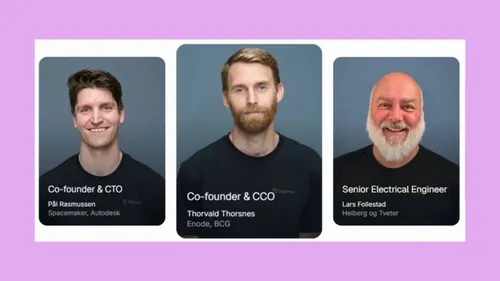
Kovger has spent eight years in marketing and customer retention. He led email marketing for fast-growing direct-to-consumer (DTC) brands, among them Burga, and co-founded monkeflow, a set of AI tools for email marketing and design.
Holo says its founders began as teenagers building online stores from their bedrooms, and that the team worked with brands such as Sintra, Pulsetto and Moerie before starting the company. Karolis Vaiginis leads design and Arnas Puidokas is chief technology officer.
FirstPick, a Vilnius venture firm, says it was the first to back the team. It describes Holo’s founders as young people who had “little outside validation and no track record at launch”.
The Investors Behind The Round
Market One Capital describes itself as a seed fund for marketplaces and platforms with network effects across Europe. Its partner Michał Mroczkowski said “great products usually come from people who’ve lived through the problem themselves”.
Mroczkowski added that content is “basically free to produce now”, while knowing what actually sells takes context and hands-on experience. Holo’s homepage carries a line from a Market One Capital partner: “Holo is doing for marketing what Lovable did for software engineering and Shopify did for commerce.” Lovable is a Swedish startup whose AI builds apps from plain text instructions.
Leonis Capital, another investor in the round, says it backs startups that are AI-native, meaning built around AI from the start. FirstPick launched a €25M fund in March for early Baltic startups, with the state-backed Lithuanian investor ILTE as its anchor.
Small Firms Take Up AI Tools
In the United States, 58% of small businesses said they used generative AI in 2025, up from 40% a year earlier, in a survey by the U.S. Chamber of Commerce. Generative AI is the kind that produces text, images and other content.
Across the European Union (EU), 20% of companies with ten or more staff used AI in 2025, up from 13.5% in 2024, Eurostat figures show. About 9.5% used it to make images, video or audio, and 8.8% to write text or produce speech. Lithuania’s share rose 12.5 percentage points, the third-biggest jump after Denmark and Finland.
Sintra, another Vilnius startup and one Holo’s team has worked with, sells AI helpers that handle social media, customer support and admin work for small firms. It raised a $17M seed round in June 2025, when it said it had more than 40,000 paying customers.
Where Holo Stands Now
Holo now has €5M from a group led by Market One Capital, and will spend it on more autopilot features, reaching more small businesses and a bigger team in Vilnius. Owners would still be able to review and approve what goes out, or step back and let the software run.
The growth figures behind the round are large for a company founded in 2025, but they come from Holo alone, and its own website gives a much lower customer count than its founders quote. How those numbers hold up will be the clearest test of the business.
The wider setting works in its favour. Small firms on both sides of the Atlantic are taking up AI tools quickly, and Lithuania recorded one of the biggest rises in company AI use in Europe last year. Holo also shares its home city with Sintra, which sells AI helpers to the same kind of customer, so it is chasing a market that already has competition close by.