

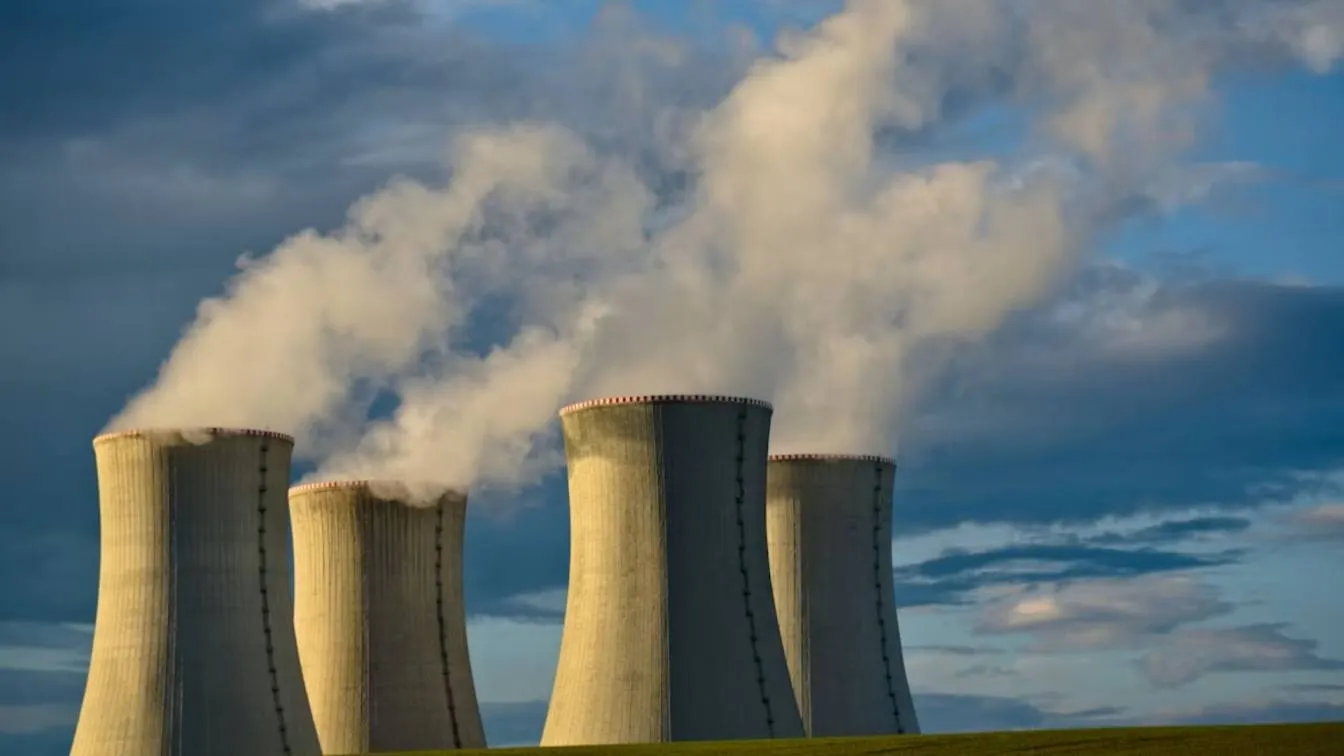
Google is close to an agreement worth more than $1B to buy nuclear electricity from Constellation Energy, the largest nuclear operator in the United States. Bloomberg reported the talks on 6 October, citing people familiar with them, and said an announcement could come within days. Neither the amount of generating capacity nor the plant involved could be determined, and neither company has confirmed anything.
Constellation is the counterparty that makes the story straightforward. It runs 21 reactors across 12 sites in the Midwest, Mid-Atlantic and Northeast, and counts 32.4GW of low-carbon capacity in total. A buyer signing with it is buying from reactors that are already running.
Why Google wants it is no mystery either. More than 700 data centres were under construction in the United States as of March this year. Estimates put the country's data centre electricity use at three to four times current levels by 2035.
Google has been signing energy agreements for two years against that. It committed to a 500MW fleet of reactors from Kairos Power, expected around 2030, and in May 2025 agreed with the site developer Elementl Power to develop 1.8GW across three locations, at least 600MW each, without having chosen a reactor technology.
The Kairos agreement gives a sense of the timescales involved. Its demonstration plant is designed to produce 50MW and its commercial plants 150MW each. The reactor is cooled by molten fluoride salt rather than water, a design that has never been built at commercial scale anywhere.
Nobody Has The Electricity Yet
The figure worth holding against this announcement is zero, because technology companies have announced up to 13GW of nuclear capacity running to the mid-2030s, split roughly evenly between agreements to buy output and partnerships to build new plants. Research published by the Carnegie Endowment in June found that none of it is operating.
About 6.9GW is expected by the early 2030s from purchase agreements and restarts of closed reactors. The other 6.1GW arrives by the mid-2030s and depends on small modular reactors, a compact design meant to be built in factories rather than on site, reaching commercial operation. None is running commercially in the United States today.
The arithmetic at the end of that is the part that reframes the race. If every announced project gets built, the combined output would be around 102 terawatt-hours a year, less than a fifth of what American data centres are projected to need in 2035.
For comparison, the solar capacity planned for installation during 2026 alone, 43.4GW, could produce roughly three times what all those nuclear commitments would contribute through the mid-2030s. Nuclear's appeal is not volume; it is that a reactor runs at three in the morning when the sun does not.
A Purchase Agreement Is Not A Reactor
The distinction that gets lost in these announcements is between buying electricity and creating it. An agreement to purchase output from an existing plant moves power between buyers on a grid that already has it. Whoever else would have used those megawatt-hours now buys from somewhere else, and nothing new has been generated.
Funding or restarting a reactor is a different act. Microsoft's agreement with the same company is the clearest example. It is a 20-year contract reported at around $16B to restart the shut Three Mile Island unit, now the Crane Clean Energy Center, bringing 835MW back onto the grid towards the end of the decade.
Set beside that, a $1B multi-year purchase agreement is a smaller commitment of a different kind. Bloomberg's report does not say Google is funding new construction, and Constellation's existing fleet is where its available output sits.
That difference matters most where the grid is tight. A large buyer contracting existing nuclear output changes who gets the electricity, rather than how much of it exists. The same question runs through every data centre siting decision now being made around available power.
What The Others Have Signed
Google is not moving first here, and the comparison shows how varied these commitments are. Meta has contracted up to 6.6GW across four partners, including 4GW with TerraPower, where the first two units are expected by 2032, and 1.2GW with Oklo in Pike County, Ohio, alongside purchase agreements with Vistra and Constellation for output from existing plants.
Amazon has committed $700M to a 960MW project with X-energy and Energy Northwest, planned for the 2030s, put more than $20B into a campus beside Talen Energy's Susquehanna plant, and signed an exploratory agreement with Dominion Energy in Virginia. Reading those dates together gives the picture. Almost all the new generation lands in the 2030s, and every megawatt-hour these companies actually consume this decade comes from reactors, turbines and panels that already exist.
The pattern across all four buyers is the same in structure. Purchase agreements cover the near term because they can be signed and settled quickly, while the construction partnerships carry the capacity figures that make the announcements sound large.
What This Deal Does Do
None of that makes the agreement pointless, and Constellation's chief executive has been direct about why utilities like these contracts. "Nuclear simply wins the match in every single dimension," Joe Dominguez said. "Cost, reliability, predictability of firm prices for twenty years." A long contract at a firm price is what lets an operator justify spending on maintaining and uprating plants that were, not long ago, candidates for closure.
For Google the attraction is carbon-free electricity that runs continuously, bought under a contract that does not depend on a reactor being licensed, financed and built. Against a company spending $75B on data centre capacity in a single year, $1B over several years is a procurement decision rather than a strategic bet.
What it does not do is add supply, and that is the measure to watch as these announcements accumulate. The race described in the headlines is real, but for the next several years it is a race to contract the nuclear electricity that already exists, not to generate more of it.