

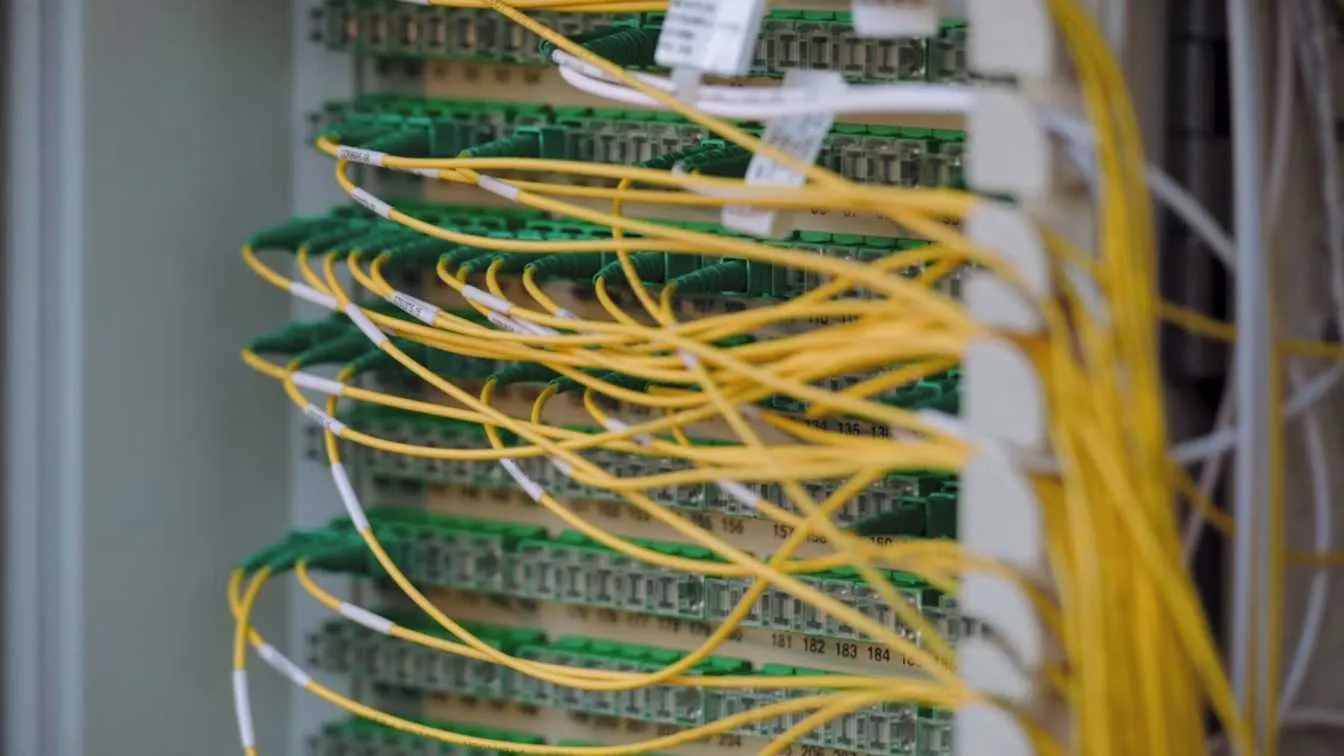
Egypt's government is moving a planned 80MW data centre on the Suez Canal a step closer to construction. Communications and Information Technology Minister Raafat Hindy has reviewed implementation plans for Kemet, a facility being developed by Intro Holding Group in the Integrated Sokhna Industrial Zone, part of the Suez Canal Economic Zone (SCZONE).
The first phase carries an investment of $270 million, with total planned capacity of 80MW. The project is targeting Tier III classification, which would make it the first data centre of that standard in SCZONE. According to the meeting readout, officials and the developer looked at the facility's design, its equipment suppliers, the build schedule and how services will be rolled out.
Kemet is meant to offer cloud services, IoT services and support for digital transformation. Its location, next to one of Egypt's main industrial and port zones and close to the subsea cables that make Egypt a global internet crossroads, is central to the pitch.
What Is Being Planned
Kemet first surfaced in October 2024, when Intro Technology, the technology arm of Intro Holding, signed a memorandum of understanding with Oman Data Park, a joint venture that includes Omantel. At that stage, the partners described a $450 million project on an 80,000 square metre site, built in two phases and expected to draw partly on solar power.
The latest review focuses on the first phase and its $270 million budget. The developer and ministry have not published a construction schedule or an opening date, and the September meeting was a progress review, not a groundbreaking. As with most large data centre projects, timelines will depend on financing, power connections and equipment supply.
Why Tier III Matters
Tier III is a widely used benchmark for data centre resilience. In broad terms, it means the facility is designed so that equipment can be maintained or replaced without shutting down the systems it supports. For enterprise customers, banks and government agencies, that level of design is often a minimum requirement before they will move critical workloads into a third-party facility.
Hindy framed the project as part of a broader effort to position Egypt as a regional hub for data centres, saying the government is committed to creating attractive conditions for investment in the sector.
Why The Suez Canal Location Matters
The choice of site is not only about land and incentives. Egypt sits on one of the busiest digital routes on the planet.
A recent analysis by the Center for Strategic and International Studies (CSIS) notes that Egypt has 14 active subsea cable systems, with more planned, and that over 90% of Europe–Asia communications pass through Egypt into cables running down the Red Sea. The same analysis estimates that the Red Sea corridor carries around 17% of global internet traffic.
A data centre close to those cable routes can offer low-latency links to Europe, the Gulf, Africa and Asia at once. That is the same logic that has turned other cable hubs, such as Marseille and Singapore, into major data centre markets.
The Risk That Comes With The Route
The concentration of cables also brings risk. CSIS points to the March 2024 cutting of four undersea cables in the Red Sea, which disrupted an estimated quarter of telecoms traffic between Asia, Europe and Africa, and further cable cuts in September 2025 that affected connectivity across the Middle East and South Asia.
For a data centre operator, that is a reminder that proximity to cables is only valuable if there are several diverse routes, so a single incident does not isolate the facility.
An Industrial Zone With Growing Demand
Kemet will sit inside a zone that is attracting significant manufacturing and logistics investment. SCZONE said it drew $7 billion across 117 projects in the 2025/26 fiscal year, spanning 21 sectors, with a strong focus on Chinese and other Asian investors. The Sokhna area includes a major Red Sea port and a growing cluster of factories.
That matters for the IoT side of Kemet's pitch. Modern factories, ports and logistics operators generate large volumes of machine data, from equipment sensors and production lines to container tracking and fleet telematics. Much of that data needs processing close to where it is created, both for speed and, increasingly, for regulatory reasons around where data is stored.
Local Compute For Connected Operations
A local Tier III facility could give manufacturers and logistics firms in the zone an option to host their industrial data platforms, analytics and control systems nearby, instead of sending everything to distant cloud regions. Our explainer on industrial IoT connectivity sets out how data flows from machines on the factory floor to the platforms that analyse it.
As AI moves into operations, the balance between on-site edge computing and nearby data centres is shifting too. Our look at Jetson Thor's edge AI result explores why some processing stays on the machine while heavier workloads move to data centres. A facility like Kemet would sit in the middle of that chain, serving as a regional hub between plant-level edge devices and global cloud providers.
How Kemet Fits Egypt's Data Centre Market
Egypt's data centre market has been drawing more attention from regional investors. In 2023, UAE-based Khazna Data Centers announced plans with Benya Group for a 25MW hyperscale data centre project at Maadi Technology Park near Cairo, with a total investment of $250 million.
Kemet's planned 80MW would be considerably larger, although the full capacity is likely to come online in stages. Its location on the canal, rather than in Greater Cairo, also sets it apart, placing it closer to cable landing routes and to industrial customers in SCZONE.
The Practical Hurdles
Several factors will shape how quickly the project moves:
· Power supply, since an 80MW facility needs large, reliable grid connections, and the earlier plan to use solar would only cover part of the load.
· Cooling in a hot climate, which affects both design and operating costs.
· Network diversity, to reduce exposure to cable cuts in the Red Sea.
· Customer demand, including whether international cloud providers and large enterprises commit to capacity.
None of these is unusual for a large data centre, but each will affect cost and timing.
The Bottom Line
Egypt is using its position on the world's cable routes and the growth of the Suez Canal Economic Zone to pitch itself as a data centre hub. Kemet, with $270 million for its first phase and 80MW of planned capacity, is one of the more concrete projects in that push.
For IoT and industrial operators in the region, the project could eventually mean local, resilient hosting for connected operations. How soon that happens will depend on how quickly the plans on the table in September become buildings, power lines and signed customers.