
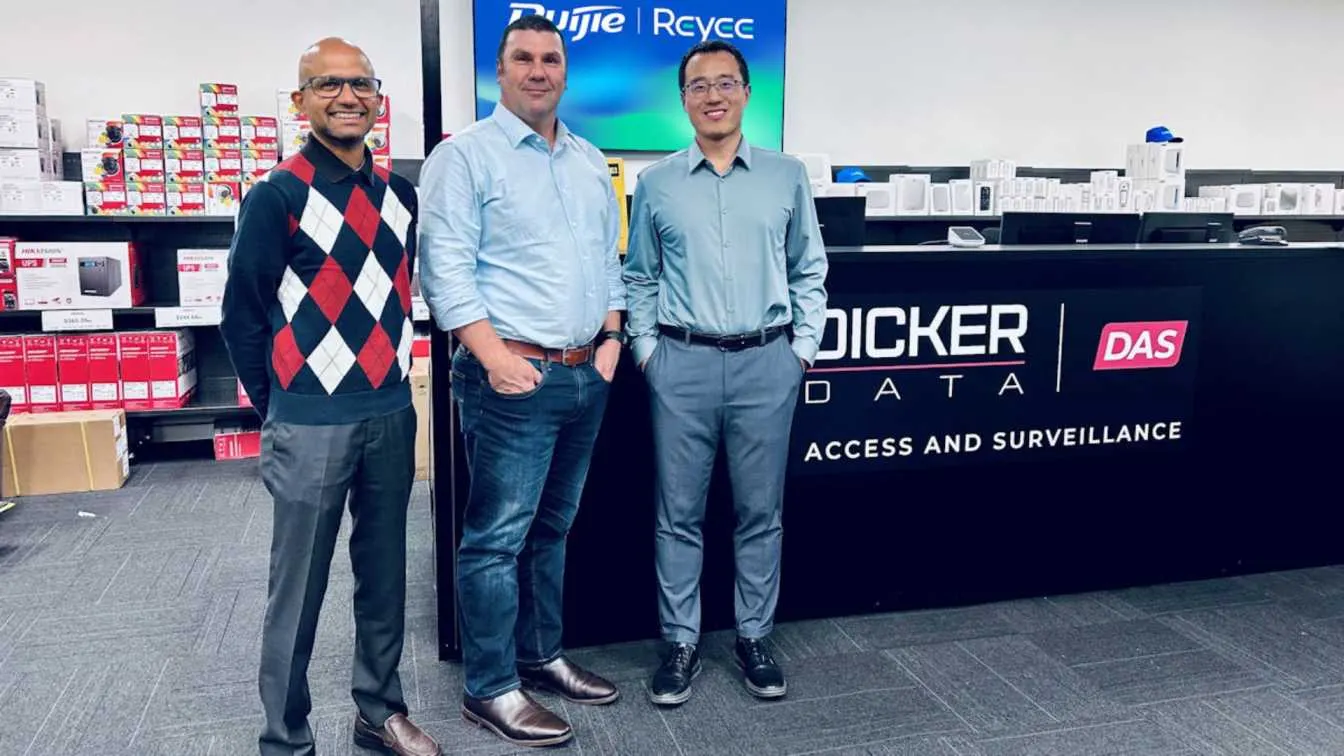
Dicker Data, the Australian company that buys hardware and software from technology vendors and sells it on to thousands of smaller resellers, is paying NZ$138M for Sektor Group, a New Zealand distributor with operations across South-East Asia. Distribution is the layer most buyers never see. A vendor such as Cisco or Microsoft does not sell directly to the average mid-sized business; a distributor holds the stock, extends the credit and supplies the reseller that the customer actually deals with, taking a slim percentage for doing it.
Sektor carries products Dicker Data has not. It distributes point-of-sale systems, the terminals and scanners shops and warehouses run on, along with enterprise mobility devices, cybersecurity software, physical security equipment and specialised infrastructure.
The business generated NZ$440M in gross revenue in the twelve months to 31 August 2026, on normalised earnings before interest, tax, depreciation and amortisation of NZ$22.7M, a figure the company notes is unaudited. It employs around 230 people across New Zealand, Australia, Thailand and Malaysia, with about 60 of them in the two Asian markets.
That geography is the part Dicker Data cannot build quickly. The price is about A$111.8M on a cash-free, debt-free basis, funded by extending existing debt facilities. The deal is expected to complete at the end of October.
"The acquisition expands our addressable market, diversifies our technology portfolio and creates meaningful opportunities to use Dicker Data's scale," said Fiona Brown, the company's executive chair and managing director. Sektor's chief executive Rhys Warren stays with the business.
The Buyer Is Having A Very Good Year
Dicker Data has done this before, and the company that is buying has changed hands at the top only recently. David Dicker and Fiona Brown founded the business in 1978, listed it on the Australian exchange in 2011, and bought Express Data Holdings in 2014, which is how it reached New Zealand in the first place.
Dicker stepped down as chief executive in 2025 after 47 years, leaving Brown as executive chair of a business that distributes for Cisco, Microsoft, HP and Lenovo among others. Those are the names that matter to the rest of this story, because they are the vendors whose own decisions set the terms a distributor works under.
The purchase is being made from strength rather than necessity, and the half-year numbers show why. Dicker Data reported gross revenue of A$2.1B for the first half of its 2026 financial year, up 14.2%, with gross profit up 23% to A$205.6M and net profit up 54.1% to A$60.7M. It has guided to A$4.3B to A$4.4B for the full year.
The company credits a particular combination for that. Businesses are replacing ageing laptops, buying machines marketed as AI PCs, modernising data centres and spending on networking, while recurring software sales grew 20.7% to A$600M.
Underneath sits the network that makes a distributor worth anything. Dicker Data carries more than 250 vendor brands and sells through over 9,000 resellers and managed service providers across Australia and New Zealand.
Thin Margins Explain The Logic
One number in those results explains the whole shape of this deal. Gross margin was 9.8%, and that counted as an improvement, having risen 70 basis points over the year.
A business that keeps under a tenth of what passes through it cannot grow profit much by raising prices. Its customers are resellers who compare suppliers on price and availability, and its suppliers are vendors large enough to set the terms. It grows by moving more volume, carrying more product categories, or operating in more countries, which is precisely the list this acquisition addresses.
Dicker Data puts the point-of-sale and automatic identification market in Australia and New Zealand at around A$1B, and the wider Asia-Pacific technology market at US$647B. Both figures are the company's own framing of the opportunity rather than independent measurements, and the second is large enough to be more rhetorical than operational.
The targeted outcome is stated more usefully. Management is aiming for annualised earnings of NZ$28M to NZ$32M after integration, against the NZ$22.7M Sektor produces now, without publishing where that improvement comes from.
Vendors Are Cutting Their Lists
The structural pressure behind a deal like this arrived in May, from a company that is not party to it. Hewlett Packard Enterprise reorganised its worldwide distribution around two global partners, Ingram Micro and TD Synnex, after absorbing Juniper Networks and the distributor network that came with it. Regional and specialty distributors stay in the system with reduced prominence, and the vendor said it would keep reviewing country-level relationships.
For a national distributor that is a warning rather than an immediate loss. A vendor that narrows to two global partners changes the terms for everyone else, and the companies most exposed are those reselling the same global brands in a single country.
Buying into categories and countries where the two global distributors are less entrenched is a reasonable answer to that. Point-of-sale terminals in Thailand are a different business from enterprise servers in Sydney, and harder for a global distributor to run at a distance. It is also a business built on local reseller relationships, which is the asset Dicker Data is paying for rather than the stock in the warehouse.
Integration Decides These Deals
The financial contribution to this year is almost nothing, which makes the timing of any judgement clear. Sektor joins with roughly two months left in Dicker Data's financial year, so the 2027 accounts are the first real test. The company says the deal will add to earnings in 2026 before one-off transaction and integration costs, which is a narrower claim than it first reads.
What follows is four countries, two of them new to the buyer, 230 staff and a product range the acquirer has not sold before. The record of technology acquisitions is that the reorganisation arrives later than the announcement suggests, as it did when Semtech wound down the module line it had bought from Sierra Wireless three years earlier.
None of that makes the deal unusual or unsound, but it does fix which figures are worth returning to. Those are the NZ$28M to NZ$32M target, and whether Thailand and Malaysia are still growing when Dicker Data reports a full year of owning them.