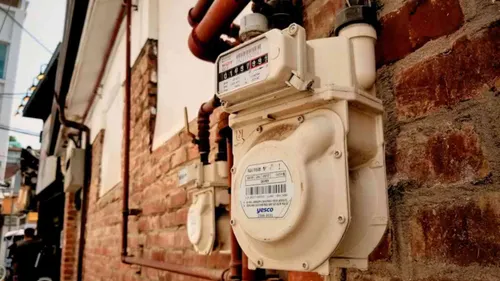
Aarhus Vand, the water utility for Denmark’s second-largest city, has chosen Netmore to connect around 69,000 digital water meters to a LoRaWAN network, a low-power radio network built for devices that send small amounts of data over long distances. The meters come from Danish manufacturer Kamstrup, contractor Eltel is handling installation, and the rollout started in the suburb of Tranbjerg after a pilot with 1,000 households.
The project will run district by district until 2030, and the deal, announced at the end of August, is less remarkable for its size than for what it says about how utilities now buy connectivity: Aarhus Vand is not building a radio network of its own, but paying a specialist operator to run one.
A City Catching Up In A Country That Measures Everything
That choice makes more sense once you see how far ahead Denmark already is. Every property connected to a public water supply has had to have a meter since 1996, and since 1994 utilities have paid a penalty on water losses above 10 percent, a rule that has pushed the country’s leakage to among the lowest in Europe.
The latest figures from Danish water association DANVA put the weighted average share of water lost or unbilled at 6.8 percent in 2024. Remotely read meters made up 84 percent of meters tracked by its members that year, up from 71 percent in 2022, and household use fell to 97 litres per person per day, the lowest since records began in 1976.
Aarhus is joining that majority rather than leading it: the utility first set out its plan for digital meters in 2023, with an initial phase of 17,000 customers, and has now committed to the whole service area.
Europe is heading the same way, given that under the revised Drinking Water Directive, suppliers serving more than 50,000 people had to have their leakage assessed by early 2026, and the European Commission is due to set an EU-wide leakage threshold by 2028, with action plans required from countries that exceed it. Denmark is well placed for that test, but meter-level data is exactly what regulators will expect utilities to show.
Why Rent The Network Instead Of Owning It
The more interesting decision is how those meters will talk, and Kamstrup’s own guidance lists several ways to connect its meters: NB-IoT, a low-power service run by mobile operators; LoRaWAN; and linkIQ, Kamstrup’s own network, which gives a utility full control but asks it to manage the infrastructure for the 15 years or more that a meter stays in the ground.
Aarhus Vand chose the middle path: LoRaWAN uses licence-free spectrum and a utility could run it privately, but here Netmore owns and operates the network and sells it as a service, so the utility gets the data without maintaining gateways on rooftops.
“Our pilot demonstrated that LoRaWAN meets those standards in practice, and our partnership with Netmore and Kamstrup gives us the confidence to scale,” said Helle Pernille Hansen, specialist manager at Aarhus Vand. Henrik Jensen, Kamstrup’s senior vice president for water, said Netmore’s network ensures the meters’ capabilities “translate into consistent read rates.”
For a utility, the read rate is the whole game, since a meter that fails to report means an estimated bill, a missed leak alarm or a truck sent out to check, so outsourcing the network makes sense only if the operator will stand behind that number for the life of the meters.
Netmore’s Growing Water Business
Netmore has been building exactly that kind of track record, mostly in Britain. It won Yorkshire Water’s tender to replace 1.3 million meters in 2024, with an initial five-year term and data services running to 2045.
A year later Severn Trent picked it to connect one million meters using a mix of LoRaWAN and NB-IoT from Vodafone. Netmore says it now manages more than three million smart water meters in the UK and covers about three-quarters of the population there, and it operates in 18 countries with backing from Nordic infrastructure investor Polar Structure.
“Reliable, carrier-grade connectivity is essential for smart metering deployments,” said Eric Collinder, Netmore’s country manager for the Nordics. Aarhus gives the company a flagship in its home region to match its British wins.
What Readings Every Three Hours Buy
For households, the change is practical: once the network reaches their area, customers stop reporting readings themselves and instead see hourly consumption, updated every three hours, with automatic alarms for possible leaks or burst pipes.
That matters more in Denmark than the leakage figures suggest, because water there is expensive, at an average of just over €11 per cubic metre in 2024 once you add wastewater charges and taxes, so a dripping toilet or a hidden leak behind a wall shows up quickly on a household bill. With utility-side losses already low, much of the value of smart meters lies on the customer side of the pipe.
The meters themselves do more than count: Kamstrup’s flowIQ 2200 model, for example, can raise alarms for leaks, bursts, backflow and tampering, and listens for the different sound water makes when it escapes from a damaged pipe, which lets a utility spot trouble in the service connection before a customer notices.
Households will get those features in stages, as installation moves north through the city: the southern districts of Tranbjerg, Beder, Skåde, Højbjerg and southern Viby in 2026 and 2027, the centre in 2027 and 2028, and the northern suburbs through 2030, though the utility describes the timetable as provisional.
How LoRaWAN Compares With The Alternatives
Aarhus is one data point in a wider contest over how to connect millions of battery-powered meters. LoRaWAN’s appeal is long battery life and a single network that can serve several utilities, which is why the technology has grown well beyond metering, as we covered in LoRaWAN at 150 million.
Other utilities make different bets, and Severn Trent’s hybrid of LoRaWAN and NB-IoT shows that some want a mobile network as a second path, while in rural India nearly a million electricity meters now pass data from one meter to the next over a mesh, as we reported in our Uttar Pradesh story. Each approach trades control, cost and coverage differently, and meters in basements and cellars test all of them.
Kamstrup is candid about LoRaWAN’s limits in its own guide to the technology: data rates are low, delays are longer than on other networks, and devices share licence-free airwaves that can get crowded. It argues those trade-offs suit meters that only need to send small readings a few times a day, and points to more than 100,000 of its LoRaWAN meters installed by a Veolia unit in Perpignan, France.
Running utility data over someone else’s network also raises a security question, which the industry answers with encryption applied by the meter itself. Kamstrup backs the Open Metering System standard, whose strongest profile keeps readings encrypted from meter to utility even when a third party operates the network in between.
What Aarhus Is Really Buying
Aarhus Vand is not really buying radios; it is buying a promise that its meters will report reliably for as long as they last. Kamstrup says its flowIQ 2200 meters can run for up to 20 years on a battery, far longer than most service contracts, so the network Aarhus rents today has to outlast several renewal cycles.
That makes the contract terms as important as the technology, so utilities weighing similar deals should look hard at read-rate guarantees, at what happens if the operator changes hands, and at how easily they could move meters to another network, because the last of Aarhus’s new meters will still be counting water in the 2040s.