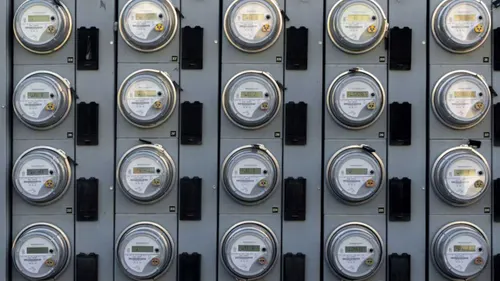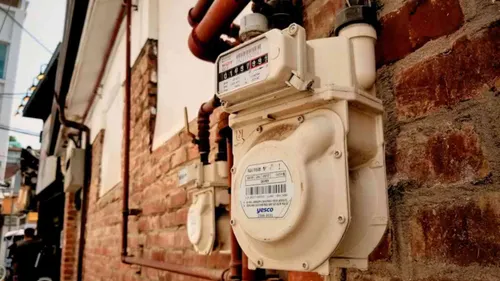


Nearly one million smart electricity meters across Uttar Pradesh, the northern Indian state, now send their readings by passing data from one meter to the next, rather than each one calling home over a mobile network. Finnish connectivity firm Wirepas said on 9 September that the meters, installed by Polaris Smart Metering under India’s national smart metering programme, run on its radio mesh with no separate gateways and no SIM card in every meter.
Most of them sit in villages, which is the point. Wirepas notes that about 78 percent of Uttar Pradesh’s people live in rural areas, where mobile coverage is patchy and homes are spread out, and where the cost of connecting a meter has long been harder to justify than in a city block.
How Meters Become The Network
That cost problem is what the mesh is meant to solve. Each meter carries a small radio that talks to its neighbours on the licence-free 865 MHz band, so a reading can hop from house to house until it reaches a meter that has a mobile connection. That meter acts as the gateway for the rest.
In a 2025 interview with Electronics Maker, Wirepas India head Ashish Sahay said one such gateway meter can share its mobile link with up to 300 others. Every new installation adds another relay, so the network grows stronger as the rollout spreads rather than needing towers or boxes planned in advance.
Polaris and Wirepas go a step further with what they call dual communication. Their earlier milestone announcement in December 2025 described meters that switch between the mesh and a mobile network when one path is down or congested, which cuts the number of missed readings. “When the meters themselves are the network, the economics finally work for rural India,” Wirepas chief executive Teppo Hemiä said.
Why The Villages Were The Hard Part
Those economics are easier to see against the usual setup. A conventional radio network for meters relies on data collection boxes mounted on poles, each serving a cluster of homes, and every box has to be bought, powered, installed and maintained. In a dense town the cost spreads across many meters, but in a village of a few dozen scattered houses it does not.
Putting a SIM in every meter avoids the boxes, but it brings a monthly data bill per meter and depends on a mobile signal that often fades at the edge of a village. The mesh sidesteps both by letting the meters carry each other’s traffic. We covered a similar argument for low-power radio networks in LoRaWAN’s life beyond the meter.
Uttar Pradesh Changed What The Meters Are For
The rollout also comes at an awkward moment for smart meters in the state. In May, the Uttar Pradesh government scrapped prepaid billing on its smart meters after protests in several districts over alleged excess bills, moving about 85 lakh installed smart meters, nearly all of them prepaid, back to monthly postpaid bills. A month earlier, Union Power Minister Manohar Lal had told Parliament that prepaid meters were optional, not compulsory, for consumers.
That shift changes the job the network has to do. A prepaid meter mainly needs to track balance and cut supply when credit runs out. A postpaid meter has to deliver a complete, trusted reading every month, because the bill that arrives by the tenth is only as good as the data behind it.
Our read: in a state where the smart meter programme stumbled over billing trust, a missed reading that turns into an estimated bill is exactly the kind of error that brings people back onto the streets. Reliable communication has become a political requirement as much as a technical one.
Communication Has Been The Weak Link Nationally
That concern is not unique to Uttar Pradesh. The national scheme behind the rollout, the Revamped Distribution Sector Scheme, had 20.34 crore meters sanctioned and 3.9 crore installed by the end of 2025, according to a Power Ministry update. Uttar Pradesh alone had about 2.85 crore sanctioned and 62.5 lakh installed.
Installing meters is one thing; getting them to report is another. In May 2025, energy research group Prayas found only about 5 percent of the national target was actually communicating, a gap that makes the network behind the meter as important as the meter itself.
Wirepas says it now connects more than 11 million meters across India, about a fifth of the market, and Polaris holds contracts for 5.1 million meters in Uttar Pradesh across the Lucknow and Devipatan clusters, awarded in early 2024. There is plenty of rollout still ahead.
What The Claims Don’t Yet Show
That rollout will be judged on performance, and here the public numbers are thin. Wirepas promotes a 99.9 percent service level and a guarantee that its service is free for any meter that fails to connect or perform, but these are the company’s own terms, and no independent reading-success data for the Uttar Pradesh network has been published.
There is also a longer bet built in. Sahay has argued that if mobile networks used by gateway meters are ever switched off, those meters can keep sending over the mesh, a live concern as operators retire older networks, something we tracked in the UK’s switch-off timeline.
For now, the achievement is real and the model is sound on paper: meters that build their own network where towers and boxes don’t pay. The open question is whether utilities and regulators will publish reading rates that let consumers, not just vendors, see that it works, because in Uttar Pradesh that proof now matters to every household that gets a bill.