Reinier Zonneveld, the Dutch techno disc jockey (DJ) and producer, has raised about $1M for GasLab, his startup for AI-generated music. Eric Demuth of the investing app Bitpanda and Bas Beerens, who founded the file-sharing service WeTransfer, are among the backers.
Other European entrepreneurs joined the pre-seed round, though GasLab has not named them or said who led it. The company says the money will take it into its next phase, building a generative music platform that is open about who shaped each track. It also expects its attribution engine to serve other AI music services.
On its website, GasLab calls itself a generative music studio “by artists, for artists”. Users ask for a track and the AI produces it, but the model learns from music that artists and labels have agreed to share. Those who opt in will be able to see how their work shaped each new song and be paid for it, the company says.
“The current state of generative AI has a major flaw: It takes from artists but gives nothing back,” said Zonneveld, GasLab’s co-founder. He called himself a musician “first and foremost”, and said he believes “it must always pay to be an artist”.
How The Digital Notary Works
GasLab says its attribution model, which it calls the Digital Notary, compares every generated track with the music of the artists taking part. It then writes a record of the recordings and rights holders that went into the result. That record covers both the recording itself and the song as written, the two sides of music rights.
In GasLab’s design, each track gets a permanent identification code and a watermark tied to its record, and every artist named there receives an economic right in the track. When GasLab earns money from subscriptions or releases, the company says, the record decides how that money is split among the people who contributed.
Zonneveld goes further in a manifesto on the website. If a GasLab track ends up on radio, on streaming services or anywhere else that earns money, he writes, the company will detect it, collect the income and pass it to the artists and rights holders behind it. In his words, those artists become “partial owners” of the music the AI creates.
GasLab’s site says the studio is opening soon, so none of this is public yet. It will open in waves, with people on its guest list let in first. They are being offered private testing ahead of a public launch, and the company has not given a date for that.
A first look comes at Amsterdam Dance Event (ADE), the yearly electronic music conference and festival. Posters around Amsterdam ask “What’s your ADE anthem?” and carry a quick response (QR) code that opens a preview, where visitors can make a track and see which artists it credits. Zonneveld is due to speak at ADE on 22 and 23 October and play an eight-hour live set on 25 October.
The DJ And Team Behind GasLab
Zonneveld runs GasLab with Cas Luuring, a longtime friend and business partner, and Thijs Emondts, a former venture capital partner who once worked as a general manager at Uber. Its two named investors come from consumer technology rather than music, from a platform for buying crypto and other assets and a service people use to send large files.
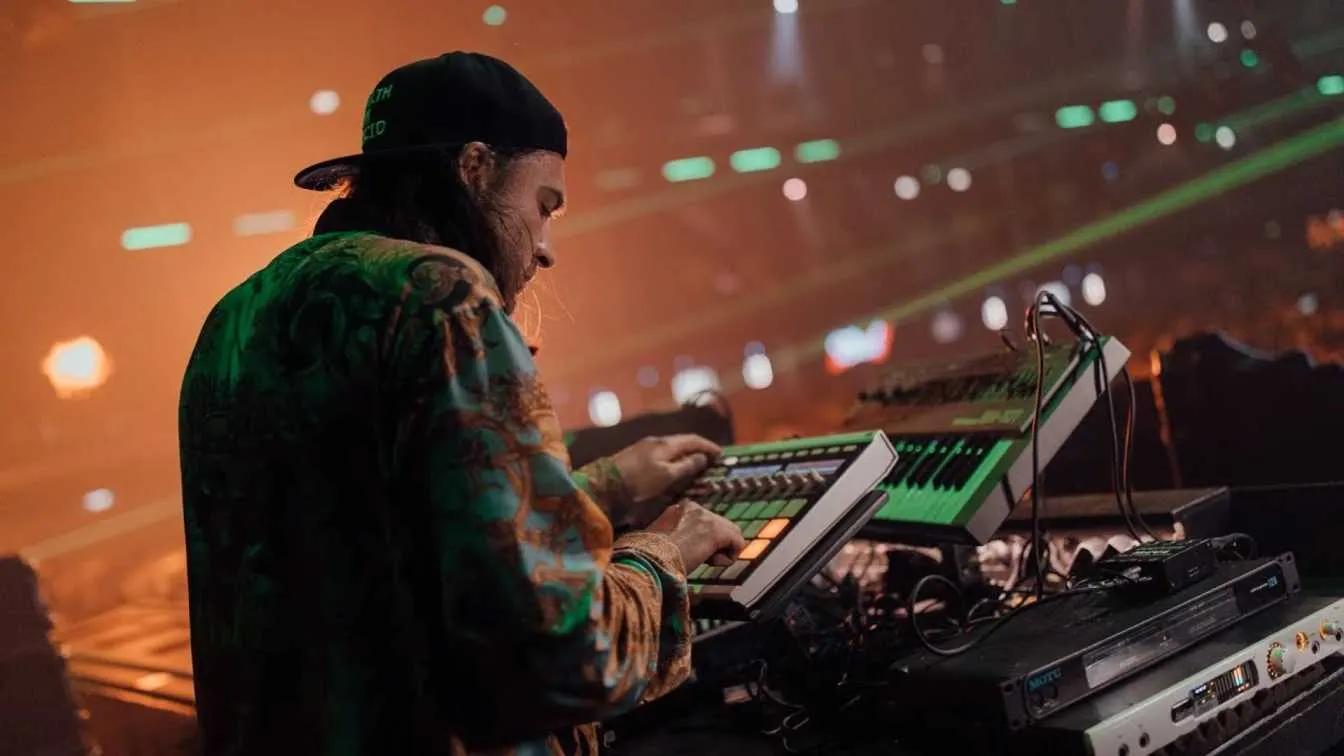
Zonneveld trained as a classical pianist from the age of three, taught himself electronic production and started his label, Filth on Acid, in 2017. GasLab says he ranks 21st in this year’s DJ Mag Top 100 DJs and holds the world record for the longest electronic music live set.
He and Luuring began working with machine learning about eight years ago. That work produced R2, a model trained on Zonneveld’s own catalogue, which he played back to back with on stage at his R² festival in the Netherlands in August 2024. The model learned from more than 2,000 hours of his music and recordings of over 1,000 live shows.
“My academic background in economics and mathematics fuelled a curiosity for what algorithms could bring to music,” Zonneveld said.
Licensing Fights Around AI Music
GasLab arrives while the best-known AI song makers are still in court with the record industry. In June 2024, Universal Music Group, Sony Music and Warner Music Group sued Suno and Udio, two startups that turn text prompts into songs, accusing them of training on the labels’ recordings without permission.
Universal settled with Udio in October 2025 and agreed to build a licensed music platform with it. Warner settled with both Udio and Suno the following month and signed licensing deals with each. Suno launched its newest model family, v6, in partnership with Warner, BMG and Believe, and says it was trained on content licensed from its partners.
Sony and Universal are still fighting Suno. In September they filed a new lawsuit over v6, arguing it was partly trained on outputs from older models built on unlicensed music. The labels say Suno has infringed 60,202 recordings since it launched. Suno called the claims “fundamentally flawed on both the facts and the law”.
Warner, meanwhile, bought Sureel AI, a startup that traces how AI models use artists’ work, in June and says it will keep serving the wider industry. ElevenLabs, known mostly for synthetic voices, launched its Eleven Music generator in August 2025 with licences from Merlin, which represents independent labels, and the publisher Kobalt.
Where GasLab Goes From Here
GasLab now has pre-seed money, a core team of three and a studio that, for now, only guest-list testers will use. Its first public outing is a preview at ADE, where people can make a track and see who it credits.
The company has not said how many artists or labels have signed up to share their music, and its Digital Notary has not yet been used in a public product. What Zonneveld is offering is a simple trade: musicians let the AI learn from them, and they share in whatever it earns.