
Sharon AI, the Australian AI cloud company listed on Nasdaq, has taken out a large loan secured directly against its graphics processors. The company said on 1 October that it had entered a $356 million GPU-backed facility with Goldman Sachs and a group of large private credit funds, at a fixed interest rate of 9.95% before fees.
The loan is senior secured and sits in a special purpose vehicle, a separate company that holds the GPUs and the cash flows from the customer contracts they serve, so lenders are repaid from the hardware's earnings rather than from Sharon AI's wider balance sheet. The money will fund computing capacity tied to existing customer contracts, part of a plan to deploy more than 68,000 Nvidia GPUs across Australia, New Zealand and the wider Asia-Pacific by the middle of 2027.
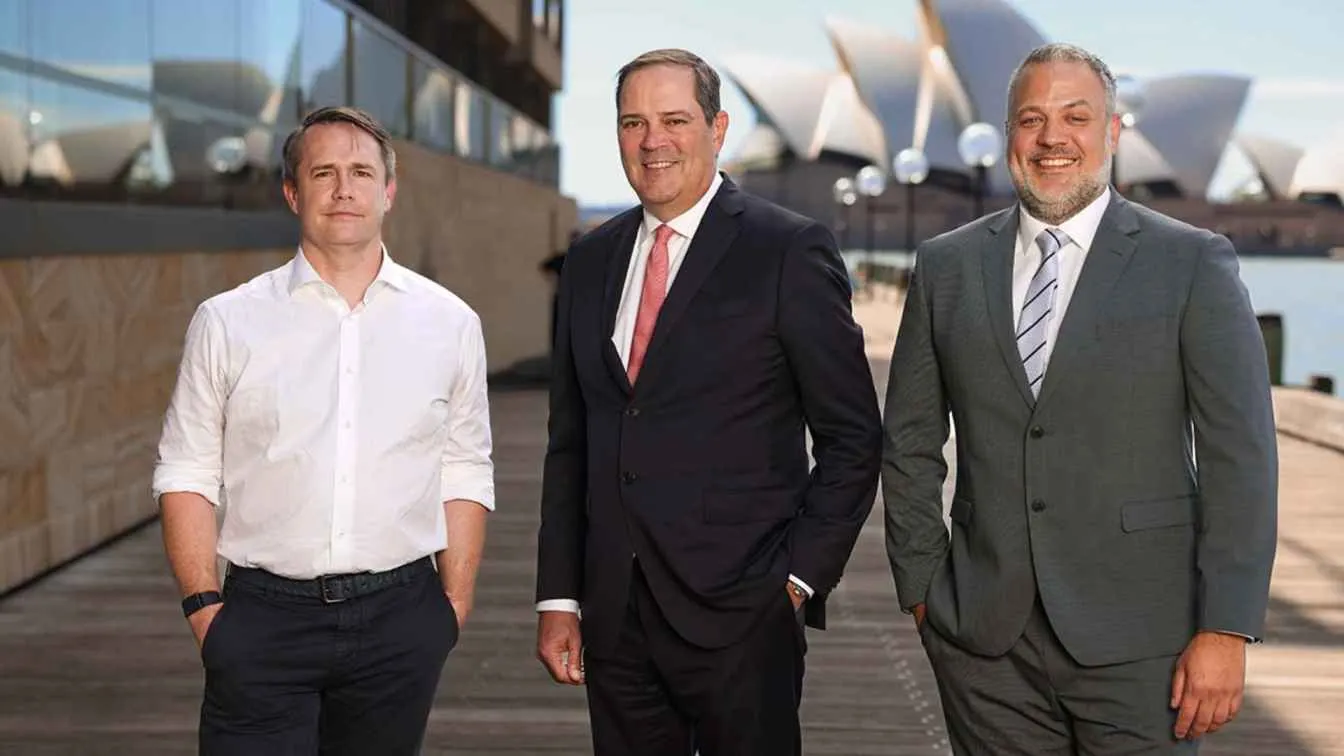
"Access to scalable debt capital is an important enabler of our growth," said James Manning, Sharon AI's co-founder and chief executive, adding that the facility draws on a book of customer contracts now worth more than $8.6 billion in total. The company described the deal as the first in an expected series of GPU financings, with Jarden Australia acting as its financial adviser.
What The Facility Pays For
Sharon AI calls its large GPU sites "AI factories," a term popularised by Nvidia for data centres built to train and run AI models at industrial scale. The company buys Nvidia GPUs, installs them in partner data centres such as NEXTDC's in Melbourne and Equinix's in Sydney, and rents out the computing power on multi-year contracts, which places it among the "neoclouds," the specialist GPU providers that have grown up alongside Amazon, Microsoft and Google.
Its largest commitment came in June, when Sharon AI signed a six-year collaboration with Nvidia worth up to $4.88 billion to deploy as many as 40,000 Grace Blackwell GB300 GPUs across 72 megawatts of new capacity in Australia. It has also signed a $1.25 billion, five-year deal with India's ESDS Software Solutions, a $950 million contract with an unnamed global technology company, a $1.32 billion agreement to serve a global AI lab from New Zealand, and a smaller deal with the Australian design company Canva.
Contracts of that size need hardware first, and the GPU loan turns those signed contracts into collateral that lenders will fund.
Why Lenders Want The SPV
The structure matters as much as the amount. Ring-fencing the chips and their contracted revenue in a separate vehicle gives lenders a direct claim on the assets and the payments behind them, which is how larger rivals have raised money for GPU fleets. It also lets Sharon AI borrow against each new contract without putting the whole company at risk every time it signs one.
A Company Raising Money Faster Than It Earns It
The facility adds to a run of fundraising that has outpaced Sharon AI's revenue by a wide margin. The company says it has secured more than $2.6 billion in debt and equity over the past ten months, including a $500 million on-chain credit line from USD.AI in January, a $350 million convertible note from Oaktree in May and a $1.6 billion raise in June, made up of about $900 million in shares and $700 million in convertible notes, with Goldman Sachs leading the placement.
Revenue has yet to catch up. Sharon AI reported second-quarter revenue of $1.9 million, well below analysts' forecasts of about $7.5 million, and a net loss of $430.4 million, most of it from non-cash items. Management has said it expects material revenue from the fourth quarter of this year as the large GPU deployments come online, with a steep ramp through 2027.
That gap between signed contracts and current income is common for a neocloud in build-out mode, but it means the company's results over the next few quarters will rest on delivering hardware on time and getting customers to accept it.
What 9.95% Says About The Risk
The interest rate is the clearest sign of how lenders view the company. In March, CoreWeave, the largest US neocloud, closed an $8.5 billion GPU-backed facility that won an investment-grade rating and priced at about 5.9% on its fixed tranche, backed by a contract with a large AI customer. Sharon AI is paying around four percentage points more, which reflects a younger company, a shorter track record and a customer list that has yet to be fully tested in operation.
CoreWeave itself paid about 15% when it first borrowed against GPUs in 2023, so Sharon AI's rate sits on the same path that its larger rival has already travelled. If the company delivers on its contracts and builds a repayment history, later facilities in the series could come cheaper.
The Depreciation Question
GPU-backed lending carries a risk that lenders and investors still debate: how fast the collateral loses value. High-end GPUs can lose around 45% of their resale value within three years, according to an analysis in Forbes, while loans often run five years or more, and Nvidia now launches a new generation roughly every year.
Lenders protect themselves by tying the debt to contracted cash flows rather than to the resale value of the chips alone, so the strength of the customer matters more than the hardware. For Sharon AI, that puts the spotlight back on the counterparties behind its $8.6 billion contract book.
The Short Seller's Challenge
Those counterparties have already drawn scrutiny. In April, Bleecker Street Research, which disclosed a short position in the stock, published a report questioning whether some of Sharon AI's contracts and financing were as strong as presented. Among its claims, it argued that ESDS's reported assets looked small next to a $1.25 billion commitment, and that the USD.AI facility had far less lending capacity in place than its headline figure suggested. Sharon AI's shares fell 6% on the day.
Manning brushed off the report at an investor conference soon after, according to Capital Brief, and the company has since signed the Nvidia agreement and raised more than $2 billion. A senior secured loan from Goldman Sachs and large private credit funds gives Sharon AI an outside signal of confidence in its contracts and collateral, although the facility does not by itself settle the questions the short seller raised.
What It Means For Buyers Of AI Compute
For businesses that rent GPUs, the deal shows how the AI cloud market is being financed and where it is heading. A growing share of the capacity on offer from neoclouds is paid for with debt secured on the customer contracts themselves, which helps providers expand quickly but ties their survival to every large customer paying on time.
Companies signing long compute contracts with smaller providers will want to check who funds the hardware, what happens to their capacity if the provider runs into trouble, and whether service levels hold up as fleets grow. The pressure on AI infrastructure runs well beyond the chips, as we found in how AI's uplink surge reaches the fibre behind 5G towers, and Asia-Pacific buyers in particular now have a local option built around Nvidia's newest hardware that did not exist two years ago.
Australia's Neocloud Now Runs On Borrowed Chips
Sharon AI's loan from Goldman Sachs and private credit funds marks its shift from a start-up raising money on promises to a company borrowing against assets and contracts, the model that turned CoreWeave into a large business. The 9.95% rate shows lenders will back that model in Australia, but at a price that reflects how much is still to be proved.
The next test is delivery. If the 68,000 GPUs arrive on schedule and the revenue Sharon AI expects from the fourth quarter shows up in its results, the follow-on facilities it has promised should come easier and cheaper, while any slip in deployments or customer payments will show first in the cost of its next loan.