

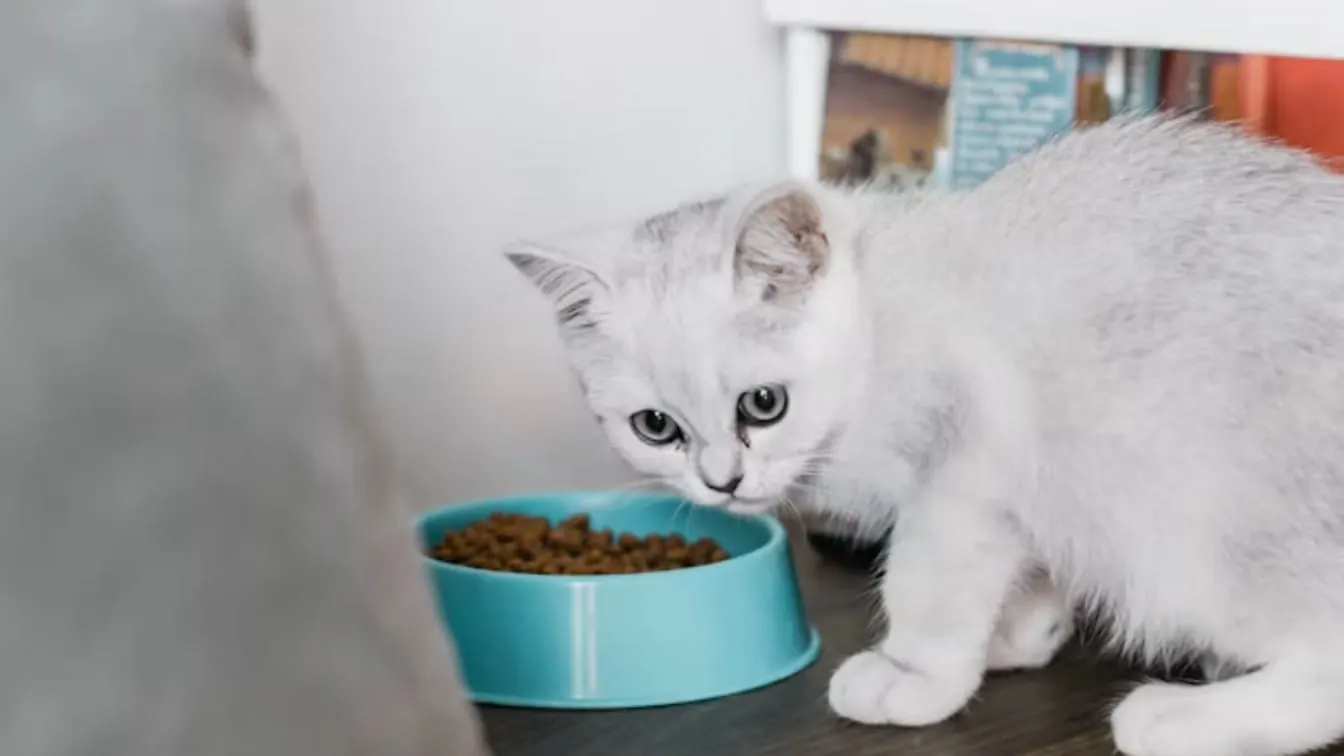
Petlibro, a Santa Clara maker of connected pet equipment founded in 2020, has put cameras into its food dispensers so they can tell one cat from another without anything attached to the animal. The Granary 2 range runs from $129.99 for the plain model to $279.99 for the Granary 2 X, with two camera models in between at $189.99 and $199.99.
Every model weighs the food in the bowl to the gram, so the device records what the animal actually ate rather than what the machine poured out.
The camera is what changed. Petlibro says it recognises each pet at the bowl and logs that meal to the right profile, and on the Granary 2 X the recognition drives a motorised lid that opens only for the cat it belongs to.
The company's own phrase for this is feeding "without collars or microchips", which is a direct swipe at how the category has always worked. Its earlier product, the Petlibro One RFID, needed a proprietary tag clipped to the collar and a reader mat under the bowl, and it could not read anything else. RFID stands for radio frequency identification, a battery-free tag that answers with its own number when a nearby reader wakes it with a pulse of radio energy.
That matters because the alternative was never convenient. Most cats already carry an implanted microchip the size of a grain of rice, holding nothing but an identity number, which a reader wakes up with a radio pulse from a few inches away.
SureFeed, the best-known product built around those implants, uses exactly that. It needs no collar and reads the chip a vet put in years ago, but it is a lid over a bowl somebody fills by hand, not a machine that dispenses on a schedule.
So households have had to choose between a feeder that knows which cat is eating and a feeder that feeds on time. Nobody had combined the implant reader with scheduled dispensing, and a camera sidesteps the radio layer altogether.
The Hardware Is The Cheap Part
What the Granary 2 does for free and what it charges for is the more interesting split. Scheduling, remote feeding, low-food and jam alerts and a live video stream all come with the device. The eating-habit alerts sit inside Petlibro Care at $59.99 a year for one pet and $129.99 for several, and recorded video sits inside Video Cloud at $95.99 to $159.99 a year depending on how many days of footage a customer keeps.
Add those up and a fully equipped first year runs to roughly $450, against hardware the buyer thinks costs $190. Health monitoring is the entire argument for putting a camera on a food bowl, and health monitoring is the paid tier.
That shape is now standard in connected consumer hardware. The device sells near cost to get into the home, and the recurring line covers the cloud bill and carries the margin, which is why the subscription prices scale with the number of pets and the length of the recording history rather than with anything the device itself does. TechCrunch's reviewer, who called the Vision one of the best feeders tested, made the same observation about the advanced health features sitting behind the paid plans.
The Lid Is Local, The Video Is Not
The two halves of the product answer to different economics, and the Granary 2 X shows where the line falls. Opening a lid for the right cat has to happen in the moment, at the bowl, with no round trip to a server. Reviewers describe the X as doing that recognition on the device itself, though Petlibro's own product page does not say where the processing runs, and the model is still listed as coming.
Video is the opposite. Streaming 1080p footage and keeping weeks of it costs real money every month, which is precisely why that part carries a subscription and the recognition does not.
This is the same division appearing across connected hardware, where the recognition work moves onto the device because a single module can now carry it, while anything involving storage or playback stays in the cloud where somebody has to pay for it.
The feeder also crosses a line most connected devices stop at. A sensor that reports what it sees is one thing; a lid that locks a particular animal out of a particular bowl is the machine acting on what it sees, and a wrong identification there means a cat on a prescription diet eats the wrong food.
Nobody Has Tested The Claims Yet
Nothing in the specification has been verified outside the company, which is the ordinary position for a consumer launch and still worth saying plainly. Recognising up to 10 cats by sight is a harder problem than it sounds, because cats of the same colour, in the dark, viewed from one fixed angle, are close to identical. The scale claim of gram-level accuracy carries its own conditions: the device needs recalibrating after anyone takes it apart, and thick carpet under the base throws the reading off.
The food itself is constrained too. The dispenser takes dry kibble between 2mm and 15mm across, which rules out wet food entirely and jams on the flat or ring-shaped pieces some veterinary diets use.
Connectivity is partial rather than optional. Schedules keep running if the home network drops, so the cat still eats, but the app control and the meal logging stop until the connection returns.
A Small Company In A Crowded Market
The category Petlibro is selling into is large and getting larger, and it is not short of competitors. Pet technology was worth $15.6B in 2025 and about $19.1B this year, on a path to $52.9B by 2035 at roughly 12% a year. North America accounts for $8.6B of that, with the United States alone at $7.6B.
Wearables, mostly trackers and collars, take 45.3% of the spending, and Garmin leads the whole market with around 11%. The top handful of companies together hold about 30%, which leaves most of the category to smaller firms.
Petlibro sits firmly among those. It has raised about $14M in total and last took money at Series B, which is a modest balance sheet for a company now carrying cloud video storage, yearly subscription billing and a recognition model as part of its product.
What the Granary 2 establishes is that a camera is now cheap enough to replace a radio tag in a $190 consumer device, and that the feature the camera exists to enable is the one the customer pays for separately every year. Whether the recognition holds up in a dark kitchen with three similar cats is the part no one outside the company can yet answer.