Forgepoint, an American startup that builds AI software to answer price requests for manufacturers, has raised a $9.8M seed round. Primary Venture Partners, a New York venture firm focused on seed-stage investing, led the round jointly with a16z speedrun, the startup accelerator run by Andreessen Horowitz.
Angel investors from OpenAI, Brex, Vercel and SoFi also joined, and the company’s website adds angels from Joby Aviation and Betterment. Forgepoint plans to spend the money bringing its product to more manufacturers, deepening its links with the business software they already run and growing its team. It did not disclose a valuation.
That product is Frank, which Forgepoint calls an AI inside sales rep. Frank reads incoming requests for quotation, flags what is missing and drafts a price from each shop’s own costs and rules. Chas Aday, founder and chief revenue officer of SIP Manufacturing, a beverage contract manufacturer that uses Frank, said: “Now, Frank drafts and I can approve it in two minutes.”
How Frank Handles A Request
A request for quotation is a buyer’s ask for a price on custom work. The buyer emails a shop with a drawing, a spreadsheet or a computer-aided design (CAD) file and asks what a batch of parts will cost and when it can be delivered. Someone at the shop then has to read the package, check the details and build a price.
Frank reads whatever the buyer sends, whether a PDF, a spreadsheet, a drawing or a CAD file. Forgepoint says it pulls out materials, dimensions, tolerances, quantities and due dates, and acknowledges new requests within minutes. When something is missing, such as the annual volume beyond a first order, Frank emails the buyer to ask.
It then builds a list of materials and prices each line from the shop’s cost model, including labour rates, material costs, margins and minimum charges. It can also point to similar parts the shop has made before and what they cost. The draft then goes to the shop’s own staff for approval, and Forgepoint says “nothing goes out until a human signs off”.
Once a quote is approved, Frank sends it and follows up until the job is won or lost. The company says Frank can see when a buyer opens the quote and what they go back to, and it flags deals that stall. Every email, quote and status change is logged in the shop’s customer relationship management (CRM) system.
Forgepoint says Frank learns each shop’s operating procedures and works within its pricing rules and approval steps. The company lists links to enterprise resource planning (ERP) systems, the software manufacturers use to run orders, stock and accounts, including Epicor, NetSuite, SAP, Sage, Infor, Syspro and Acumatica. It says it holds System and Organization Controls (SOC) 2 Type II certification, an independent audit of security controls. Forgepoint does not publish prices.
Early Numbers From The Company
Forgepoint says it reached seven-figure annual recurring revenue within six months of Frank’s launch, and that hundreds of engineers, estimators and sales reps use Frank every week. Across customers, the company says monthly quote volume has risen by an average of 30% and the time taken to produce a quote has fallen by more than 55%.
Those are the company’s own figures, and it has not published the baselines or measurement periods behind them. Other company material uses bigger numbers: its website claims quote turnaround 91% faster than a manual process, and its a16z speedrun profile says Frank cuts time to quote by up to 90%. Customers shown on its site include SIP Manufacturing, Excal, Metals of Honor, Gamma Foundries, Riverside Foundry, Highland Foundry and Acra Cast.
For metal service centres, Forgepoint says, Frank checks a request against stock, cutting capabilities and each customer’s price tier. For foundries, it pulls alloy, weight, tolerances and heat-treatment needs from the drawing, flags missing details for staff to review and drafts pricing for an estimator. The company also lists injection moulders, stampers, fabricators and machine shops among the trades it serves.
Founders Who Shadowed Plant Staff
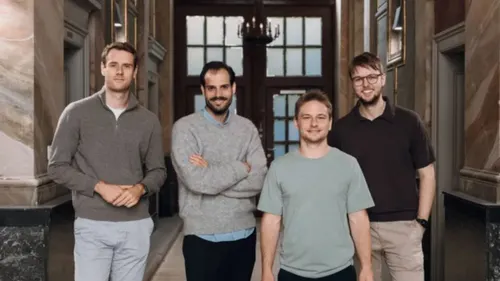
Jack Strauss, the chief executive, and Alex Pareto, the chief technology officer, co-founded Forgepoint, which its a16z speedrun profile dates to 2025. Strauss previously worked at the defence contractor Northrop Grumman, in the advanced manufacturing practice of the consultancy Bain & Company and at the aerospace company Xwing. Pareto led engineering for Brex’s spend management organisation.
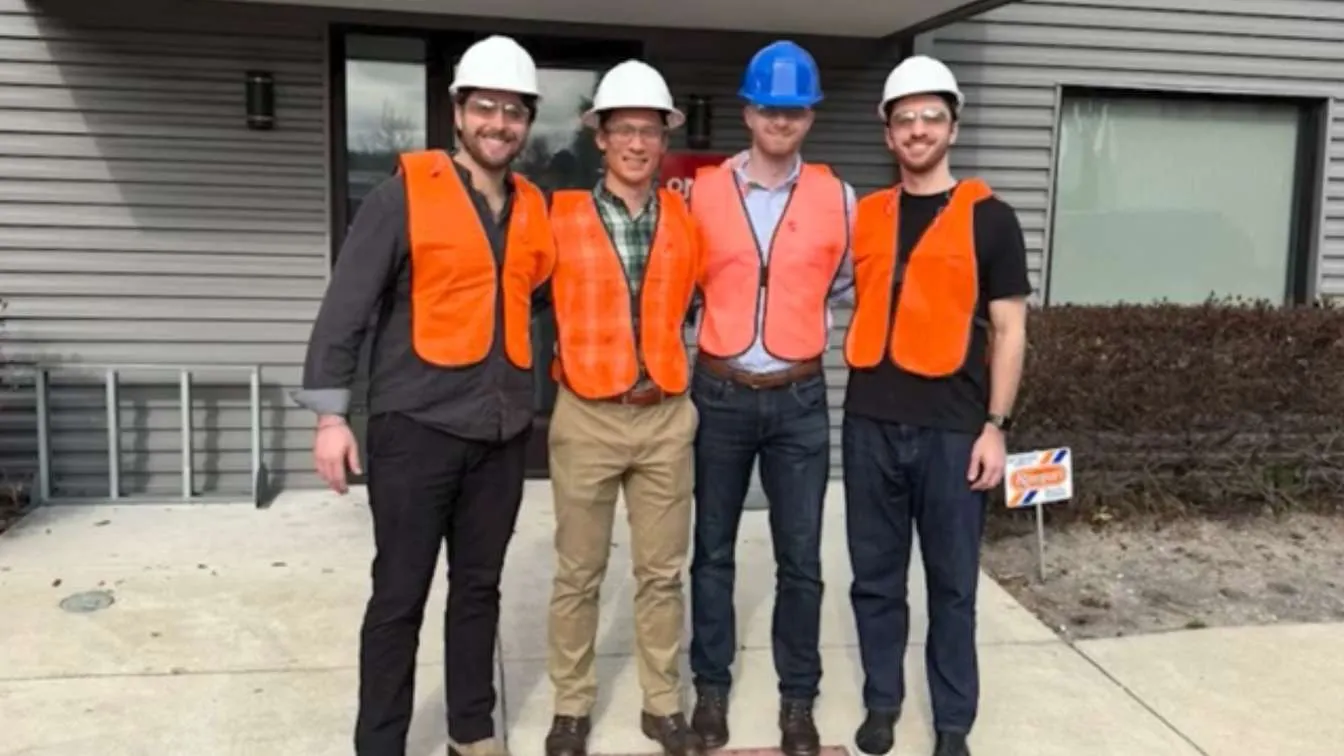
In early 2025 the pair spent months touring plants across the American Midwest and shadowing employees to learn where work slowed down.
“In those early days, we simply wanted to learn, as if we had been hired to do the job ourselves,” Pareto said. “We knew that before we could solve the problem, we needed to understand it deeply.”
Strauss said the trouble they kept seeing was paperwork, not a lack of orders. “We kept meeting manufacturers with strong demand and capable teams, but their best people were spending hours on administrative work,” he said.
“Speed is a competitive advantage, so we built Frank to keep jobs moving and free skilled operators to focus on the decisions only they can make.”
The speedrun programme puts up to $1M into each company as a first cheque and runs a 12-week residency in San Francisco. Forgepoint was part of its fifth cohort. Primary, the other lead, announced a $625M fifth fund in February 2026, the firm’s largest to date.
A Manufacturing Workforce Gap
A 2024 study by the Manufacturing Institute and Deloitte estimated that American manufacturers could need as many as 3.8 million additional employees between 2024 and 2033. It warned that about 1.9 million of those jobs could go unfilled if manufacturers cannot close gaps in skills and applicants.
“A manufacturer’s ability to grow depends on how much work its team can quote, plan, and manage,” said Zach Fredericks, a principal at Primary. “Forgepoint is giving those teams more capacity, starting with quoting.” He said the firm backed the founders “because they understand the details of that work”.
Forgepoint says it plans to apply the same approach to other back-office departments over time, so manufacturers can grow without adding administrative staff at the same rate. Its website already lists AI workers for order intake, purchasing, accounts receivable and customer service alongside sales and quoting.
Other Startups Chasing The Quote
Paperless Parts, which sells estimating and quoting software to job shops and contract manufacturers, raised a $30M Series B led by OpenView Partners in 2021. Newer AI companies now aim at the same desk.
Uptool, from San Mateo, California, came out of stealth in February 2026 with a $6M seed round from backers including Khosla Ventures, Eclipse, Bessemer Venture Partners and Kleiner Perkins. Its software pulls quote inputs out of emails, CAD files, drawings and bills of materials for small and midsize machine and fabrication shops.
CloudNC, which makes AI software that helps machinists program computer-controlled machine tools, raised $20M led by Nimble Ventures in September 2026. It plans to release Quote Agent, a tool that drafts machining quotes, in late 2026. Isembard, a London company that runs its own and franchised factories, raised a $50M Series A led by Union Square Ventures in March 2026, with quoting built into its in-house software.
Frank works inside a shop’s existing email and systems, drafting each quote for a person to approve before it goes out.