
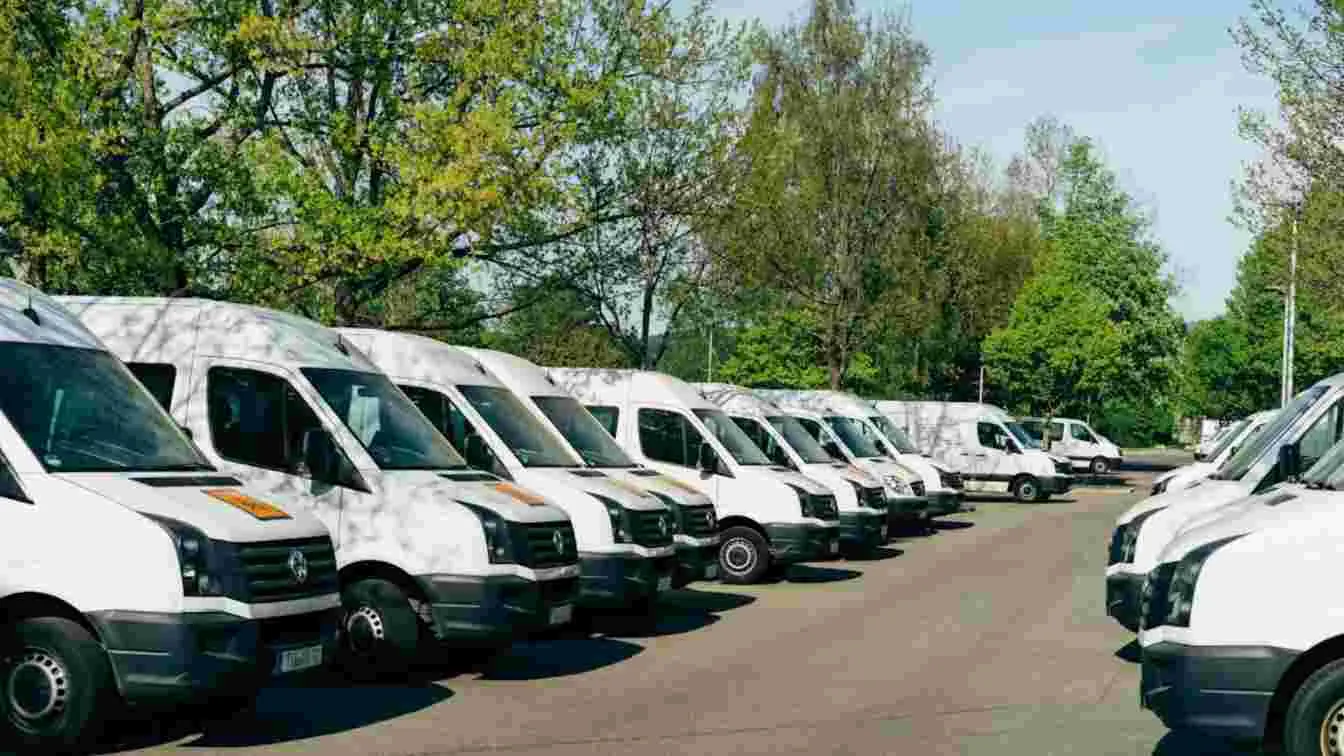
Samsara, the San Francisco company that puts cameras, sensors and tracking gateways on commercial vehicles and industrial equipment and sells the software that reads them, has won one of the largest private fleets in the United States. Asplundh, the Pennsylvania firm whose crews cut back trees around power lines and build and maintain utility infrastructure across North America, has selected Samsara to run safety and tracking across tens of thousands of vehicles and pieces of specialty equipment.
Samsara was founded in 2015 by Sanjit Biswas and John Bicket, who had previously built and sold the networking company Meraki to Cisco, and listed on the New York Stock Exchange in December 2021 under the ticker IOT. Its customers include DHL and Sysco alongside city and state governments.
The deal covers the whole Asplundh family of companies, a group employing around 36,000 people across vegetation management, power line construction, electrical testing, utility pole maintenance and roadway lighting. The hardware going in includes AI dash cams, vehicle gateways, powered asset gateways and asset tags, along with the FirstNet-certified VG55-FN gateway that runs on the US public safety network.
"Our top priority remains keeping people safe," said David Fleischner, co-president of vegetation at Asplundh. Farrukh Rafiq, the company's vice president of fleet operations, framed the appeal differently: "Seeing our vehicles, crews, and equipment in a single view means our teams are all working from the same picture."
Why Utility Contractors Are A Natural Market
The work explains the purchase. Crews operate heavy machinery close to live electrical lines, often on roadsides, frequently in weather that has just damaged the grid they are repairing. Equipment is spread across hundreds of job sites, much of it unpowered, which is why asset tags appear alongside vehicle gateways in the deployment.
Storm response is where the FirstNet gateway earns its place. When a utility is restoring power after severe weather, knowing which crews and bucket trucks are nearest a fault determines how fast service returns, and commercial networks are often the first thing to fail in those conditions.
Asplundh lists five goals for the rollout: fewer incidents through in-cab alerts and driver coaching, better utilisation of trailers, chippers and aerial lifts, faster emergency response, consistent metrics across its operating companies, and lower insurance costs.
Insurance Is The Clearest Line Of The Five
That last item is the one with a number attached. Fleets of this type carry substantial liability exposure, and insurers price on claims history and on evidence of controls, which makes recorded footage and documented coaching programmes directly relevant to a renewal.
It is also the easiest benefit to verify after the fact, unlike utilisation gains that depend on how a company chooses to measure them.
The Numbers Behind The Deal
Samsara reported its second quarter on 3 September, covering the period to 1 August, with revenue of $508.4M and annual recurring revenue of $2.125B, both up 30% from a year earlier. Net new recurring revenue was $134.1M.
The detail that matters for a deal like Asplundh sits further down. Customers worth more than $1M a year in recurring revenue now account for over $500M of the total and have grown more than 50% for three consecutive quarters, which is a faster rate than the business as a whole.
Gross margin was 77%, non-GAAP operating margin 21%, and free cash flow $64.7M, with full-year guidance of $2.043B to $2.047B. Chief executive Sanjit Biswas described it as durable and efficient growth.
The AI Push Has Moved To Agents
Cameras and gateways are the installed base; the newer product work is about what the software does without being asked. At its customer conference in June, Samsara launched Agent Studio, a console for building and managing automated workflows, with more than 15 pre-built agent templates covering safety and maintenance tasks, a knowledge base for company documents, a preview mode for checking agent behaviour before deployment, and permission controls.
Alongside it came AI Multicam with blind spot and rear collision warnings, a 360-degree camera for operated equipment, predictive maintenance with automated warranty claims, and Coaching Priority, which the company says weighs more than 45 risk factors using models trained on crash data from across its customer base.
Samsara attaches a plain disclaimer to this material, noting that unreleased features may not arrive on time or at all. That caveat belongs with the list, and it also reflects a real pattern: the agent products are young, and the deployments named so far are individual customers rather than fleets the size of Asplundh's.
The direction is consistent with what the company has been building for a while, including its work exposing fleet data to AI assistants through the Model Context Protocol, which lets outside tools query operational records under the same permissions a dashboard user would have.
Hardware Wins The Account, Software Decides The Value
A contract of this size is still won on the physical layer. Asplundh is buying cameras, gateways and tags that have to survive on a chipper truck for years, and the FirstNet certification mattered enough to be named in the announcement.
What follows that installation is where the recurring revenue comes from, as the same vehicles that report location and footage become the input for coaching programmes, maintenance scheduling and the automated workflows Samsara is now selling, in the pattern of systems that act on what they sense rather than simply recording it.
A Fleet That Is Difficult To Instrument
Asplundh is an unusually demanding reference. Its equipment ranges from pickups to aerial lifts to wood chippers, its crews work in conditions that break things, and its operating companies have historically measured themselves differently, which is why standardised metrics appears on the list of goals at all.
Samsara has spent the past year adding products faster than most of its customers can adopt them, and a deployment across tens of thousands of assets in this environment will show which of those products hold up outside a demonstration. The contract is signed either way, and the rollout is where the detail emerges.