
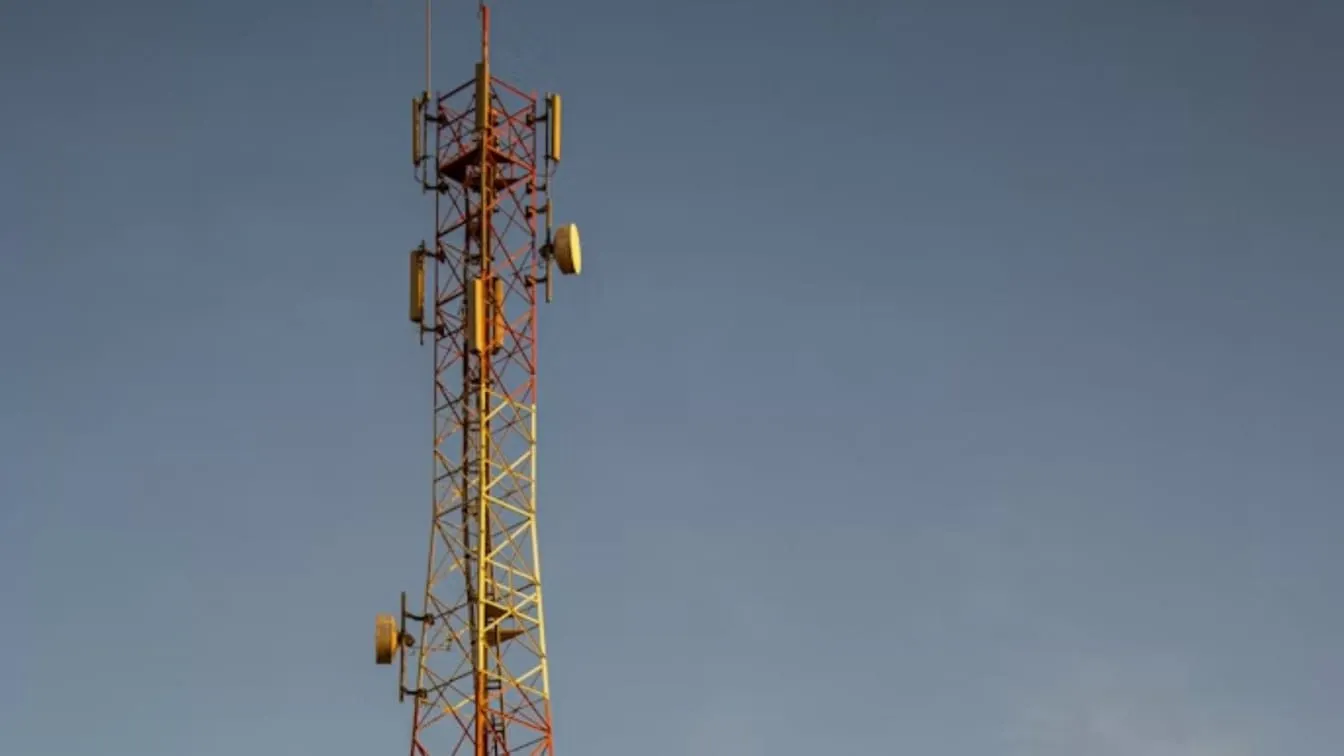
The mobile industry learned an expensive lesson about twenty years ago. Every operator building its own towers, on its own land, with its own power and backhaul, was a poor use of money. Tower companies grew out of that lesson: independent owners that built the infrastructure once and rented space on it to many operators, each keeping its own spectrum and its own customers.
Two of the older names in satellite communications now want to apply the same idea in orbit. In mid-September 2026, Viasat and Space42 signed a binding agreement to co-found Equatys, a shared satellite and ground platform for direct-to-device connectivity. The partners plan to put up to $1 billion of their own equity into the venture, and they describe it as open to other satellite operators and spectrum holders.
The deal arrives in a year when the race to connect ordinary devices directly to satellites has turned into one of the most expensive contests in telecoms. For the IoT industry, which has long depended on specialised satellite terminals to reach remote assets, the outcome of that race will shape what connectivity looks like beyond the edge of terrestrial networks.
What Viasat And Space42 Agreed
The agreement was signed in Paris during World Space Business Week, according to Viasat’s announcement of the binding deal. It follows a memorandum of understanding signed in March 2025 and a formal announcement of the planned venture in September 2025.
The Money
The founders are putting in $400 million apiece once the company is set up. On top of that, Space42 has earmarked another $200 million for a second raise, where outside investors will also be invited to take part. Add it up and the two partners could commit as much as $1 billion between them, with outside equity and loans expected to cover much of the later cost.
For context, $1 billion is a meaningful sum but not an enormous one by the standards of satellite constellations. It is best read as seed capital for the first phase, with the larger bill for a full system still to be raised.
The Constellation
Equatys will start small and grow in steps. The partners have not said how many satellites the opening phase will use, but the full design allows for up to 2,800, arranged in 60 orbital planes at three different heights. Via Satellite reported in March that the layered design is intended to let the network expand without being redesigned.
The partners have not published a launch schedule for the first satellites. When Equatys was first announced in 2025, the stated goal was to begin commercial service within three years.
The Spectrum
Spectrum is the asset that gives the venture its weight. Space42 brings L-band frequencies cleared for use in over 160 markets, while Viasat contributes worldwide L-band rights and S-band rights in Europe. Pooled together, that gives Equatys more than 100 MHz of satellite spectrum to work with, coordinated internationally.
Between them, the partners already do business with over 400 mobile operators. That matters because direct-to-device services are usually sold through those operators rather than directly to end users.
What Is Still Conditional
The venture does not yet exist as a company. Its formation depends on regulatory approvals, definitive agreements and customary closing conditions. Once the company exists, Viasat is lined up to build the system as its main technology supplier.
The Tower Company Idea, Moved Into Orbit
The partners describe Equatys as a tower company model applied to satellites. The announcement puts it plainly: the model “helped the terrestrial mobile industry efficiently scale by sharing standardized and/or common infrastructure among all or many operators.”
How Towers Changed Mobile
On the ground, the tower model separated two businesses. One owns and maintains the physical infrastructure. The other sells services to customers. Mobile operators could expand coverage faster by renting space on existing towers than by building their own, and tower owners earned steady returns by filling each site with several tenants.
Equatys applies that separation to space. The venture would own and run the satellites and ground infrastructure. Operators and spectrum holders would use that infrastructure without giving up their frequencies, their subscribers or the right to set their own prices.
Karim Michel Sabbagh, managing director of Space42, framed the approach as a change in mindset: “For the first time, the satellite industry is building infrastructure the way the mobile industry thinks: shared, interoperable, standards-based, and designed for billions of devices rather than millions of subscribers.”
Why Satellites Are Different
The analogy has limits. A tower serves a fixed patch of ground, and sharing it mostly means sharing the steel, the site lease and the power supply. A satellite in low orbit moves continuously, serves different countries within minutes and operates under spectrum rules that vary by market. Sharing a constellation means sharing capacity that is scarce, mobile and politically sensitive.
The model also depends on tenants. A tower company works because many operators need coverage in the same places. Equatys will need several spectrum holders and operators to commit their traffic to a shared network rather than build or buy their own. With some of the largest technology companies building vertically integrated systems, that is the central commercial test.
Why Standards Change The Equation
The timing of Equatys is tied to a change in mobile standards rather than a change in satellite technology alone.
From Special Terminals To Ordinary Chips
For most of the industry’s history, connecting to a satellite meant using a satellite-specific terminal, with its own chipset, antenna and often its own service plan. That limited satellite connectivity to specialists: ships, aircraft, remote industrial sites and people willing to carry a dedicated phone.
The 3GPP, the body that sets global mobile standards, changed that with Release 17, which added support for non-terrestrial networks, or NTN. Viasat’s announcement says the shift means “everyday smartphones and IoT devices can connect to satellite networks without specialized hardware.” Equatys is being built around those standards, with the partners saying they plan closer integration with later releases.
What This Means For IoT Devices
For IoT, the most relevant part of NTN is its support for NB-IoT and LTE-M style connections over satellite. A tracker or sensor built around a standards-based cellular module could, in principle, use a terrestrial network where one exists and a satellite network where it does not, without a second radio system.
That is the scenario IoT Business News highlighted in its report on the Equatys commitment: a truck, a shipping container or a pipeline sensor that stays on one mobile contract whether it is under a mast or out of range, with no second satellite system bolted on. We covered the low-power networks many of these devices already use in our explainer on the networks built to whisper.
Two Companies, Two Satellite Legacies
Neither partner is new to satellite services, and their histories explain the spectrum they bring.
Viasat, based in California, built its business on broadband satellites for homes, aircraft and government users. Its 2023 acquisition of Inmarsat added one of the longest-running mobile satellite service operators, with L-band networks used for maritime safety, aviation and remote industrial connectivity. Those L-band rights are a large part of what Viasat contributes to Equatys.
Space42 is based in the United Arab Emirates and was formed in 2024 through the merger of Yahsat, the Emirati satellite operator, and Bayanat, a geospatial analytics company. Yahsat’s Thuraya business has long offered mobile satellite services across Europe, Africa, the Middle East and Asia, again in L-band.
Both companies, in other words, hold spectrum designed for an older generation of satellite phones and terminals. Equatys is, in part, a way to put that spectrum to work in a market where standard phones and IoT modules can reach it directly. In 2025, Sabbagh said the venture aimed to achieve “what the satellite industry has pursued for decades: combining the scale of terrestrial networks with the efficiency of space.”
A Crowded Race For Orbit And Spectrum
Equatys enters a market in which several larger players are spending far more, and mostly on closed, vertically integrated systems.
SpaceX And Starlink
SpaceX is the clear leader in direct-to-device services today. Its Starlink direct-to-cell service already runs through operators including T-Mobile in the United States and Deutsche Telekom in Europe. In 2025, SpaceX agreed to acquire spectrum from EchoStar in cash and stock deals worth close to $20 billion, strengthening its hold on frequencies suitable for connecting phones from orbit.
Amazon And Globalstar
Amazon moved into the same field in April 2026, agreeing to buy Globalstar in a deal valued at about $11.6 billion, which is still pending. Globalstar’s network powers satellite messaging on iPhones. Amazon has also asked US regulators for permission to launch up to 5,105 additional satellites for direct-to-device service, with deployment planned from 2028.
Iridium, Elveo And AST SpaceMobile
Other deals have followed. In June 2026, Rocket Lab agreed to acquire Iridium in a deal worth around $8 billion, bringing Iridium’s L-band spectrum and its narrowband IoT services under a launch and satellite manufacturer. In August, Lynk Global and Omnispace completed their merger to form Elveo Mobile, combining Omnispace’s S-band spectrum with Lynk’s operator relationships. AST SpaceMobile, which we profiled in our look at the Texas startup betting on a cell tower in space, has partnered with Vodafone on a European venture.
Light Reading’s roundup of recent satellite direct-to-device dealmaking quoted Luke Pearce of CCS Insight on the shift: “Direct-to-device has transformed MSS spectrum from a relatively niche asset into a scarce and strategically valuable foundation.”
Where Equatys Fits
Against that backdrop, Equatys is pitching neutrality. SpaceX and Amazon are building systems they own and control end to end. Equatys is offering a shared platform that operators, spectrum holders and potentially governments could use without handing their customers to a large US technology company.
That pitch may resonate in markets concerned about depending on a small number of foreign providers. Earlier this month, European operators including Deutsche Telekom, Orange, Telefónica and Vodafone were reported to be in early talks about a joint bid for EU-controlled mobile satellite spectrum, driven by a similar wish for European control over direct-to-device services. In March, the Equatys partners said they were exploring partnerships with e& in the UAE and with Telkomsat in Indonesia.
Where IoT Fits
Most coverage of direct-to-device focuses on smartphones: emergency texts, messaging in dead zones and eventually voice and data. For IoT, the opportunity looks different.
Industry forecasts point to steady growth. Omdia expects satellite IoT connections to reach 197.6 million by 2035, according to IoT Business News, with automotive accounting for more than half. Transportation and logistics, energy and utilities, and remote monitoring make up much of the rest.
Those are applications where devices move in and out of terrestrial coverage, or sit permanently beyond it. A refrigerated container crossing an ocean, a truck on a remote highway, a pipeline sensor or a pump in a farm field all need connectivity where towers are sparse. Today, many of them use proprietary satellite terminals or separate satellite IoT networks. We looked at how trackers handle assets in hard places in our story on tracking assets that have no power.
A standards-based network like Equatys would, if it works as described, let these devices use a cellular module and a single operator contract to move between terrestrial and satellite coverage. That could reduce hardware costs and simplify procurement for companies managing large fleets of connected assets.
There are practical caveats. Satellite links to small devices carry limited data and can involve longer delays than terrestrial networks. Power consumption rises when a device has to reach a satellite, which matters for battery-powered sensors. Antenna placement and installation quality affect performance. Omdia’s forecast frames satellite IoT as a complement to terrestrial networks, not a replacement, and that is likely to remain the case.
What Is Still Unknown
Several questions will decide whether Equatys becomes a working network or remains a promising structure.
The first is timing. No launch date for the initial satellites has been published, and competitors are moving quickly. Being later to market than SpaceX and Amazon could be offset by a neutral model, but only if operators wait for it.
The second is funding. Up to $1 billion from the founders covers an early phase. A constellation that scales towards 2,800 satellites will need substantially more capital from outside investors, and the partners have said they expect third-party equity and debt.
The third is tenants. The tower company model only works with several customers sharing the infrastructure. Beyond the founders and the operator relationships they bring, Equatys has not yet named committed tenants.
The fourth is regulation. Spectrum rules differ by country, and satellite services crossing borders need approvals in each market. The venture’s formation itself still depends on regulatory approvals.
The fifth is devices. Release 17 support is spreading through chipsets and modules, but performance in real IoT products, including battery life, antenna design and certification, will determine how many devices can use the network in practice.
What IoT Buyers Should Watch
For companies planning connected fleets, trackers or remote monitoring over the next few years, Equatys is not something to plan around yet. It is a signal worth tracking.
Buyers can already ask module and connectivity suppliers whether their products support 3GPP NTN, which releases they follow and which satellite networks they have tested with. They can ask mobile operators which satellite partners they work with, and whether satellite coverage can be added to existing IoT contracts. And for devices with long service lives, they can favour hardware that can be updated to support new networks as they arrive, rather than hardware tied to a single proprietary satellite system.
Mark Dankberg, Viasat’s chairman and chief executive, described Equatys as “a new infrastructure category for global D2D and advanced MSS connectivity, backed by unique spectrum assets, significant committed capital, and a business model proven to scale the mobile industry.” Whether that category takes hold will depend less on the words in the agreement than on satellites in orbit and operators willing to share them.
A Shared Network In A Winner-Takes-Most Race
Direct-to-device satellite connectivity has quickly become a contest of scale, with SpaceX, Amazon and now Rocket Lab spending billions to control both spectrum and satellites. Equatys offers a different answer: build the infrastructure once, open it to many operators and let them compete on service.
For the IoT industry, the difference matters. A market dominated by a few closed systems could leave device makers and operators dependent on the terms those systems set. A shared, standards-based alternative could keep choice open. Viasat and Space42 have committed the first money and the spectrum. The next few years will show whether operators, investors and regulators follow.