Affinity Labs, a London startup that builds apps and other software together with social media creators, has closed a $2M pre-seed round. Fuel Ventures, a British venture capital firm that backs young technology companies, led the investment.
Antler, the global early-stage investor where the three founders met, also took part. So did individual investors from Google DeepMind, Meta and Playfair VC, Italian YouTuber Marcello Ascani, and Devran Amaratunga Karaca, chief executive of the creator economy company Kyra. The round includes a £497,787 grant from Innovate UK, the government innovation agency that sits within UK Research and Innovation (UKRI), which chief executive Edoardo Ricci has said makes up about a third of the total.
Affinity Labs plans to use the money to add more apps to its portfolio, support the ones already live and hire across product, growth and engineering. Part of the funding, including the grant, will go into its artificial intelligence (AI) system for building products. The company says the system automates steps from spotting an app idea and finding a creator partner to building, running and scaling the product.
Each product starts with one creator, chosen for their expertise, and launches straight into that creator’s existing audience. “Creators are the most underleveraged founders in the world,” said Ricci, who co-founded the company. He argues that creators have “the audience, the trust and the loyalty” but have lacked the infrastructure to turn that into value.
How The Creator Partnerships Work
Affinity Labs sets up a separate business for each product and holds the majority stake. The creator gets a share of the equity without paying for it, and their name stays on the product. Affinity Labs charges the product company fees for building, running and growing it, and runs shared functions centrally instead of hiring staff for each app.
“We don’t sponsor creators. We build with them,” the company says on its website. Before writing any code, the team tests demand with the creator’s audience through waitlists, clickable design prototypes and paid adverts. Only then does it build the full business, from the app itself to notifications, email and customer support.
Ricci has said each product should work as a viable business even without the creator attached. The company says it partners with only a handful of creators a year, and Ricci looks for people with real expertise in a clear niche rather than broad appeal.
Four Apps, From History To Interiors
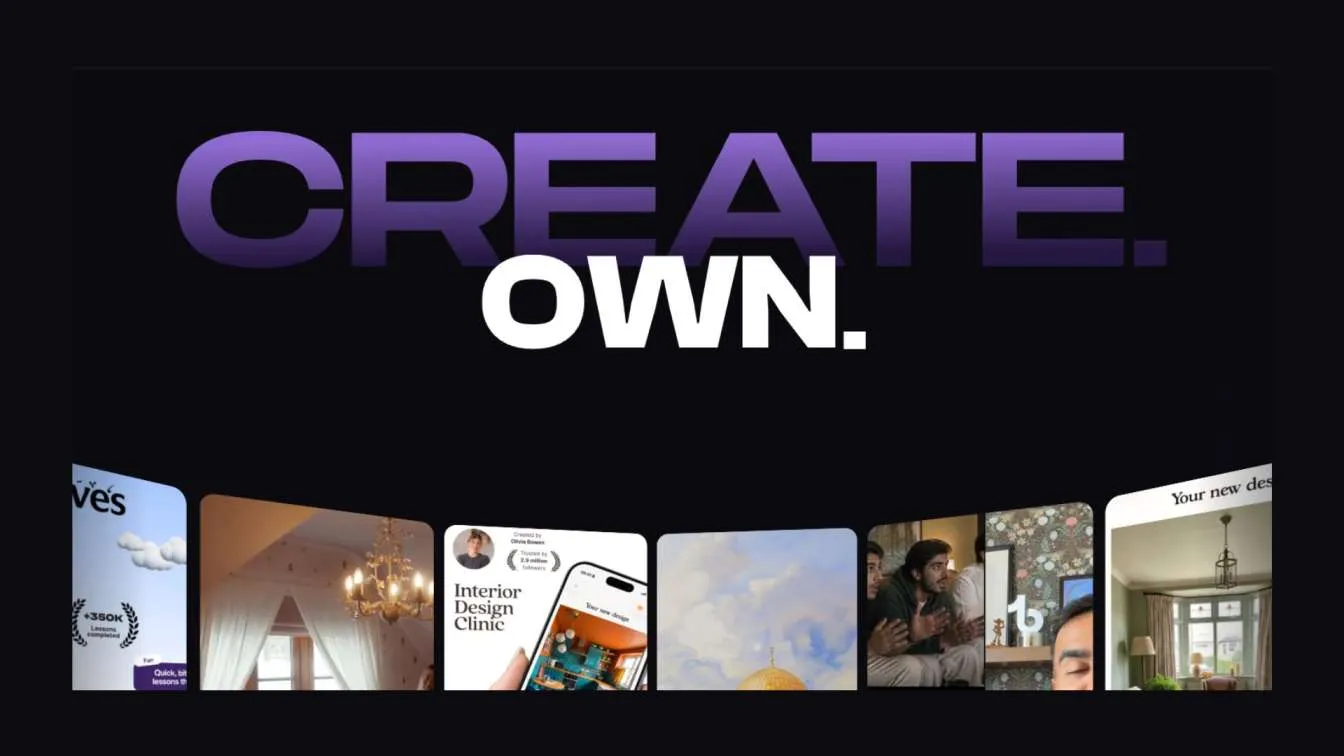
The first product, Archives, teaches Islamic history through short daily lessons, each followed by a question. It was built with history creator Basel Gazi. The app is free to download, and a subscription unlocks the full library, with plans including $12.99 a month or $49.99 a year on the United States (US) App Store.
Archives holds a 4.9-star rating from 312 ratings on Apple’s store. Affinity Labs says the app has more than 75,000 users and has ranked among the top 200 apps in the Education category. According to Ricci, the creator’s own audience has grown faster since the launch, not slower.
Interior Design Clinic, built with interiors creator Olivia Bowen, uses AI to redesign a room from a single photo, and the company says it reached No. 34 in the App Store’s Lifestyle category. NextStep, a web platform made with the creator behind Consulting Comedy, helps consultants find jobs outside consulting.
A fourth product, Batootah, turns travel videos a user has saved into a day-by-day trip plan. Affinity Labs lists it as taking sign-ups for a waiting list and has not named the creator behind it. Across the portfolio, the company claims more than 130,000 users and says revenue has grown by an average of 100% a month over the past three months. It has not disclosed revenue figures.
Why Bending Spoons Is The Model
Bending Spoons, the Milan software group, is not among the backers. Ricci calls it the company he has researched most while building Affinity Labs and the closest comparison to what he is doing. Founded in 2013, Bending Spoons buys established digital products such as Evernote, WeTransfer, Vimeo and Eventbrite and runs them from a central team.
Bending Spoons raised $1.68B when it listed on the Nasdaq in July, pricing its shares at $29, above its marketed range. Its revenue rose from about $387M in 2023 to $1.31B in 2025. Affinity Labs builds its products from scratch rather than buying them, but it borrows the idea of shared tools run by one team.
Affinity Labs’ internal tool, Foundry, gives every app ready-made parts such as payment systems and automated tools for producing user-generated content (UGC), the casual posts and videos made in the style of ordinary customers. The company says this shared tooling lets products ship in weeks rather than months, and that each new one becomes easier to build and grow.
A Market Built On Brand Deals
Goldman Sachs Research put the creator economy at about $250B in 2023 and expects it to reach $480B by 2027. The bank counted roughly 50M creators worldwide, of whom only about 4% earn more than $100,000 a year. Brand deals made up around 70% of creator revenue.
Ricci calls sponsorship “a very volatile income stream” and points out that creators do not own the platforms their followings live on. Other companies already help creators sell directly to fans. In 2025, membership site Patreon said fans had paid creators more than $10B since its founding, and course platform Kajabi said its creators had earned over $10B.
Ricci names Beach House Group, a brand incubator founded in 2016 that has launched brands with celebrities including Kendall Jenner, as one competitor. He has said most rivals he has seen focus on physical goods, and he steers creators towards software, arguing it costs less to start and to run.
From London To US Creators
Affinity Labs was incorporated in July 2025. Ricci previously worked in early-stage business development at Abatable, a startup backed by Y Combinator, and at Opna, backed by Atomico. He leads the company with Ahmed Eltom, its chief operating officer, and Sunny Panchal, its chief technology officer.
Fuel Ventures, founded by Mark Pearson after he built and sold the voucher site MyVoucherCodes, says its funds hold more than 230 startups and invest between £150,000 and £3M per company. Antler, founded in Singapore in 2017, backs founders from before they have a team or an idea and has offices in 27 cities.
Affinity Labs plans to launch its first products with creators in the United States in late 2026. It is aiming for more than 200 creator-led software brands by 2030, up from four today.