
Sequent, a startup whose AI tools mathematically prove that software follows the rules its developers set, has raised $2.2M. Frachtis and Metaplanet co-led the pre-seed round, an early round that usually comes before a startup has steady sales.
Frachtis is a $20M fund, run by former executives of blockchain company Chorus One, that invests in early crypto and AI startups. Metaplanet is the investment firm of Skype co-founder Jaan Tallinn, who led Anthropic’s $124M Series A in May 2021. A Series A is usually a startup’s first large funding round after its early money.
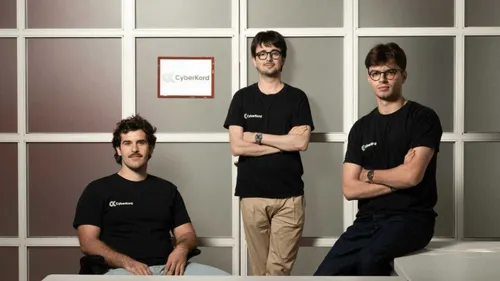
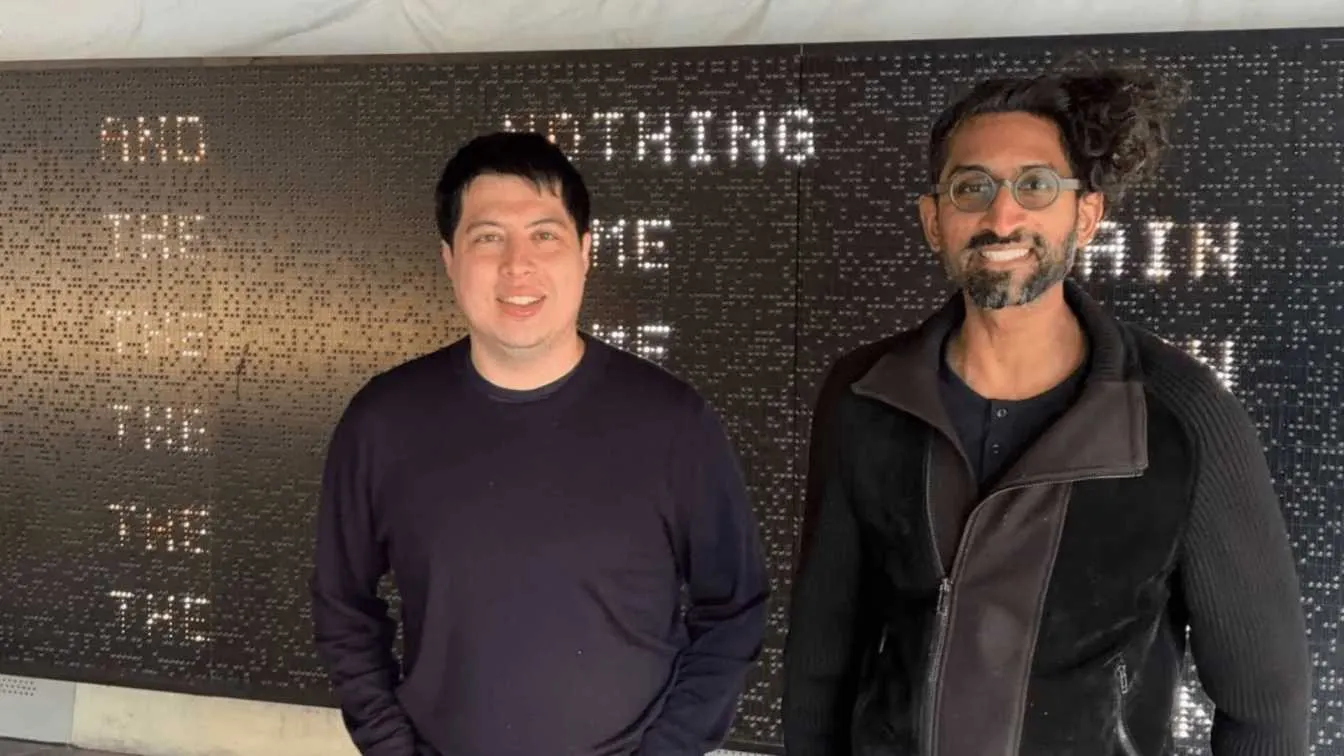
Chief executive Charles Cooper is a core developer of Vyper, one of the two main languages for writing programs on Ethereum. Chief technology officer Ramana Kumar is a former AI safety researcher at Google DeepMind and a co-author of CakeML, a compiler that has been mathematically proven to work correctly. A compiler turns code that people write into instructions a machine can run.
The Bug That Started Sequent
Smart contracts are programs on a blockchain that hold and move money automatically. Once deployed, many cannot be changed, so a flaw can stay in place for years.
In 2021, Cooper accidentally introduced a flaw into the Vyper compiler. The bug was fixed within months, but contracts already built with the faulty versions (0.2.15, 0.2.16 and 0.3.0) could not be updated.
In July 2023, attackers used the flaw to drain older pools at Curve, a decentralised exchange (a trading service run by smart contracts rather than a company), and at other projects including Alchemix, JPEG’d and Metronome. The bug broke the locks meant to stop a contract being called again before it finished a transaction. Losses were first estimated at about $70M and fell to roughly $52M after some funds were returned, according to security firm Halborn.
After the attack, Kumar offered to help prove mathematically that the Vyper compiler works correctly. Curve is now Sequent’s first paying customer, the company says. “Smart contracts taught us that anything that can be exploited will be,” Cooper said.
How Sequent’s Alan Works
Most software is checked by testing it on a sample of inputs. Formal verification goes further and proves that code follows a set of rules for every possible input, much as a mathematician proves a theorem.
Sequent’s product, Alan, works through a program’s code and helps developers set out exactly what the program should do. Alan then generates proofs, which a computer can confirm, that the code meets those rules. The tool is in early access, and its first target is smart contracts.
AI is also making it faster to find flaws. In October, the PHP project fixed two critical flaws that researchers at Wiz and others had found using AI models. The flaws affect versions dating back more than a decade. PHP is the programming language behind much of the web. Attackers are using AI too. CrowdStrike has linked ARTEX, an open-source AI hacking tool, to data thefts at South Korean banks.
Cooper said banks, governments and companies running older systems have relied on keeping their code private. “AI-powered cyber attacks are eroding that protection,” he said. He added that AI “is also making mathematical proof economical, and that puts the advantage back with defenders.”
Funding Plans And A Growing Field
Sequent says the money will help it take Alan out of early access and launch it fully. It will also fund new engineering, sales and marketing staff, plus the computing costs of running its AI.
Other startups are building checks for software written with AI. London-based Niro, for example, maps how a company’s code behaves so engineers and AI agents can test changes against it.
Sequent aims to use AI to bring mathematical proof into everyday code checking. It is starting with smart contracts, where a single bug can cause losses that cannot be reversed.