
Farming happens in the places networks forget. A cattle station in Australia can cover more land than some countries. A banana plantation in Ghana may sit hours from the nearest town. Durian orchards, vineyards, irrigation canals and grain silos are scattered across landscapes where a mobile signal is weak, intermittent or absent.
That is one reason agriculture has become one of the strongest markets for LoRaWAN, the low-power wide-area network technology that lets small battery-powered sensors send data over long distances. It is also why the industry is increasingly turning to satellites to reach the parts of the farm that even LoRaWAN gateways cannot.
In July 2026, the LoRa Alliance, the industry body behind the standard, published a set of agricultural case studies spanning four continents. Several rely on satellite links, either to connect remote sensors directly or to carry data back from gateways in the field. IoT Business News described the trend as LoRaWAN pushing deeper into smart agriculture with satellite-backed connectivity.
Why Farms Choose LoRaWAN
The LoRa Alliance’s chief executive, Alper Yegin, put the case simply: “LoRaWAN is winning in the Smart Agriculture market for one simple reason: it reaches where farming actually happens.”
Range And Battery Life
A single LoRaWAN gateway can cover several kilometres of open ground, and sensors can run for years on small batteries or solar power. That suits farms, where devices are spread thinly across large areas and nobody wants to replace batteries every few months. We explained how these low-power networks work in our guide to the networks built to whisper.
No SIM, No Monthly Plan
LoRaWAN runs in unlicensed spectrum. A farm can install its own gateways and connect its own sensors without a SIM card or a data plan for each device. For operations with hundreds or thousands of sensors, that changes the economics compared with cellular.
A Large Device Ecosystem
According to the LoRa Alliance’s agriculture announcement, there are more than 650 LoRaWAN Certified devices from over 334 member companies, and about 125 million LoRaWAN devices were connected worldwide by the end of 2025. For farms, that means off-the-shelf soil probes, weather stations, water meters, tank sensors, gate monitors and livestock tags, rather than custom hardware.
Where Satellites Come In
LoRaWAN has a practical limit. Devices need a gateway within range, and the gateway needs a connection back to the internet. On a remote farm, either can be missing.
Two Ways To Combine Them
Satellites help in two different ways, and the distinction matters.
The first is backhaul. A gateway on the farm collects data from local sensors and sends it onward over a satellite link instead of a mobile network or fibre. The sensors themselves remain ordinary LoRaWAN devices. The satellite link may be a broadband terminal or a lower-capacity IoT service, depending on how much data the gateway handles.
The second is direct-to-satellite. Here, sensors transmit LoRa signals that a satellite passing overhead receives directly, with no gateway on the ground. This reaches places where installing a gateway is impractical, but satellites are not always overhead, so data may be delayed until the next pass, and messages must be small.
Standardising The Link
The LoRa Alliance has been working on satellite discovery features, which aim to standardise how LoRaWAN devices find and connect to satellite constellations. In September, network operator Netmore said it would add connectivity from French satellite operator Kinéis to its LoRaWAN networks across the 18 countries where it operates, with devices switching automatically between terrestrial and satellite links, IoT Business News reported. Kinéis operates a constellation of 25 satellites dedicated to IoT.
That approach treats satellite as an extension of the existing low-power network rather than a separate service with separate devices.
Four Farms, Four Approaches
The LoRa Alliance’s case studies show how differently farms use the technology.
Banana Disease In Ghana And Brazil
The most satellite-dependent example is Banalytics, a project supported by Lacuna Space that aims to catch Black Sigatoka, a fungal disease that damages banana leaves and cuts yields, before it spreads.
The project combines satellite-connected LoRaWAN sensors with soil-nutrient measurements and AI imaging. According to industry coverage of the case study, about ten plants per hectare carry sensors measuring temperature and humidity, conditions that influence the spread of the disease, while soil-nutrient sensors sit on a 50-metre grid. The data helps growers spot risk early and avoid spraying fungicide where it is not needed.
Lacuna Space’s own account of the project describes it as a satellite-powered early warning system for banana farms. The remote location of many plantations is what makes satellite connectivity necessary.
Cattle Tracking In Australia
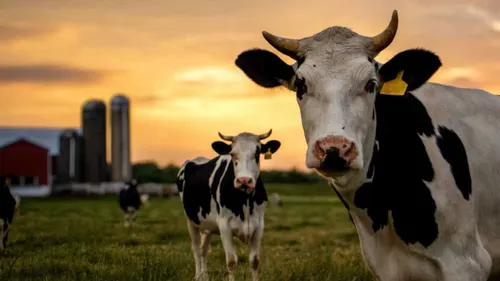
In Australia, MooField uses solar-powered GPS ear tags weighing less than 30 grams to track cattle across open grazing land. The tags connect to RAKwireless LoRaWAN gateways fitted with solar batteries, since many paddocks have no mains power.
RAKwireless’s case study puts the cost at about $10 per tag per year. It quotes the MooField team explaining their choice of gateway: “We chose your gateway because it offers router functionality, has a long range, and comes with a solar battery. That battery is key for us.”
Tracking removes the need for manual headcounts and helps ranchers find animals that stray. MooField is exploring satellite backhaul to extend coverage across entire properties, which on large Australian stations can stretch beyond the reach of any single gateway’s connection. We looked at the challenge of tracking assets with little or no power in our story on tracking assets that have no power.
Durian Orchards In Malaysia
At MIE Agro Farm in Malaysia, more than 20 Seeed Studio soil sensors monitor an orchard of around 6,000 durian trees. According to the LoRa Alliance, the system replaced manual inspections that took two hours a day, with sensors expected to last more than three years.
Durian is a high-value crop, and soil moisture and temperature affect both yield and fruit quality. Continuous readings let the farm adjust irrigation and fertiliser more precisely than periodic checks.
This example does not rely on satellites. It shows the terrestrial core of LoRaWAN in agriculture: a private network covering a single estate.
Vegetables In Bulgaria
In Bulgaria, Loren Networks uses TEKTELIC KIWI agriculture sensors to measure soil moisture, temperature, humidity and light for watermelon and cabbage crops. The data guides irrigation decisions, and the sensors are rated for up to ten years of battery life.
Again, the value lies in replacing guesswork with measurement on crops where water use and timing matter.
What The Data Is Used For
Across these examples, the applications are practical rather than futuristic.
Irrigation is the most common. Soil moisture sensors tell farmers when and where to water, which saves water, energy and labour, and avoids stressing crops.
Disease and pest early warning uses environmental data, sometimes combined with images, to predict when conditions favour outbreaks, as in the Banalytics project.
Livestock tracking reduces losses and labour on large properties.
Infrastructure monitoring covers water tanks, pumps, gates, fences and cold stores, where a simple alert can prevent expensive problems.
Weather stations provide local conditions that regional forecasts miss.
Most of these send small amounts of data, a reading every few minutes or hours, which suits both LoRaWAN and satellite IoT links well.
The Economics Of Satellite On The Farm
Adding satellites changes the cost picture, and farms need to weigh it carefully.
Backhaul Is Usually Cheaper
For farms with many sensors in one area, a single gateway with satellite backhaul is usually more economical than connecting each sensor to a satellite. The cost of the satellite link is spread across all the devices the gateway serves.
Direct-To-Satellite For Scattered Devices
Direct-to-satellite suits devices that are spread too thinly for a gateway to make sense: a water trough at the far end of a station, a sensor on a remote pump, a tag on an animal that roams widely. The per-device cost is higher, and messages are smaller and less frequent, but there is no infrastructure to install.
Power On Site
Gateways need power. On remote farms, that usually means solar panels and batteries, as the MooField example shows. A gateway with satellite backhaul needs enough power for both the LoRaWAN radio and the satellite terminal, which can be significant for broadband terminals.
Why The Timing Matters
Several pressures are pushing farms towards this kind of monitoring now.
Water is the first. Droughts and tighter limits on water use in many farming regions make precise irrigation more valuable. Measuring soil moisture across a field lets growers water only where and when crops need it.
Labour is the second. Many farms struggle to find workers for routine checks on distant fields, troughs and fences. Sensors that report automatically free people for work that cannot be automated.
Input costs are the third. Fertiliser, fungicide and fuel are expensive, and applying them only where data shows a need saves money and reduces environmental impact. The Banalytics project’s aim of avoiding unnecessary fungicide spraying is a clear example.
Satellite connectivity itself is also becoming easier to buy. Omdia expects satellite IoT connections to grow from 7.7 million in 2023 to nearly 198 million by 2035, with agriculture and environmental monitoring among the sectors driving demand.
The Limits
Satellite-backed LoRaWAN is not a universal answer.
Delay And Data Volume
Direct-to-satellite LoRa links depend on satellite passes, so data may arrive minutes or hours after it is collected. That is fine for soil moisture trends but not for urgent alarms. Messages must also be small.
Spectrum Rules Differ By Region
LoRaWAN uses different unlicensed bands in different regions, and rules on satellite use of those bands vary. Europe has set conditions for low-power devices in the 862 to 870 MHz band to communicate with satellites. In the United States, the FCC’s current proposal to open unlicensed bands to satellite links covers parts of the 2.4 GHz and 5.8 GHz bands, not the 902 to 928 MHz band commonly used by LoRaWAN there. Device makers and farms operating across regions need to check what is permitted where.
Competing Options
LoRaWAN is not the only way to connect remote farms. Cellular low-power technologies such as NB-IoT and LTE-M are gaining satellite support through standards-based non-terrestrial networks. Proprietary satellite IoT services offer their own devices and plans. The right choice depends on existing infrastructure, device counts, data needs and budgets.
Skills And Support
Installing sensors is easy. Keeping a network running, interpreting the data and acting on it takes time and skills that many farms lack. Case studies tend to highlight successful deployments; the practical burden of maintenance and data use is often understated.
What Farmers And Agri-Tech Firms Should Ask
For farms and agricultural technology providers considering satellite-backed LoRaWAN, a few questions help.
Where are the devices, and how spread out are they? Clustered sensors favour gateways with backhaul; scattered devices may need direct satellite links.
How quickly is the data needed? Irrigation trends can wait; a failed pump or a breached fence may not.
What power is available at gateway sites, and how will it hold up through cloudy weeks or winter months?
Which bands and satellite services are permitted in the country of operation, and do the chosen devices support them?
Who will maintain the network, and who will act on the data? The technology is only useful if someone responds to what it shows.
We looked at similar trade-offs in industrial settings in our explainer on industrial IoT and industrial connectivity.
A Quiet Layer Beneath The Harvest
Agriculture rarely makes headlines in the IoT world, but it is where low-power networks prove their worth: long distances, small batteries, harsh conditions and thin margins. LoRaWAN has become a common choice because it fits those constraints.
Satellites extend that reach to the places gateways and mobile networks cannot. Whether as backhaul for a gateway on a cattle station or as a direct link from a sensor in a remote plantation, they are turning coverage gaps into monitored ground. The case studies show the technology works. The harder questions, as ever on the farm, are about cost, maintenance and whether the data leads to better decisions in the field.