

Reclinker, a University of Cambridge spin-out that turns demolition rubble back into cement, has raised £10M in an oversubscribed Series A. The four-year-old company makes its material inside electric arc furnaces that already melt scrap steel, which removes the kiln from the process entirely.
Clean Growth Fund and AP Ventures co-led the round, and the Development Bank of Wales, Kibo Invest, Zero Carbon Capital and Cambridge Enterprise also took part, according to the company, with the last two backing it before this round.
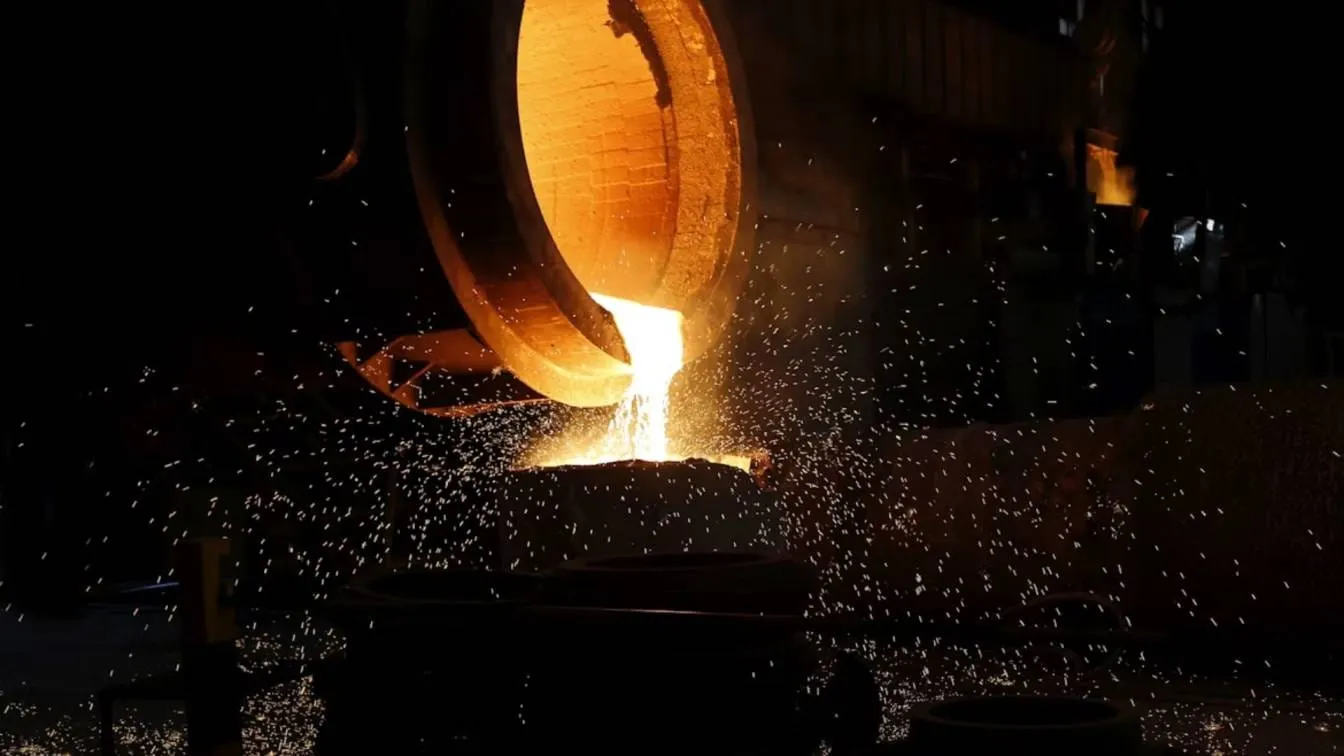
The process starts in a demolition yard. Reclinker recovers the old cement paste that binds crushed concrete, then feeds it into the furnace in place of the lime flux steelmakers normally add to carry impurities out of the melt. Inside the furnace the paste does the flux's job and comes out as slag, and cooled quickly enough, that slag is clinker, the active ingredient of Portland cement, so the furnace has produced recycled steel and new cement from a single melt.
What that removes is the expensive part of conventional cement. There is no quarried limestone, no kiln and no fossil fuel burned to reach 1,450C, which the company says cuts cement emissions by about half immediately, with more to follow at scale. Cost is the second claim, and Reclinker says it can reach parity with conventional cement because the furnace, the electricity and the operators are already paid for by the steel business running them.
The trials have run at 7 Steel UK's works in Cardiff, and the company is targeting 120,000 tonnes a year from that site. It has produced thousands of tonnes so far and has made its first commercial sales.
"This oversubscribed round sends a strong signal that UK investors are serious about decarbonisation," said chief executive Bill Yost. Andrew Hinkly, managing partner at AP Ventures, described the technology as "a unique, scalable, and cost-competitive route to low-carbon clinker production," while Gabriella Nizam, head of sustainability at 7 Steel UK, said the company had "been pleased to contribute to the development of this world-first technology."
The Chemistry Came From Cambridge
The method behind the company was published in Nature in May 2024 by engineers at the University of Cambridge. Cyrille Dunant was the first author, working in the group led by Julian Allwood, and the paper set out why the substitution works: spent cement paste already contains the oxides a steelmaker wants in the flux, and the resulting slag foams and flows better than the lime version it replaces.
The scale the researchers described was considerable. Cambridge put the potential at 1B tonnes of cement a year by 2050, roughly a quarter of current production, against global demand of about 4B tonnes and a sector responsible for some 7.5% of human carbon dioxide emissions.
Industrial testing began before the paper appeared. A project called Cement 2 Zero started in 2023 with £6.5M from UK Research and Innovation, run by the Materials Processing Institute with Atkins, Balfour Beatty, Tarmac, Day Aggregates, Brewster Brothers and the Cardiff steelworks, which traded as Celsa at the time. That trial moved from a 250kg induction furnace to a 6-tonne electric arc furnace and then into the commercial plant.
Philippa Horton, who worked on it at Cambridge, is now one of Reclinker's three founders alongside Yost and Poppy Brewer. So the Series A is funding a transition rather than a first attempt, because the chemistry has been demonstrated at industrial scale in the same furnace the company now intends to produce from commercially.
The Host Furnace Sets The Ceiling
Running inside somebody else's plant is what makes the economics work, and it is also what bounds them. 7 Steel UK is the former Celsa Steel UK, bought in 2025 by the Czech group Sev.en Global Investments, and its Castle Works site in Cardiff melts scrap into reinforcing bar and wire rod, producing around 1.2M tonnes of finished product a year with a minimum of 98% recycled content and employing about 1,000 people.
The cement output is tied to that steel output. A furnace makes a fixed quantity of slag per tonne of steel, so Reclinker's volume rises only when its host melts more, or when the company signs more hosts.
That is a different shape of business from a cement producer that can add a kiln line. The 120,000 tonnes targeted in Cardiff is a modest quantity beside the output of a single conventional cement works, which places the company at the specialist end of supply rather than near the centre of it.
The counterweight is capital. Reclinker is not building a plant, which is why £10M is a credible figure for reaching commercial production, where a conventional cement venture at the same stage would be raising several times that amount for a single facility.
Expansion depends on other furnace operators agreeing to the same arrangement. The company has named electric arc furnace sites in Europe and the United States as the next targets, and each one involves persuading a steelmaker to change the flux in a process it has optimised for decades.
British Cement Is Shrinking
The domestic market the company is entering has been contracting for years. UK cement production has fallen to its lowest level since 1950, with imports taking a growing share of what gets used, and industrial electricity prices in Britain are among the highest in the world, which weighs on any process that substitutes electricity for fuel.
Policy is moving at the same time. The UK carbon border adjustment mechanism starts in January 2027 and covers cement, which is intended to put the same carbon cost on imported material as on domestic production. The industry has not treated that as settled: Martin Casey of the Mineral Products Association has said the draft legislation does not yet achieve carbon cost parity, and that cement producers receive no energy intensive industry compensation despite being identified as among the most exposed to carbon leakage.
For a company selling low-carbon clinker into Britain, the detail of that legislation shapes the price of the alternative. A carbon cost applied evenly to imports and domestic kilns narrows the gap Reclinker has to close; one applied unevenly widens it.
American Rivals Lost Their Funding
The funding environment elsewhere has moved the other way, which gives the round some of its context. The United States Department of Energy terminated awards to two of the best-known cement startups in May 2025, with Sublime Systems losing $87M for a Massachusetts factory and Brimstone losing up to $189M for a commercial-scale plant, part of $3.7B cancelled across 24 projects as the office administering them was wound down.
Both companies had corporate backing from Microsoft and Amazon and neither was given a specific reason for the cancellation. Sublime later cut part of its workforce.
Those two are building new production processes that need new plants, which is what made them dependent on public capital at the demonstration stage. Reclinker's route avoids that dependency by taking space in an asset somebody else has already financed, and it also inherits that asset's conditions, since a steelworks changes owners, adjusts output to the construction cycle and answers to its own economics, and a cement business running inside one is exposed to all of it.
What the round establishes is that a laboratory result from 2024 has reached paying customers through an industrial trial, in a sector where most low-carbon alternatives have stopped at the pilot. What it does not yet establish is whether the arrangement travels beyond the one furnace in Cardiff where it was proved.