

Chinese technology group Gosuncn has guaranteed 30 million yuan, about $4.2 million, of bank credit for its wholly owned IoT subsidiary, according to a stock exchange filing dated 24 September. The guarantee backs a credit line from Shanghai Pudong Development Bank’s Shenzhen branch, and it leaves Gosuncn with 425 million yuan, roughly $60 million, still available under the guarantee allowance its shareholders approved in May.
On its own, that is routine corporate housekeeping. The more interesting part is what the filing reveals about the unit being backed.
A Unit That Builds The Car’s Connection
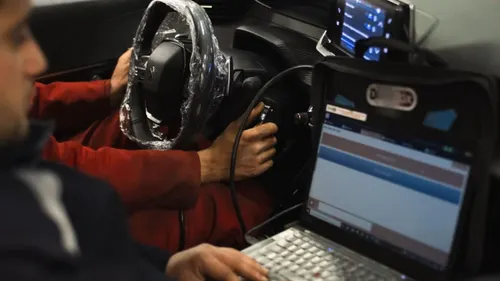
The subsidiary, Gosuncn IoT, which trades internationally as Gosuncn Welink, now centres its product line on vehicles. It sells telematics boxes, the in-car units that link a vehicle to its maker’s cloud for remote control, software updates and location tracking, along with 4G and 5G car modules and Bluetooth digital car keys. The company says monthly shipments of its telematics units have passed 100,000.
That puts it on one of the busiest roads in connected devices. Every new connected car needs one of these boxes, and as we explained in how IoT rewired the car, the box has become the channel through which carmakers update and support vehicles long after sale.
Growth That Needs Funding
The filing’s unaudited figures show how quickly the unit is moving. In the first half of 2026 it booked 329.6 million yuan in revenue, already more than half of its 589.7 million yuan for the whole of 2025, and a net profit of 25 million yuan, nearly double its full-year 2025 profit of 12.8 million.
The balance sheet has grown with it. Between the end of December and the end of June, total assets rose by about 36 percent to 699 million yuan, while liabilities rose faster, by about 46 percent, to 508 million. Bank loans stayed small at around 37 million yuan, so most of that increase likely reflects other obligations, such as money owed to suppliers as production ramps up.
That is the pattern of a hardware business scaling up, and it explains the guarantee. A parent’s promise to repay makes it easier and cheaper for a fast-growing subsidiary to borrow for working capital, and Gosuncn’s filing notes it has no overdue guarantees, with actual outstanding guarantees equal to about 8 percent of its net assets.
A Turnaround Built On Cars
The subsidiary’s progress matters because the wider group has been struggling. Gosuncn, founded in 1997 and best known for years for public safety video and telecom site monitoring, went through several loss-making years as revenue fell sharply after 2018.
Vehicle products have become the way back. In 2025, vehicle terminals made up nearly 64 percent of group revenue of about 2 billion yuan, and the company has been raising money to expand production of vehicle communication equipment. The group still posted a small loss last year, so a profitable, growing car unit is exactly what it needs to show.
Where This Fits In The Module Market
Gosuncn is growing in a market where scale increasingly decides who survives. Counterpoint found that global cellular IoT module shipments grew 11 percent year on year in the second quarter of 2026, with Quectel’s share rising to 41 percent, and smaller players have been leaving: Semtech, for one, has agreed to sell its modules business.
Our read: Gosuncn is betting that the car is a better place to compete than the crowded general-purpose module market, because automotive work rewards long qualification cycles and close ties with carmakers rather than just the lowest price. The guarantee is modest, but it shows the parent is willing to stand behind that bet.
The open question is whether the unit’s growth survives beyond its home market. Gosuncn’s vehicle business still leans on Chinese customers, with overseas sales early and mostly through aftermarket channels, so its next filings will show whether that 100,000-a-month pace can travel.