

Cambridge, UK, company bit.bio has closed a $25M Series D, its second funding round this year. The money will help it sell more of its lab-made human cells to drug developers and researchers.
Two backers have been named in the round. UK investment firm M&G Investments, which already held a stake in bit.bio, invested again, and Jonathan Milner, who founded the Cambridge lab supplies company Abcam, also put in money. bit.bio has not said who led the round or what the company is now worth.
The company plans to spend the money on adding human cell types to its range and on reaching more customers with its cell models, which are lab-grown human cells used in experiments in place of donated tissue. It says it already has the manufacturing in place to support that growth.
In January, M&G led a $50M Series C in bit.bio through its Crossover investment strategy. At the time, the company said it had raised more than $200M since its 2016 spinout from investors including ARCH Venture Partners, BlueYard Capital, Charles River Laboratories, Foresite Capital and Tencent.
When it announced the Series C, bit.bio said it would use that money to scale its operations globally, expand into the toxicology market, where drugs are tested for harmful effects, and build large datasets for training AI models.
Programming Stem Cells
The company was spun out of the University of Cambridge in 2016 and is built on research by stem cell biologist and neurosurgeon Mark Kotter. Its patented opti-ox technology starts with induced pluripotent stem cells, which scientists make by reprogramming ordinary adult cells back into a flexible, stem cell-like state. From there, opti-ox converts them into specific human cell types. Kotter has said that even he did not expect it would be possible to make pure batches of brain and muscle cells within days.
The company holds an exclusive licence to a US patent for opti-ox granted in 2023 and owned by Cambridge Enterprise, the university’s commercialisation arm. The company has also worked with contract research group Charles River Laboratories since 2019, when the two agreed an exclusive partnership to offer bit.bio’s cells through Charles River’s drug discovery and safety services.
The finished cells are sold under the ioCells brand, a range that now covers more than 50 products, including liver cells and several kinds of brain and nerve cells, with heart muscle cells added through a partnership. Researchers use them to study disease, test the role of individual genes, screen drug candidates and check whether compounds are toxic. The company says the approach gets around the limited supply of human cells for research and the way cells from different donors behave differently.
New Chief Executive Sees Rising Demand
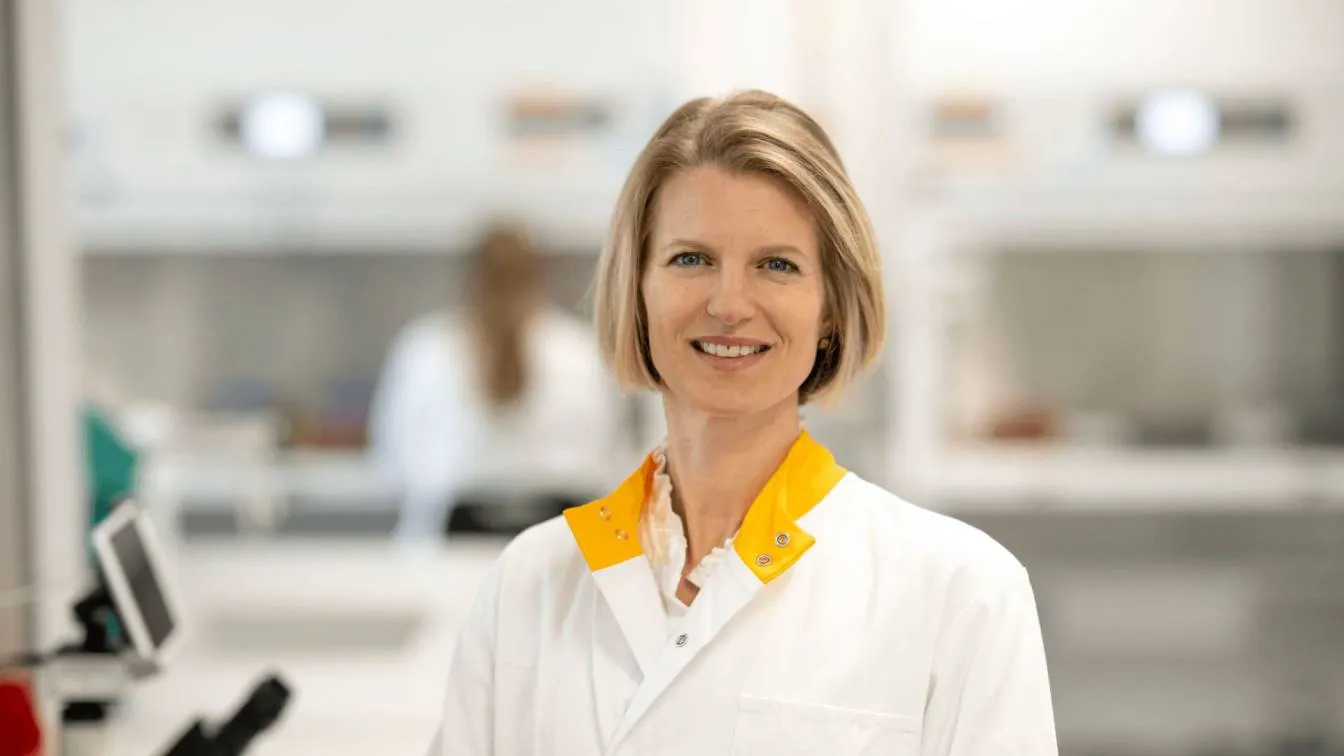
Emma Pepperell took over as chief executive in June from Przemek Obloj, who had led the company since its change of strategy in 2025. She previously spent about a decade at Abcam and joined bit.bio in 2024, where she was most recently vice-president, commercial, according to the company.
“The industry is reaching an inflection point in drug discovery,” Pepperell said. “AI is changing the speed at which new medicines can be discovered, while the move towards animal testing alternatives is creating growing demand for models that better reflect human biology.” She added that both trends need “vast quantities of consistent human cell models”.
Regulators Turn To Human Models
Governments on both sides of the Atlantic are pushing drug research away from animals. In April 2025 the US Food and Drug Administration announced a plan to phase out animal testing requirements, starting with monoclonal antibody drugs, and encouraged developers to submit data from lab-grown human models and computer simulations.
In November 2025 the UK government published a strategy for replacing animals in science. The five-year plan aims to phase out animal use in all but exceptional circumstances, build regulators’ confidence in alternative methods and attract private investment into them.
Other startups are going after the same demand for models that reflect human biology. Norwegian startup Vitroscope secured $7M this week for equipment that keeps human tissue samples alive in the lab for days, so researchers can watch how drugs act on them over time.
The Series D backs a technology developed at the University of Cambridge that turns stem cells into specific human cell types for drug research. With Pepperell now in charge, the company plans to add cell types to its ioCells range and sell them to more pharmaceutical, biotech and research customers.